A keyway drawing often shows a width and depth but omits the information that controls process selection. The first distinction is whether the feature is an external keyseat, an internal through keyway or a blind internal slot.
Tool passage, end condition, material hardness, fit and production quantity then determine whether milling, broaching, slotting, shaping or EDM is practical.
Key Takeaways
- Classify the feature before selecting a process.
- State key and fit requirements, not only nominal slot width.
- Provide through access when a pull or push broach is expected.
- Use EDM when hardness or inaccessible geometry justifies it.
- Inspect width, depth and relationship to the rotational axis together.
Classify the Feature
External keyseats, through keyways and blind internal slots have different access and tooling requirements.
Milling External Keyseats and Slots
End mills and side cutters can generate accessible features but leave geometry determined by cutter path and radius. See our CNC milling services. General cutter-selection and engagement principles are available in the Sandvik Coromant milling knowledge resource, but the final method must still reflect slot access, end condition and part hardness.
Broaching Through Keyways
Broaching is efficient when a tool can pass completely through and quantity supports the tooling. See our CNC production machining.
Blind Internal Slots and Hardened Parts
Slotting, shaping, sinker EDM or wire EDM may be required when access or hardness prevents standard broaching. See our wire EDM problem-solving guide.
Fit and Inspection
Control width, depth, symmetry, burrs and end condition according to the mating key and torque path.
Keyway Standards and Fits
Most keyways follow a standard, which fixes width, depth and tolerance for each shaft size. State the standard on the drawing:
- Metric parallel keys: DIN 6885 or ISO R773. The keyway width tolerance sets the fit, for example N9 in the shaft and JS9 in the hub for a normal fit, or P9 in both for a tight fit.
- Inch keys: ANSI B17.1, with class 1 (clearance) or class 2 (side fit).
- Woodruff keys: DIN 6888 or ANSI B17.2, cut with a dedicated Woodruff cutter.
Also state the depth reference (from the shaft surface or from the opposite side), symmetry to the axis if the key positions something, and whether the slot ends are radiused or square.
How We Make Keyways and Internal Slots
We do not have a broaching machine. Through keyways are either milled, where the geometry allows, or cut by wire EDM at our partner factories.
- External keyseats and open slots: milled on our CNC machining centers and turn-mill machines, often in the same setup as the shaft diameters so the keyway stays symmetrical to the axis.
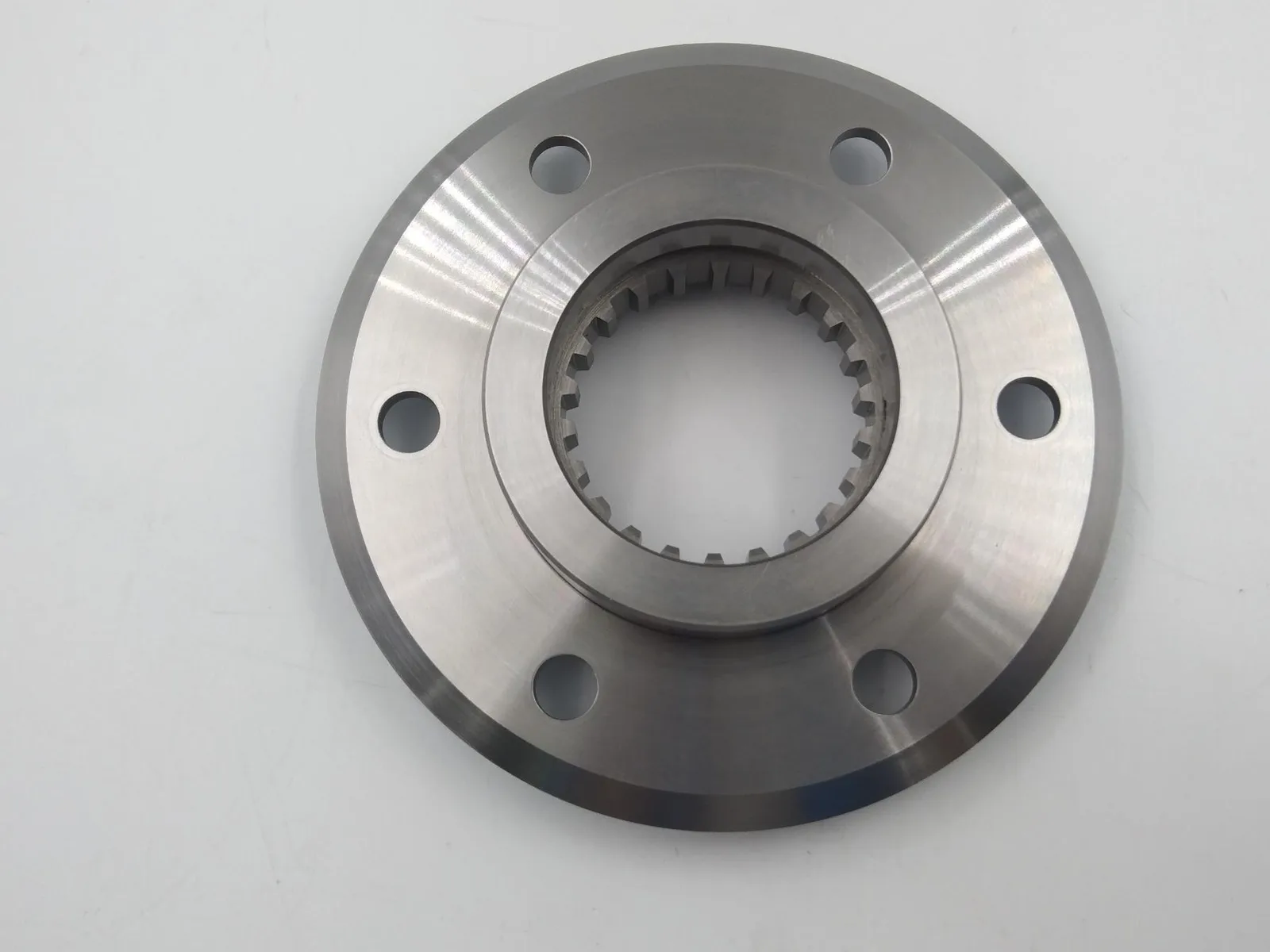
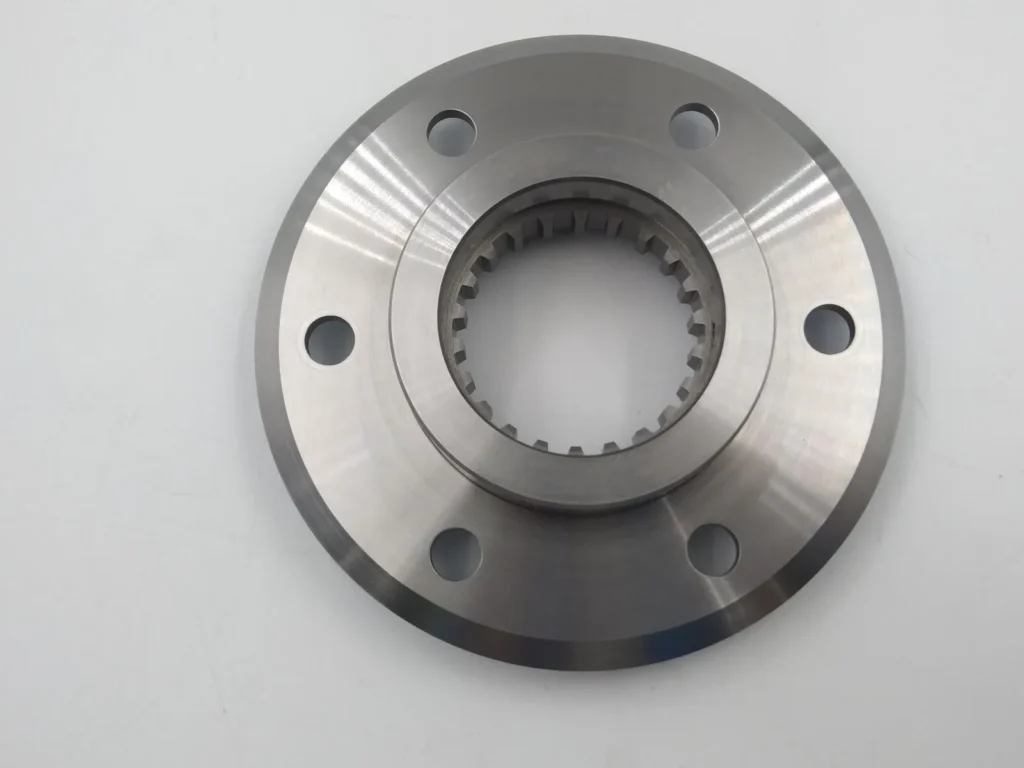
- Internal keyways and splines: through features with sharp internal corners are cut by wire EDM at our partner factories; the internal spline flange below was made this way.
- Blind internal slots and hardened parts: sinker EDM, which we run in-house, can form features a rotating cutter cannot reach. See our EDM electrode guide.
For more on why milled slots have rounded ends and how sharp corners are produced, see our guide to internal corner radii.
Standard Keyway Sizes for Common Shaft Diameters
For metric parallel keys to DIN 6885, the key width and the keyway depth in the shaft (t1) follow the shaft diameter. A few common sizes:
- Shaft over 10 up to 12 mm: key 4 × 4, shaft keyway depth 2.5 mm
- Over 12 up to 17 mm: key 5 × 5, depth 3.0 mm
- Over 17 up to 22 mm: key 6 × 6, depth 3.5 mm
- Over 22 up to 30 mm: key 8 × 7, depth 4.0 mm
- Over 30 up to 38 mm: key 10 × 8, depth 5.0 mm
- Over 38 up to 44 mm: key 12 × 8, depth 5.0 mm
Always confirm the values and tolerances against the current standard. Using standard sizes means standard cutters and keys, which keeps cost and lead time down.
Milling, Broaching or Wire EDM: How They Compare
- Milling: the most flexible and economical method for external keyseats and open slots. Slot ends are rounded by the cutter radius unless a side cutter runs the slot out.
- Broaching: fast and accurate for repeated through keyways in a bore, but needs a dedicated broach for each size and a through hole for the tool to pass.
- Wire EDM: cuts internal keyways and splines with sharp corners in any conductive material, including hardened steel. Slower, but needs no special tooling and gives very good accuracy.
- Sinker EDM: for blind internal slots and shapes that no cutting tool or wire can reach.
Common Keyway Design Mistakes
- Non-standard widths that need a special cutter or a custom key.
- Blind internal keyways where a through keyway would work; blind internal slots cannot be broached and usually need EDM.
- No symmetry control when the key positions a gear or pulley angularly.
- Sharp internal corners on a stressed shaft; a small radius at the keyway bottom reduces stress concentration.
- Keyways running into a shoulder without room for the cutter to run out.
Frequently Asked Questions
Can a standard broach cut a blind keyway?
A conventional pull or push broach normally needs through travel. Blind features require another approach.
Why does a milled slot have rounded ends?
The rotating cutter creates an end radius unless relief or another process is specified.
Is EDM always the most accurate option?
No. EDM is valuable for hardness and access, but process choice also depends on finish, recast layer, cost and quantity.
Should keyway width alone be inspected?
No. Depth, position, symmetry, burrs and mating-key function can also be critical.
Can you cut a keyway in a hardened shaft?
Yes. Hardened parts are usually cut by wire or sinker EDM, or the keyway is milled before heat treatment and the drawing allows for distortion.
Why are internal keyways more expensive than external ones?
Internal keyways need broaching, slotting or EDM rather than a simple milling cutter, and the bore limits tool access. External keyseats can usually be milled in the same setup as other features.
What information should a keyway callout include?
The standard, width and its tolerance, depth and its reference surface, length, end shape, and symmetry or position to the axis if the key locates another part.
Get an Engineering Review
Upload the CAD model and controlled drawing for an engineering review before production. When the model and drawing are ready, use upload the shaft and hub drawings and include the material, quantity, finish and inspection requirements.
For a review of CNC keyways and slots, send the native CAD model, controlled drawing, material specification, quantity, finishing route and required acceptance records. SAMSHION’s engineering team can return project-specific DFM questions and documented quotation assumptions before production begins.