
Custom Metal Stamping Services
From tooling and first-article validation to repeat production, Samshion provides precision metal stamping and manufactures reliable custom stamped metal parts with engineering support, controlled processes and documented inspection.
- DFM review before tooling
- Prototype to repeat production
- Inspection reports available
A Manufacturing Partner Built Around Production Reliability
As a custom metal stamping manufacturer, Samshion connects tooling, engineering, quality and delivery in one accountable workflow. Metal stamping success depends on more than press capacity.
Engineering Before Tooling
DFM review identifies forming risk, tolerance conflicts and cost drivers before die construction.
One-Stop Coordination
Tooling, stamping, secondary operations, finishing and inspection are managed through one project team.
Scalable Supply
Support from development samples and bridge builds to scheduled repeat production.
Documented Quality
First-article, in-process and final inspection records are available for critical requirements.
The Right Tooling and Forming Route for Your Part
We select the process around geometry, material, tolerance, batch size and annual demand, not a one-size-fits-all production method.
Progressive Die Stamping
Multiple cutting and forming operations run in sequence for repeatable, cost-efficient production.
Deep Drawing Services
Flat blanks are formed into seamless cups, shells and housings with controlled material flow.
Compound & Single-Hit Stamping
Flexible tooling for flat parts, development builds and simpler lower-volume components.
Secondary Operations
Tapping, PEM insertion, deburring, welding, finishing and light assembly are available.
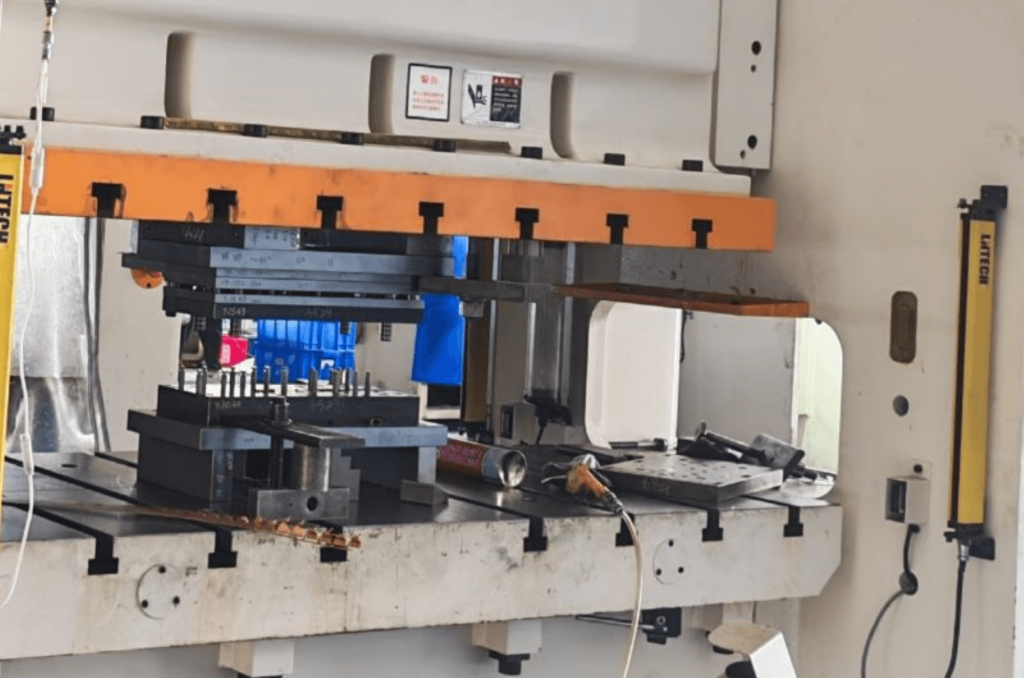
Turning Flat Sheet into Repeatable Production Parts
Metal stamping uses a press and dedicated tooling to cut, bend, draw, pierce or emboss sheet metal into a finished geometry. A die controls each operation so parts can be produced repeatedly with stable dimensions and short cycle times.
It is commonly used for brackets, clips, contacts, terminals, shields, covers, housings and other sheet-metal components that require consistent production output.
When Dedicated Tooling Creates Better Production Value
Stamping offers its greatest advantage when stable demand, repeatable geometry and controlled features justify the initial tooling investment.
Lower Unit Cost at Scale
Short press cycles and efficient material use reduce cost as production volume increases.
Consistent Repeatability
Dedicated dies locate and form features consistently across repeat production runs.
Complex Features in Fewer Steps
Piercing, bending, embossing and forming can be combined in one tool sequence.
Production-Ready Output
Parts can include hardware, finishing and assembly before final delivery.
Metal Stamping or Sheet Metal Fabrication?
Metal stamping is usually the stronger production route when the design is stable and expected demand can justify dedicated tooling. Once the die is approved, repeated cutting and forming operations can be completed with short cycle times, consistent feature locations and predictable unit costs.
For prototypes, frequent design revisions or smaller batches, sheet metal fabrication services based on laser cutting and press-brake forming may avoid the initial die investment. When demand is still developing, low-volume manufacturing can bridge design validation and full production tooling. Samshion reviews both routes during DFM and recommends the practical option for the part geometry, tolerance and expected volume.
How a Stamped Part Is Manufactured
Each stage is planned around material flow, tool direction, critical dimensions and the required production rate.
Blanking & Feeding
Sheet or coil stock is prepared and accurately positioned for each press cycle.
Piercing & Cutting
Holes, slots and external profiles are produced according to the die sequence.
Bending & Forming
Controlled deformation creates flanges, ribs, offsets, embosses and 3D geometry.
Drawing
Material flows into a die cavity to form cups, shells and deeper seamless shapes.
Finishing & Inspection
Parts are deburred, finished, measured and packed to the approved requirements.
Select the Stamping Method Around Geometry and Volume
Different tool concepts balance tooling cost, cycle time, part complexity and production flexibility.
Progressive Stamping
Best for repeat production where multiple operations can be completed as strip material advances through the die.
Compound Stamping
Several cutting operations occur in one press stroke for accurate flat parts and concentric features.
Transfer Stamping
Individual blanks move between forming stations, supporting larger or deeper formed geometries.
Single-Operation Stamping
One operation per press stroke offers flexibility for simpler parts and lower production demand.
How We Select the Right Stamping Process
The most suitable stamping method depends on more than production quantity. Our engineers review part geometry, feature sequence, material behavior, tolerance relationships and secondary requirements before defining the tooling concept.
Part Geometry and Operation Sequence
The part shape determines whether operations can be combined in a progressive die or require compound, single-hit or transfer tooling. Deep walls, tight corners, closely spaced features and complex forming directions affect station planning and material flow.
Production Volume and Tooling Economics
Higher repeat volumes can justify more automated tooling because shorter press cycles reduce unit cost over the production life. For development builds or uncertain demand, simpler tooling may provide greater flexibility and a lower initial investment.
Material and Formability
Material grade, temper, thickness and grain direction affect cracking risk, springback, draw depth and tool wear. Our manufacturing materials guide provides additional information about commonly used metals and their performance characteristics.
Tolerances and Inspection Strategy
Cut features, formed features and dimensions across multiple operations do not behave in the same way. Critical dimensions, datum relationships and inspection methods should therefore be identified before tooling begins. Learn more about our quality assurance and inspection systems.
Production Materials Selected Around Part Function
Grade, temper and thickness affect formability, springback, tool wear, corrosion resistance and final performance. For additional information about available grades and material properties, review our manufacturing materials guide.
Carbon & Galvanized Steel
SPCC, DC01 and galvanized grades for structural brackets, chassis, clips and industrial parts.
Stainless Steel
304, 316 and other grades for corrosion resistance, strength and demanding environments.
Aluminum
Lightweight, corrosion-resistant alloys for covers, shields, housings and mobility applications.
Copper & Brass
Conductive alloys for contacts, terminals, bus components, shielding and decorative hardware.
Need help selecting a grade? Send the operating environment, mechanical requirements and target finish with your drawing. Our engineers will recommend practical options.
Protect, Strengthen or Improve the Appearance of Stamped Parts
Finishing is selected around substrate, corrosion exposure, wear, electrical function and cosmetic requirements. Compare our complete surface finishing options for custom metal parts.
Powder Coating
Durable color and corrosion protection for steel and aluminum components.
Zinc Plating
Practical corrosion protection for carbon-steel brackets, clips and hardware.
Nickel Plating
Wear resistance, conductivity and a controlled metallic appearance.
Passivation
Restores corrosion resistance after stainless-steel forming and processing.
Anodizing
Protective and cosmetic oxide finish for compatible aluminum alloys.
Deburring & Brushing
Controlled edges and directional cosmetic surfaces for finished components.
What Influences Metal Stamping Cost?
Metal stamping cost includes both the initial tooling investment and the production cost of each finished part. Understanding the main cost drivers helps engineering and purchasing teams compare quotations more accurately.
Tool Complexity
The number of forming stations, cutting operations, moving components and adjustment requirements affects die design, manufacturing time and trial work. Combining unnecessary features into one tool can increase cost without improving the finished part.
Material Use
Material grade, thickness, strip width and nesting efficiency influence both raw-material cost and scrap rate. Practical feature placement and efficient strip layout can reduce material consumption across repeat production.
Production Quantity
Expected annual volume, batch size and production schedule affect tooling selection, press setup and unit pricing. Supplying realistic demand information allows the tooling investment to be evaluated against the expected production life.
Secondary Operations and Finishing
Tapping, hardware insertion, welding, deburring, plating, coating and assembly add separate production and inspection steps. Review the available surface finishing options before finalizing the drawing.
Quality and Documentation
Tight tolerances, special gauges, material traceability, first-article reports and additional inspection documentation can affect project cost and lead time. These requirements should be identified during quotation rather than after tooling has started.
Upload your CAD files together with the drawing, material, finish, critical tolerances and expected production volume for a detailed DFM review and quotation.
Metal Stamping Design Guidelines
These are useful starting points. Final recommendations depend on material grade, temper, thickness, geometry and tool direction.
Use Practical Bend Radii
Avoid overly tight radii that can cause cracking, springback or premature tool wear.
Keep Holes Away from Edges
Allow enough material between holes, cut edges and bend zones to reduce distortion.
Control Critical Tolerances
Apply tight tolerances only where function requires them and identify inspection datums.
Maintain Consistent Geometry
Consistent radii and feature directions simplify tooling and improve repeatability.
Plan for Burr Direction
Identify functional and cosmetic surfaces so cutting direction and deburring can be planned.
Provide Complete Production Data
Supply STEP, DXF and PDF drawings with material, thickness, finish and annual volume.
Control the Process, Not Just the Final Part
Critical characteristics are reviewed before tooling, verified during first article and monitored throughout production. Inspection documentation can be supplied to match your project requirements.
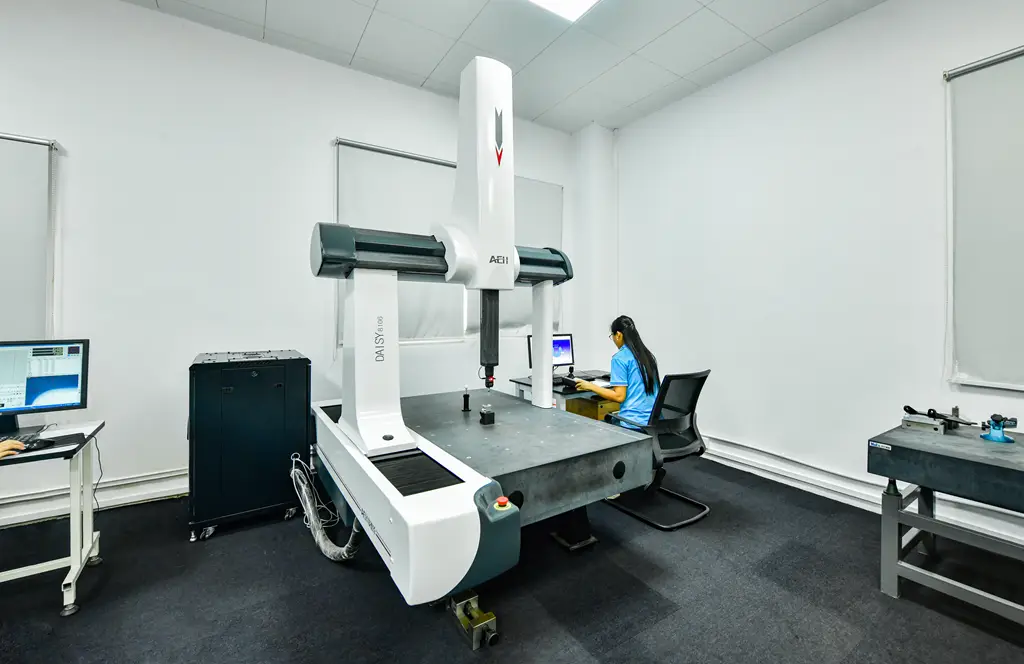
Drawing & DFM Review
Tolerances, datums, material and forming risk checked before release.
First Article Inspection
Initial samples verified before the production run proceeds.
In-Process Control
Defined checks maintain consistency and identify process drift.
Final Documentation
Inspection reports, material certificates and CoC available on request.
A Clear, Controlled Project Workflow
Each stage has a defined decision point so tooling, quality and delivery expectations are aligned before production begins.
File Review
Submit STEP, DXF and a dimensioned PDF drawing with volume and material requirements.
DFM & Quotation
We review forming risk, tolerances, tooling concept and production assumptions.
Tooling & Trial
The die is manufactured, tested and adjusted against the approved specification.
First Article
Samples and dimensional results are submitted for your approval.
Production & Delivery
Controlled production, final inspection, finishing, packing and shipment.
Metal Stamping FAQs
What files should I send for a metal stamping quote?
Send a 3D STEP file, a dimensioned PDF drawing and, when available, a DXF flat pattern. Include material grade and thickness, finish, critical tolerances, annual volume and expected batch size.
Does metal stamping require custom tooling?
Most production stamping parts require a dedicated die. Tool type and cost depend on geometry, operations and demand. For lower volumes, we may recommend single-hit tooling, CNC punching or sheet-metal fabrication instead.
Can you support prototypes before production tooling?
Yes. Depending on geometry, development samples can be made using soft tooling, laser cutting, bending or machining to verify fit and function before the production die is completed. Learn more about our rapid prototyping services for early design validation.
What tolerances can metal stamping achieve?
Tolerance depends on material, thickness, feature type, part size and the relationship between cut and formed features. We review every drawing and identify achievable production tolerances in the quotation.
Can stamped parts include finishing and assembly?
Yes. We can coordinate deburring, plating, powder coating, passivation, anodizing, hardware insertion, welding and light assembly so you receive production-ready components.
How long does tooling and first-article approval take?
Timing depends on part complexity, die type and material. The quotation separates tooling, trial, first-article approval and production lead times so each milestone is clear.