
Vacuum Casting Services for Low-Volume Polyurethane Parts
Create detailed polyurethane prototypes and short-run parts from a high-quality master pattern and silicone mold. SAMSHION supports rigid, flexible, clear, colored and appearance-focused cast components for design verification, customer evaluation, pilot builds and transitional production.
- Master pattern reviewed before silicone tooling
- Rigid, flexible, colored and transparent polyurethane options
- Appearance and functional requirements defined before casting
- Inspection and documentation matched to project risk
From One Master Pattern to a Controlled Short Run
Vacuum casting reproduces a master pattern by forming a flexible silicone mold around it and filling the resulting cavity with a two-component casting resin under controlled conditions. It is especially useful when a team needs more than one prototype but is not ready to commit to an injection mold.
The process can replicate fine texture, color, undercuts and complex external geometry with relatively low tooling investment. However, the result depends on the quality of the master, mold layout, resin system, cure history and finishing method. A silicone mold is a consumable production aid, not permanent steel tooling, and cast polyurethane should not be described as automatically identical to an injection-molded thermoplastic.
This page is focused on the casting process itself. For broader selection among CNC machining, 3D printing, molding and sheet metal routes during early development, see SAMSHION’s rapid prototyping services. For a validated design moving into coordinated pilot or repeat production, review our low-volume manufacturing services.
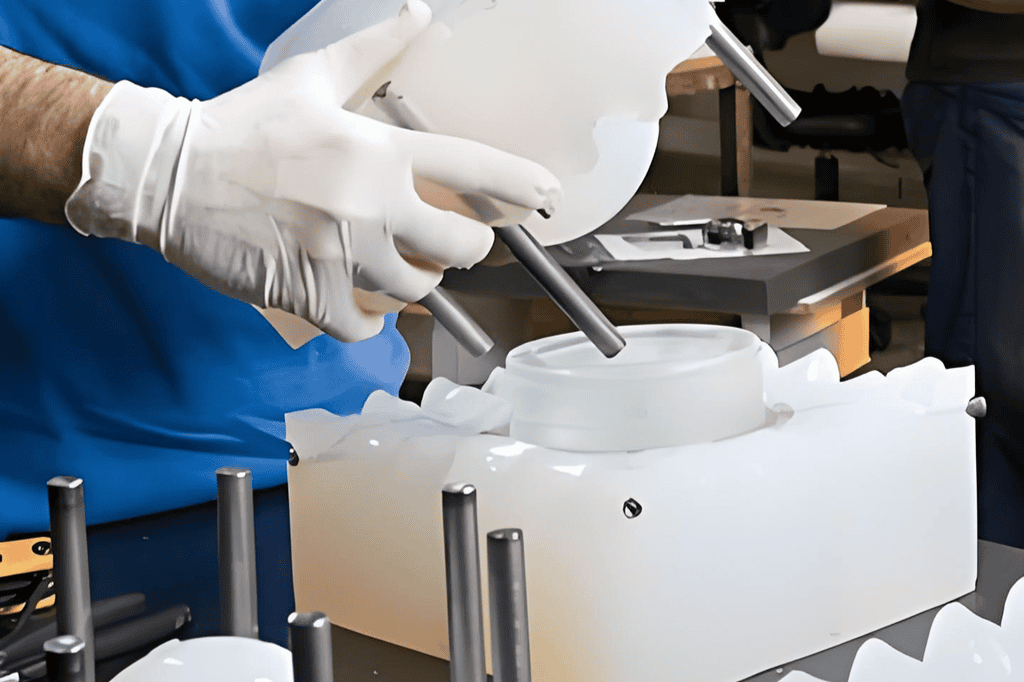
What is Vacuum Casting?
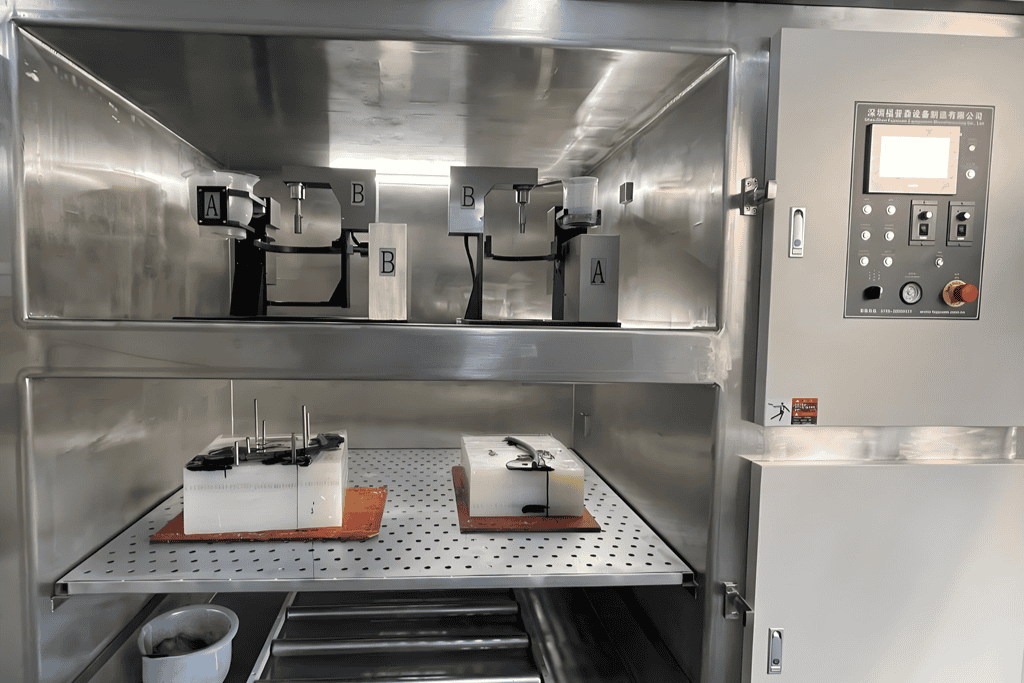
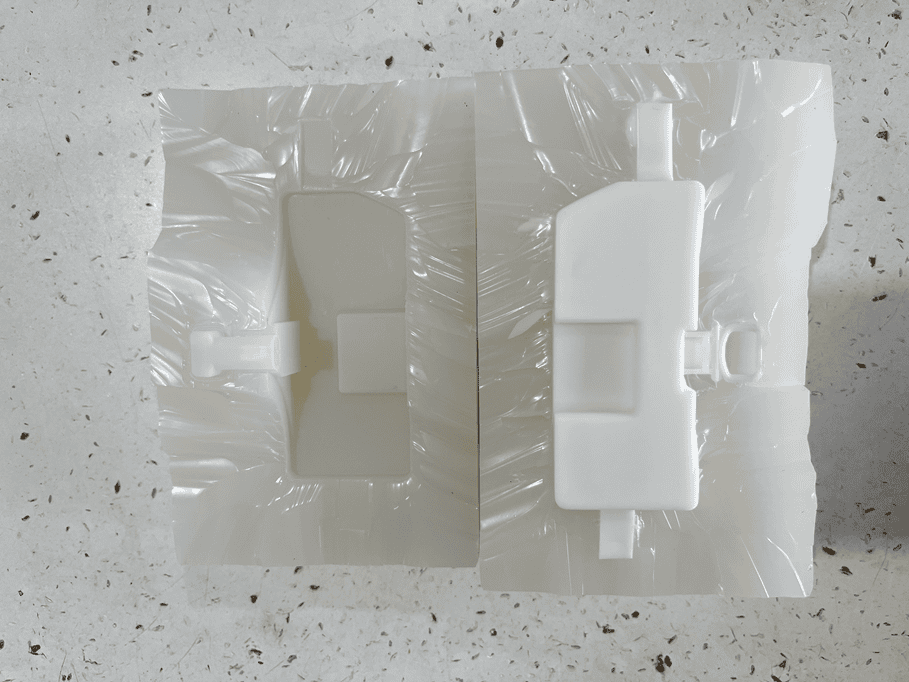
Vacuum casting, also called urethane casting or polyurethane casting, uses a master pattern to create a flexible silicone tool. After the silicone cures, the tool is opened along a planned parting line, the master is removed and the cavity is prepared for casting. Metered resin components are mixed, degassed or cast under reduced pressure as appropriate, and cured before the replicated part is removed and finished.
The vacuum helps manage entrapped air in the mixed resin and complex cavity. It does not eliminate every possible void or cosmetic defect by itself. Venting, gate location, material handling, mold temperature, mixing, pot life and operator control remain important.
Because the silicone tool can flex during demolding, the process can reproduce selected undercuts and shapes that would require slides or other actions in a rigid injection mold. That flexibility is valuable, but it can also contribute to dimensional variation if thin walls, long unsupported features or deep sections are not designed and handled carefully.
Why Choose Samshion Vacuum Casting?
Engineering Review Before the Master Is Released
SAMSHION reviews wall thickness, undercuts, fragile features, parting-line location, gate and vent strategy, surface zones, dimensional priorities and assembly requirements. The review identifies which features can be reproduced directly and which may require modification, inserts, secondary machining or a different process.
Master Patterns Matched to the Requirement
The master determines the basic geometry and surface transferred into the silicone tool. SLA and other 3D printing processes are often evaluated for complex geometry and efficient pattern creation, while CNC machining may be selected for stable datum features, demanding surfaces or production-material masters. The route is chosen according to the part rather than habit.
Material Selection Based on the Test
Material conversations begin with stiffness, hardness, impact, elongation, temperature, color, transparency and service environment. Where a published property is important, SAMSHION confirms the specific commercial resin and technical data rather than relying only on broad “like” descriptions.
Controlled Appearance and Finishing
Texture, gloss, color, polishing, painting, coating, marking and insert installation are coordinated with the mold and resin plan. Approved reference samples can be used when the drawing alone cannot communicate the appearance requirement.
Inspection Defined Around Cast-Part Behavior
Critical dimensions, flexible features, cosmetic zones and assembly checks receive an appropriate measurement method. Inspection is performed in a defined part condition and after the agreed cure or conditioning stage where timing can affect the result.
When Vacuum Casting Is the Right Process
Appearance and Ergonomic Evaluation
Color-matched housings, handles, bezels, controls and presentation models can help teams evaluate visual language, texture, assembly and user interaction before production tooling. Cosmetic zones, color reference, gloss and viewing conditions should be agreed before finishing.
Functional Polyurethane Prototypes
Rigid or elastomer-like systems can support selected fit, assembly, impact, sealing or handling evaluations. Material selection must start from the property being tested. A generic “ABS-like” or “rubber-like” label is not enough when temperature, chemical exposure, long-term load, flame behavior or regulatory compliance matters.
Short-Run Parts from One Master
Silicone tooling can support limited quantities of repeated parts without a metal injection mold. Practical output depends on geometry, resin chemistry, surface requirement, demolding stress and acceptable tool wear. The expected quantity should be quoted as a project estimate, not advertised as one guaranteed number for every mold.
Pre-Production and Bridge Builds
Vacuum-cast parts can support assembly trials, packaging development, field evaluation or early launch while production tooling is being developed. Differences between cast polyurethane and the final production resin must be documented so that the bridge build is used for suitable decisions.
Clear or Translucent Components
Transparent housings, lenses, light guides and fluid-visualization parts may be cast with clear polyurethane systems and then finished. Optical appearance depends on master polish, silicone quality, resin, wall thickness, geometry, bubbles, cure and post-finishing. Parts that require controlled optical performance need project-specific evaluation rather than a general “optically clear” claim.
Multiple Color or Surface Variants
One geometry can be evaluated in different colors, gloss levels or textures without changing a hard production tool. Variant control should identify each approved color reference, finish and quantity to prevent mix-ups during casting and final inspection.
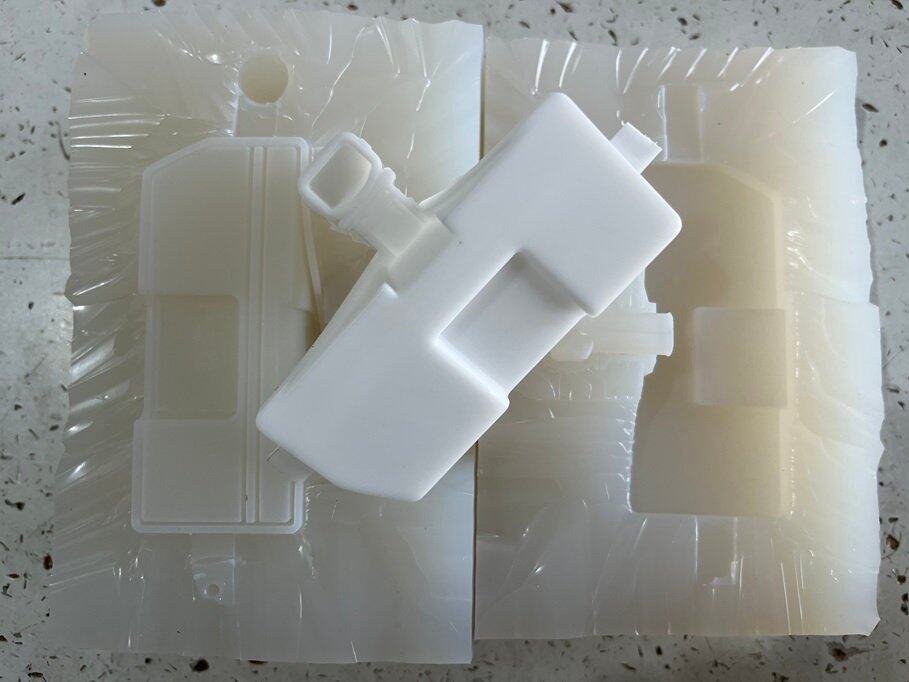
Vacuum Casting Process
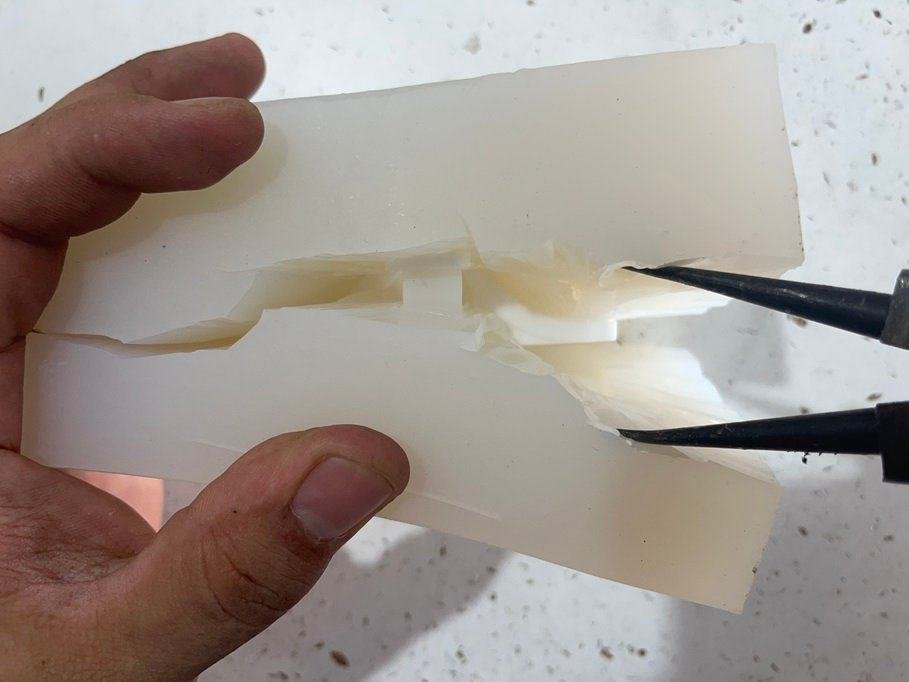
1. Review CAD Data and Acceptance Requirements
Provide the 3D model, controlled 2D drawing, target quantity, material objective, color, finish, tolerance priorities and required documentation. The review resolves conflicts before the master pattern is manufactured.
2. Manufacture and Finish the Master Pattern
The master may be printed, machined or produced through a combined route. Support marks, machining marks and surface defects that remain on the master can be reproduced in every cast part, so the master is finished to the intended transfer condition before tooling.
3. Plan Parting, Gates, Vents and Inserts
The silicone tool must allow the master and cast parts to be removed without unacceptable damage. Parting lines, pour points, vents, removable inserts and support structures are planned around geometry and visible surfaces. These features should be kept away from critical cosmetic areas where practical.
4. Create and Cure the Silicone Mold
The master is positioned in a mold box and silicone is introduced around it using a controlled procedure. After cure, the mold is opened, the master is removed and the cavity is inspected. Cure conditions depend on the silicone system and tool geometry; one fixed temperature and time should not be presented as universal.
5. Prepare and Cast the Polyurethane Resin
The mold and resin are prepared according to the selected material system. Components are measured and mixed within their processing window, and vacuum is used where appropriate to reduce entrapped air. Pigment, inserts and other approved additions are controlled by batch.
6. Cure and Demold the Part
The casting remains in the mold until it has sufficient strength for removal. Cure and post-cure requirements depend on the material, wall section and intended property. Premature demolding can distort thin or flexible features; excessive delay may also make processing inefficient.
7. Trim, Finish and Assemble
Gates, vents and flash are removed. Parts may then receive sanding, polishing, painting, clear coating, texture work, printing, threaded inserts or assembly when included in the approved route. Secondary operations are controlled so that they do not obscure critical interfaces or acceptance evidence.
8. Inspect, Pack and Release
The agreed dimensional, visual, assembly and documentation checks are completed before release. Packaging separates cosmetic parts, protects thin features and prevents transparent surfaces from scratching during shipment.
Quote-to-Parts Workflow
Upload Your Files
Send STEP, IGES or another suitable 3D file together with the controlled drawing. Include quantity, application, material objective, color, finish, critical dimensions and intended test.
Engineering and Process Review
SAMSHION reviews the master route, silicone tool, parting, gates, vents, resin, inserts, finishing, inspection and schedule. Questions and DFM recommendations are resolved before release.
Approve the Quotation and Requirements
The quotation records scope, assumptions, quantity, material, finishing, inspection, documentation and estimated lead time. Production begins after commercial and technical approval.
Review the Master or First Casting
Depending on project risk, the master, finish sample or first casting can be reviewed before the complete batch. The approval condition should be agreed before work starts.
Cast, Finish and Inspect the Batch
Approved resin and process controls are used for the required variants. Parts are trimmed, finished and inspected according to the agreed route.
Pack and Deliver
Accepted parts and requested records are packed for surface and geometry protection. Repeat orders are checked against the current revision and mold condition.
Vacuum Casting Materials
Polyurethane casting systems are formulated for different combinations of stiffness, toughness, flexibility, temperature resistance, transparency, color and processing behavior. They are not one universal material family with interchangeable properties.
Rigid Polyurethane Systems
Rigid systems can be considered for housings, covers, bezels, fixtures and functional models. Product selection may target stiffness, impact behavior, heat deflection, color or surface appearance. Long-term creep, UV exposure and chemical resistance should be reviewed when parts are intended for extended service.
Impact-Modified and Tough Systems
Tougher casting systems may be selected for clips, covers, handheld devices and parts exposed to handling or assembly loads. Notched impact results from a data sheet do not replace a part-level test when geometry and stress concentration dominate performance.
Flexible and Elastomer-Like Systems
Flexible polyurethane can represent grips, seals, boots, overmold concepts and compliant components. Specify a hardness target and the measurement condition where it matters. The official ISO 868 Shore hardness method explains that Type A durometers are used for softer materials and Type D for harder plastics; hardness alone does not define tear, compression set or environmental durability.
Clear and Translucent Systems
Clear resin can support visual-flow models, light-transmitting covers and transparent prototypes. Thickness, geometry, color tint, UV exposure and finishing affect appearance. A separate reference sample and transmission or haze requirement may be needed when transparency is functional.
Colored and Pigmented Systems
Pigments can approximate a specified color reference, but resin, thickness, surface texture and lighting affect the perceived result. Color matching should define the reference system, acceptable difference, gloss and viewing condition rather than rely on a screen image.
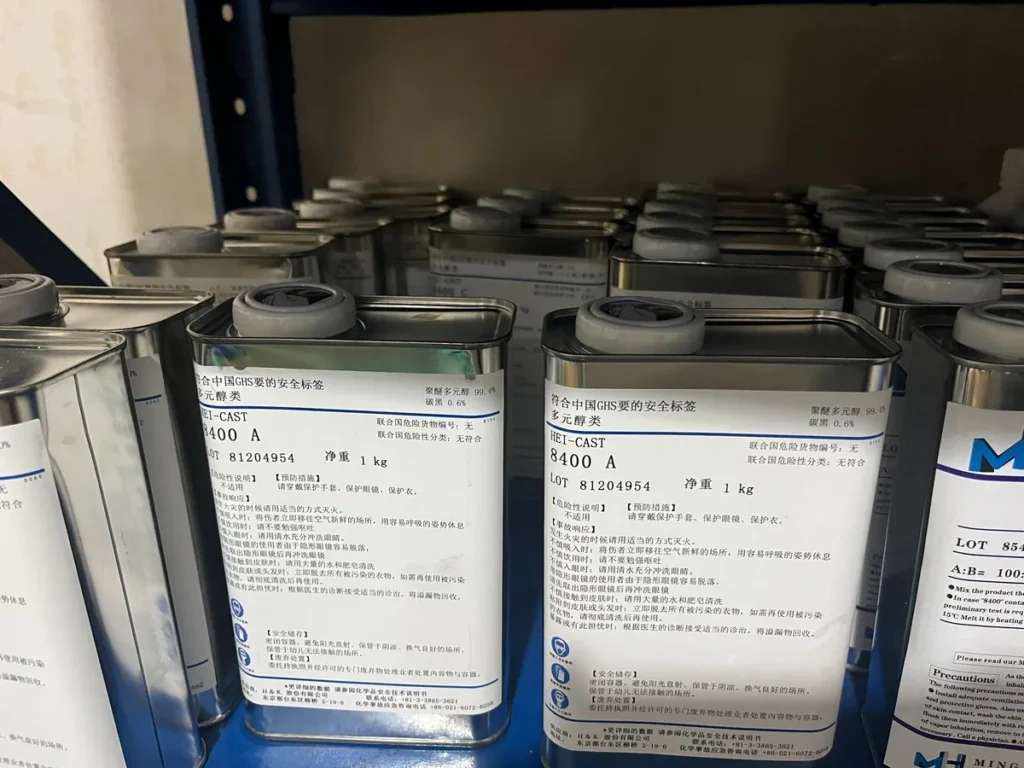
For a broader comparison of metals, thermoplastics and manufacturing routes, use SAMSHION’s manufacturing materials guide. When tensile strength, modulus or elongation are used for engineering decisions, test conditions matter; ISO 527-1 sets out general principles for determining tensile properties of plastics under defined conditions.

Surface Finishes and Secondary Operations
The silicone tool reproduces the master surface, including intentional texture and unintended defects. That transfer capability can reduce finishing, but it does not remove the need to plan gate trimming, parting-line cleanup and cosmetic acceptance.
Common project-specific options include:
- Molded-in matte, satin or gloss surface based on the master
- Color pigment added to the casting resin
- Sanding and polishing for selected cosmetic or clear areas
- Painting, clear coating or soft-touch coating where compatible
- Pad printing, screen printing, labels or laser marking on suitable surfaces
- Bonded or cast-in threaded inserts and hardware
- Light assembly and functional fit checks
Review additional options through surface finishing services. Coating adhesion, color, gloss, thickness and masking should be confirmed on the actual polyurethane system when they are critical.
Design Guidelines for Vacuum-Cast Parts
Use Consistent, Supported Wall Sections
Abrupt changes from thin to thick material can change resin flow, cure and shrink behavior. Use gradual transitions where function allows and support long flexible walls with ribs or geometry that can be demolded safely.
Define Undercuts Instead of Assuming They Are Free
Flexible silicone can release selected undercuts, but deep hooks, sharp returns and enclosed features can tear the mold or damage the casting. Every undercut should be reviewed for mold strain, tool life and demolding direction.
Keep Critical Features Away from Parting and Gate Areas
Parting lines, gates and vents require trimming and may leave a visible witness. Identify cosmetic zones and functional interfaces so the tool layout can prioritize them. If a critical surface cannot be avoided, define the acceptable cleanup method.
Add Realistic Draft Where It Helps
Vacuum casting can often release geometry with less draft than injection molding, but zero draft is not always beneficial. Draft can reduce mold stress, surface drag and demolding damage, especially on deep walls and textured surfaces.
Avoid Unnecessarily Sharp Internal Corners
Small radii improve master finishing, silicone flow, resin filling and stress distribution. A mathematically sharp CAD corner may be changed by the master process or become vulnerable during repeated demolding.
Plan Inserts and Assembly Loads Early
Threaded inserts, magnets, bushings and other hardware can be cast in or installed later. Define location, retention, electrical isolation, appearance and pull-out requirement. Insert heat and mass may also affect cure around the feature.
Separate Critical Tolerances from General Geometry
Do not apply an injection-molded or machined tolerance block blindly to every surface. Identify dimensions that protect assembly, sealing, alignment or function, then agree the master allowance, mold strategy, resin and measurement method around those characteristics.
Control Clear-Part Expectations
For transparent components, identify optical and cosmetic zones, allowable bubbles, tint, flow marks, polish direction and scratch limits. A clear appearance model and a functional optical component are different requirements.
Tolerances, Shrinkage and Repeatability
Vacuum-cast dimensions are influenced by the master pattern, silicone cure, resin shrinkage, mold support, wall thickness, casting sequence, demolding and measurement timing. A single website tolerance cannot represent every combination.
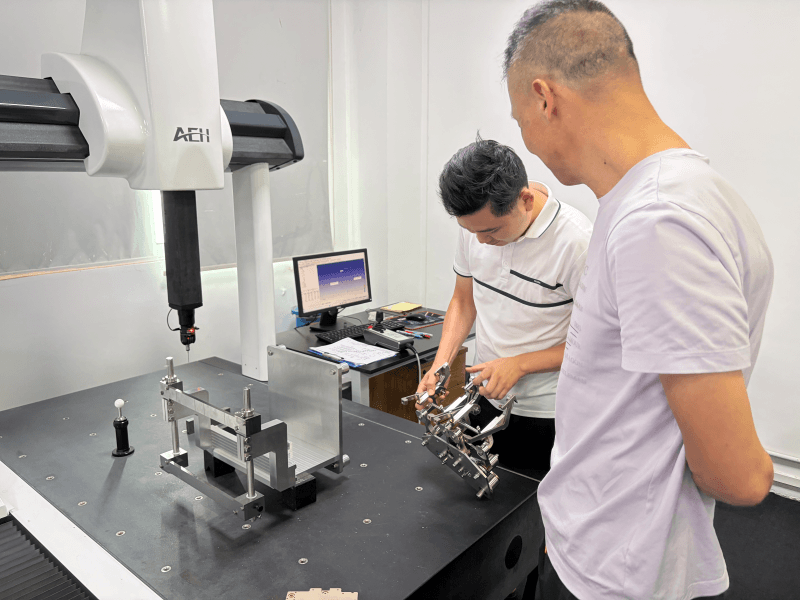
SAMSHION reviews the drawing and identifies critical dimensions before quotation. Where compensation is appropriate, it is applied to the master or process plan based on geometry and material data. First-part results provide evidence for the actual mold and resin combination. Features that need machining-level control may be cast with allowance and finished through a secondary operation, or moved to another manufacturing process.
Repeatability should also consider mold aging. Parting surfaces, thin silicone sections, texture and undercuts can change as the tool is used. Sampling and mold replacement decisions are therefore based on the approved requirements and observed condition, not only on a nominal shot count.
Quality Control for Vacuum-Cast Parts
SAMSHION’s quality assurance process begins with requirement review and continues through master approval, mold inspection, first casting, in-process checks and final release. The inspection scope is matched to part risk, quantity and intended use.
Before Tooling
- Confirm CAD model, drawing, revision and quantity.
- Define resin target, color, hardness and appearance zones.
- Identify critical dimensions, mating parts and test conditions.
- Approve the master manufacturing and finishing route.
- Confirm required reports, traceability and reference samples.
During Mold and Casting Preparation
- Inspect the completed master for geometry and surface condition.
- Verify mold parting, gates, vents and insert locations.
- Confirm resin identity, batch information and processing window.
- Record approved pigment or color reference where required.
- Check the first casting before the remaining quantity proceeds.
During Production
- Monitor mold damage, parting condition and flash.
- Check critical dimensions according to the agreed sampling plan.
- Review bubbles, short fill, distortion, color and surface condition.
- Control post-cure, trimming and finishing operations.
- Segregate and document nonconforming parts.
Before Shipment
- Complete final dimensional, visual and assembly checks.
- Confirm quantity, variant, marking and documentation.
- Protect cosmetic and transparent surfaces separately.
- Package flexible or thin features against deformation.
- Release only the accepted revision and configuration.
Vacuum Casting Compared with Other Processes
Choose vacuum casting when replicated appearance, polyurethane properties and limited quantity make a silicone tool useful. Choose 3D printing when rapid geometry change or additive complexity is more important. Choose CNC machining when specified stock material, precision interfaces or machining evidence is required. Choose injection molding when production resin, sustained repeat output and tooling economics support the investment.
Cost Drivers in Vacuum Casting
Master Pattern Complexity and Finish
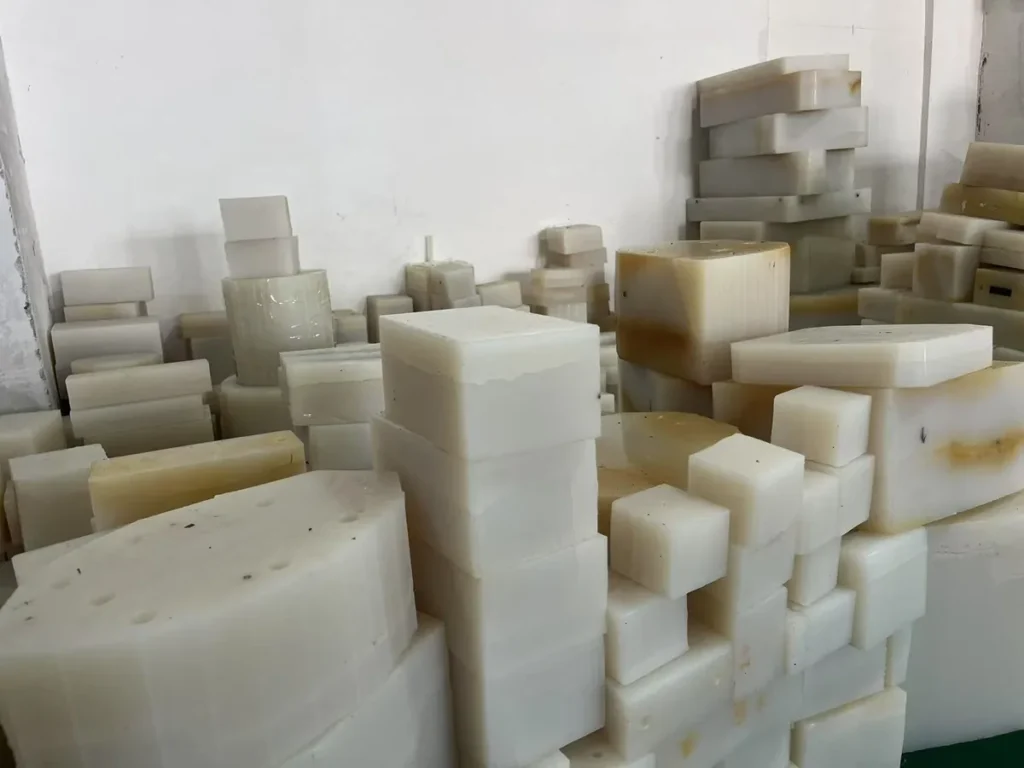
The master cost reflects geometry, build or machining route, supports, dimensional requirements and manual finishing. A polished clear master or controlled texture requires more work than a basic fit model.
Silicone Mold Size and Layout
Part volume, split complexity, mold box, silicone quantity, inserts and demolding risk affect tool cost. Multiple cavities may improve output but can also increase mold size, fill balance and handling complexity.
Resin and Appearance Requirements
Specialty rigid, flexible, transparent, heat-resistant or colored systems have different material and processing costs. Color matching, polishing and painted finishes add controlled operations and approval steps.
Quantity and Expected Mold Consumption
Unit cost is influenced by how setup and tooling are distributed over the order. If geometry or resin limits the useful life of one silicone mold, additional molds may be required. Quotations should make that assumption visible.
Inserts, Assembly and Secondary Work
Cast-in hardware, threaded inserts, masking, printing, coating, bonding and functional assembly add labor and inspection. Provide hardware specifications and assembly criteria before quotation.
Inspection and Documentation
Critical-dimension reports, color measurement, hardness checks, functional testing, material documents and special packaging should be included in the request. The required evidence is part of the manufacturing route, not a free universal add-on.
Vacuum Casting FAQs
Is vacuum casting the same as urethane casting?
The terms are often used for the same family of processes in which polyurethane resin is cast into a silicone mold, commonly with vacuum used to manage entrapped air. The exact equipment and material handling procedure can vary by resin and supplier.
How many parts can one silicone mold produce?
There is no reliable universal number. Practical output depends on geometry, undercuts, silicone, resin chemistry, cure, surface requirement and demolding stress. SAMSHION estimates mold consumption for the specific project and monitors condition during production.
Can vacuum-cast polyurethane match ABS, PP or rubber exactly?
It can be selected to approximate certain properties or appearance, but it is not automatically chemically or mechanically identical to an injection-molded production polymer. Define the properties that matter and review the specific resin data and part-level test.
Can you produce transparent vacuum-cast parts?
Yes, selected clear polyurethane systems can be cast and finished for transparent prototypes. Required clarity, tint, bubbles, polish, wall thickness and optical function must be defined because “clear” covers a wide range of acceptance levels.
What tolerances can vacuum casting achieve?
Achievable tolerance depends on the master, part size, geometry, silicone tool, resin, cure and measurement condition. Critical dimensions are reviewed individually. Secondary machining or another process may be recommended where tighter control is essential.
Can threaded inserts or hardware be added?
Yes, inserts, magnets, bushings and other hardware may be cast in or installed after casting when the geometry and material support the operation. Location, retention and assembly requirements should be included in the drawing.
When should I switch from vacuum casting to injection molding?
Consider the expected total demand, required production resin, per-part economics, tool life, dimensional control, regulatory needs and cost of design change. Vacuum casting can be effective for limited quantities, while injection molding becomes more attractive when sustained demand justifies hard tooling. When the design is ready for molded production but schedule and tool investment remain important, compare the program with SAMSHION’s rapid tooling services.
What files are needed for a quotation?
Provide a 3D CAD model and a controlled 2D drawing whenever possible. Include quantity, application, material objective, color, finish, critical tolerances, insert details, acceptance criteria, documentation and delivery requirements.