
Customized Laser Cutting Solutions
Samshion deliver high-precision laser cutting solutions for aluminum, steel, and industrial polymers, seamlessy bridging the gap from rapid prototyping to mass production.
- 24-hour DFM feedback
- Rapid Prototyping & Functional Testing
- Smooth Surface, Burr-Free Edges
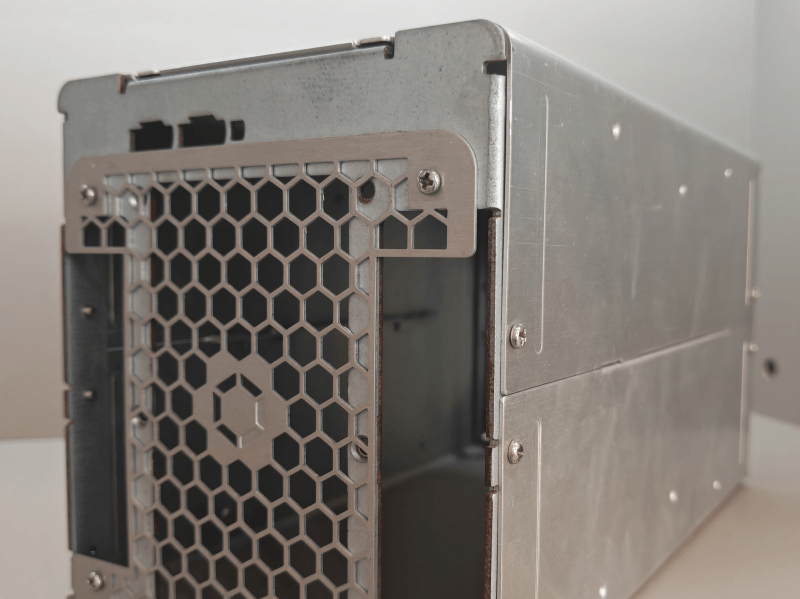
Why Choose Samshion Rapid for Laser Cutting Services?
Samshion don’t just cut metal; we deliver perfection. Our high-power fiber laser systems are calibrated for burr-free results and exceptionally smooth surfaces. By eliminating the need for secondary manual deburring, ensuring your parts are safe to handle and ready for immediate assembly or surface treatment.
We are willing to transform your designs into high-performance parts. Our engineering team is standing by to provide a comprehensive DFM (Design for Manufacturing) evaluation to optimize your production efficiency. And we provide complimentary DFM (Design for Manufacturing) evaluations for every project.
Please submit your files (STEP, DXF, or IGES) now. Whether it’s a single prototype or a low-volume production run, we provide rapid assessments and technical feedback within hours. Let Samshion Rapid handle the complexity so you can focus on innovation.
Same-Day Quotes
Upload DXF files and engineers typically complete nesting, costing, and quoting within 4–8 hours — fastest in the region.
Zero Tooling Cost
Laser cutting requires no stamping dies. Go directly from DXF to cut parts. Drawing changes cost nothing, ideal for prototypes and iteration.
±0.1mm Accuracy
Trumpf high-precision laser, ±0.1mm profile, ±0.05mm hole position — suitable for precision mating parts and tight-clearance assemblies.
50% Below US/EU
China manufacturing cost advantage. Same quality laser cut parts, typically 40–60% below US/EU suppliers, including DHL door-to-door delivery.
What Is Fiber Laser Cutting?
Fiber laser cutting focuses a high-energy-density laser beam onto the metal sheet surface, instantaneously melting or vaporizing the material. Assist gas (N₂ or O₂) blows away the molten material, creating a precision cut kerf.
Compared to CO₂ lasers, fiber lasers have a shorter wavelength (1,064nm) and better beam quality. They have much higher absorption on copper and brass — materials CO₂ laser cannot cut — and cut aluminum 3–5× faster.
N₂ vs O₂ Assist Gas Selection
Nitrogen N₂ — Inert Shield
Cut edge has no oxidation (bright silver), ideal for stainless, aluminum, copper, thin carbon steel. Cut surface ready for immediate welding or coating with no cleanup. Downside: higher gas cost, slightly lower speed.
Oxygen O₂ — Exothermic Assist
Oxygen reacts exothermically with carbon steel, increasing cutting speed for thick stock. Cut edge has slight oxidation (yellow-brown) requiring cleanup before welding or coating. Best for carbon steel over 10mm thick.
Cut Quality Grades
Standard Cut
Standard for most daily fabrication work. Suitable for structural parts — no additional processing needed before bending.
- Ra 12.5 μm, squareness 0.2mm/10mm
Precision Cut
For mating parts and precision hole patterns. Requires optimized nesting and lower cutting speed. ~10% price premium.
- Ra 6.3 μm, squareness 0.1mm/10mm
Ultra-Precision Cut
Precision instrument components and medical devices. Requires special fine-cut N₂ parameters — confirm at enquiry.
- Ra 3.2 μm, squareness 0.05mm/10mm
Zero tooling cost advantage
Compared to punch/shear operations, laser cutting needs no stamping dies. DXF → part in hours. Drawing changes are free — perfect for prototypes and rapid design iteration.
Types of Laser Cutting Processes at Samshion
Our advanced facility houses an extensive fleet of high-power fiber laser systems and precision cutting machinery designed to handle diverse industrial applications.
By integrating specialized laser processing techniques, Samshion Rapid ensures optimal edge quality and tight tolerances tailored to specific material properties and thicknesses—delivering perfection from the first prototype to full-scale production.
Inert Gas Laser Cutting
Utilizing high-purity Nitrogen as an inert shielding gas, this process effectively expels molten material from the kerf without reacting with the metal. It is the industrial gold standard for achieving oxide-free edges and superior aesthetics. By eliminating the need for secondary deburring or cleaning, our inert gas cutting service ensures your parts are ready for immediate welding or coating.
Laser Flame Cutting
This leverages an exothermic reaction to significantly boost thermal energy during processing. This high-efficiency method is specifically optimized for thick carbon steel and mild steel plates, delivering rapid cutting speeds and robust structural integrity. While producing characteristic sparks and slag, our specialized service ensures consistent performance and cost-effectiveness for heavy-duty industrial components
Laser Sublimation Cutting
Our laser sublimation cutting employs a high-intensity vaporization process to transition materials directly from solid to gas. This ‘no-melt’ technique is uniquely suited for high-performance polymers like PTFE, PEEK, and intricate textiles, ensuring ultra-precise edges with zero liquid dross. By minimizing the heat-affected zone (HAZ), our sublimation cutting service preserves the chemical integrity and dimensional accuracy of delicate components for specialized industrial applications.
Fiber Laser Fine Cutting
Our fiber laser cutting is engineered for thin sheet metal and intricate geometries, maintaining rigorous tight tolerances of ±0.05 mm. It utilizes short-wavelength technology to deliver exceptional beam quality and narrow kerf widths. This ultra-precision process Perfectly suited for the electronics and medical device industries, our fiber laser service ensures maximum accuracy for complex prototypes and micro-components with a superior edge finish.
Common Laser-Cut Part Categories
Precision Flat Parts
Instrument panels, structural shims, connection plates — high-precision hole patterns and contours
Sheet Metal Blanks
Pre-cut flat blanks for bending — precise contours ensure consistent dimensions after forming
Decorative & Art Cutting
Perforated patterns, logo cutouts, decorative grilles — any complex curves and fine artistic details
Tube & Pipe Cutting
Round, square, and rectangular tube 3D laser cutting — miter cuts and side holes
Gaskets & Shims
Stainless or aluminum gaskets with complex contours, high batch-to-batch consistency
Busbars & Electronics
Copper/brass precision small parts, 0.5mm thin sheet, high-accuracy fiber laser advantage
Medical Device Parts
304/316L stainless, N₂ oxide-free cut for immediate welding, fully traceable material
Aerospace Structures
Aluminum · titanium · stainless sheet parts, tight tolerances, full material traceability
Materials of Laser Cutting Services at Samshion
Samshion Rapid provides a comprehensive range of laser cutting solutions tailored for diverse industrial needs. Our engineers utilize high-power fiber laser technology to ensure maximum precision across various material categories.
Metal Laser Cutting (Sheet Metal)
Our core expertise lies in high-speed, high-precision metal fabrication.
- Aluminum Laser Cutting: Ideal for lightweight, corrosion-resistant components with clean, burr-free edges. Usually, the thickness of sheet metal is below 8mm.
- Stainless Steel Laser Cutting: Delivers sharp, professional finishes for medical, food-grade, and industrial hardware. Usually, the thickness is chosen to be below 5mm.
- Carbon & Alloy Steel Cutting: Robust solutions for heavy-duty structural parts and machinery components.
- Copper & Brass Cutting: Specialized processing for reflective metals used in electrical and decorative applications.
Plastic & Polymer Laser Cutting
We also offer clean, non-contact cutting for a wide variety of non-metal industrial materials.
- Acrylic Laser Cutting: Achieves flame-polished, crystal-clear edges for displays and optical components.
- ABS & Polycarbonate Cutting: High-speed shaping for durable enclosures and engineering parts.
- High-Performance Polymers (PTFE/Teflon & PEEK): Specialized cutting for high-temperature and chemically resistant materials like PTFE (Teflon) and PEEK, ideal for gaskets, seals, and medical components.
- Custom Gasket & Foam Cutting: Precise fabrication of industrial seals, gaskets, and protective packaging inserts.
Carbon Steel
- Q235B (0.5–20mm)
- Q345B High-Strength (0.5–16mm)
- SPCC Cold-Rolled (0.5–6mm)
- SGCC Galvanized (0.5–6mm)
O₂ assist for thick carbon steel, N₂ for thin sheet oxide-free finish
Stainless Steel
- 304 (0.5–15mm)
- 316L Medical Grade (0.5–12mm)
- 430 Ferritic (0.5–10mm)
- 2205 Duplex (0.5–8mm)
N₂ assist cutting — bright silver edges, weldable immediately
Aluminum
- 5052-H32 (0.5–12mm)
- 6061-T6 (1.0–10mm)
- 6063-T5 (0.5–8mm)
- 5083 Marine Grade (0.5–10mm)
N₂ cutting to prevent oxidation, fast cut speed advantage
Copper Alloys
- C110 Pure Copper (0.5–6mm)
- C260 Cartridge Brass (0.5–6mm)
- C360 Free-Cutting Brass (0.5–5mm)
- Beryllium Copper C172 (0.5–3mm)
Fiber laser exclusive advantage — CO₂ laser cannot cut copper
Titanium
- TC4 / Ti-6Al-4V (0.5–4mm)
- TA2 Grade 2 (0.5–5mm)
- TA7 (0.5–3mm)
N₂ + Ar mixed inert gas shield to prevent oxidation
Specialty Materials
- Spring Steel 65Mn (0.5–6mm)
- Tool Steel D2/Cr12 (0.5–8mm)
- Heat-Resistant 310S (0.5–8mm)
- Magnetic SS 420 (0.5–8mm)
Special materials — note at enquiry, parameters require trial cuts
Post-Processing & Surface Finishing
Deburring & Cleaning
Post-cut deburring mandatory for safety and fit accuracy. Machine deburring + manual finishing.
Powder Coating
After forming, any RAL color, 60–80μm, adhesion grade 0, inspect for corner coverage on bends
Zinc Plating
Carbon steel outdoor use — electro zinc 5–15μm or hot-dip 85μm, salt spray 500–1,000h
Anodizing
Aluminum cut parts, Type II (corrosion) or Type III (hard), color options available
Passivation
Stainless cut parts, ASTM A967, removes free iron, improves corrosion resistance
Brushed Finish
Stainless/aluminum, unidirectional grain, Ra 0.8–1.6μm, premium appearance
CNC Bending
Laser-cut blanks continue directly to CNC press brake, ±0.2° angle, same facility
Welding & Assembly
Laser-cut blanks → TIG/MIG welding → PEM hardware → complete turnkey delivery
Why Choose Laser Cutting?
No Tooling — DXF to Parts
Upload DXF, cut same day. Drawing changes are free. No die design, no die lead time.
One Machine, All Metals
Carbon steel · stainless · aluminum · copper · brass · titanium — one fiber laser handles all
Better Than Plasma or Waterjet
±0.1mm far exceeds plasma (±0.5mm) and waterjet (±0.2mm). Smoother cut edges, smaller kerf.
Any Complex Contour
Any curve, sharp internal corner, nested intricate features — laser has no cutting force, cuts acute angles cleanly
Quality Control

First Article Inspection
Every batch first piece full contour/hole measurement using optical comparator or CMM before batch production
In-Process Sampling
5–10% sampling per batch using gauges and calipers to verify critical hole diameters and edge lengths
ISO 9001 Traceability
Every batch includes material certificate, cutting parameters logged and retained 5 years, retrievable on request
Cut Quality Visual Inspection
Every batch includes material certificate, cutting parameters logged and retained 5 years, retrievable on request
Laser Cutting Design Guidelines
Minimum Hole Diameter ≥ Material Thickness
Minimum round hole diameter should be ≥ sheet thickness. For 2mm steel, min hole Ø≥2mm. Smaller holes degrade cut quality and risk breakthrough failures.
Hole Spacing & Edge Distance ≥ 2× Thickness
Hole-to-hole and hole-to-edge distances should be ≥2× material thickness to prevent local overheating and distortion during cutting.
Thin Webs Width ≥ 2× Material Thickness
Very narrow ribs (width <2× thickness) will warp from thermal distortion during cutting. Widen or redesign as a bent reinforcement feature.
Replace Sharp Corners with R0.2–0.5mm Radii
Perfect 90° internal corners cause slight over-burn at the apex. Specifying R≥0.2mm internal radii improves cut quality and saves laser lift-travel time.
File Format & Submission Requirements
- Preferred Format: DXF (AutoCAD) · STEP (with thickness)
- Also Accepted: DWG · AI · PDF · SolidWorks files
- Layer Convention: Outer contour/inner holes/bend lines on separate layers
- Units: Millimeters (mm), 3 decimal places
- Line Width: Cut lines = 0 (hairline), no area fills
- Repeated Geometry: Use blocks/groups, do not explode to individual lines
- Nesting Gap: Part-to-part spacing ≥2× thickness for efficient nesting
Faster quoting tip
Include material + thickness in the DXF filename (e.g., bracket_steel2mm.dxf) — reduces communication time by 50%.
Our Tolerances in Laser Processing
At Samshion Rapid, we achieve industry-leading laser cutting tolerances typically ranging from ± 0.02 mm to ± 0.15 mm, depending on material type and thickness. We use advanced high-precision fiber lasers and multiple composite processes to ensure consistent size accuracy and repeatability for each batch. And it has strict post-processing processes such as deburring and professional quality inspection to ensure that the prototype of laser cutting has perfect quality.
Optimized Laser Cutting Processes Comparison Table
Cutting Process | Typical Materials | Thickness Range | Standard Tolerance | Superior Tolerance (Fine/Precision) |
Inert Gas Laser Cutting | Stainless Steel, Aluminum, Titanium, High-alloy steels | 0.5 mm – 20 mm (up to 25 mm in some cases) | ±0.10 mm | ±0.05 mm |
Oxygen Flame Cutting | Carbon Steel, Mild Steel | 6 mm – 25 mm+ (up to 40–50 mm with high power) | ±0.20 mm | ±0.15 mm |
Laser Sublimation Cutting | PTFE (Teflon), PEEK, Plastics, Polymers, Wood, Textiles | 0.1 mm – 5 mm (best for thin/delicate) | ±0.08 mm | ±0.05 mm (or tighter on thin materials) |
Fiber Laser Fine Cutting | Thin foils, Electronics-grade metals, Stainless/Aluminum foils, Precision prototypes | 0.05 mm – 2 mm (excels on ultra-thin) | ±0.03 mm | ±0.02 mm (or ±0.01 mm in optimal conditions) |
Estimated Tolerances by Material Thickness – Table
Material Thickness (mm) | Metric Tolerance (mm) | Imperial Tolerance (inch) | Recommended Process |
Thin Gauge (0.05 – 1.5mm) | ±0.03 to ±0.05 mm | ±0.0012″ to ±0.0020″ | Fiber Laser Fine Cutting |
Standard (1.5 – 6.0mm) | ±0.08 to ±0.13 mm | ±0.0030″ to ±0.0050″ | Inert Gas (Nitrogen) |
Medium (6.0 – 12.0mm) | ±0.15 to ±0.20 mm | ±0.0060″ to ±0.0080″ | Nitrogen / Oxygen |
Thick Plate (12.0 – 25mm+) | ±0.25 to ±0.50 mm | ±0.0100″ to ±0.0200″ | Oxygen Flame Cutting |
FAQ
What is the standard precision tolerance for laser cutting?
Samshion Rapid typically achieves industry-leading tolerances between ±0.10 mm and ±0.15 mm. For high-precision requirements, Samshion Rapid utilizes advanced Fiber Laser Fine Cutting to reach an exceptional accuracy of ±0.05 mm on thin-gauge materials. We encourage you to leverage Samshion Rapid’s complimentary DFM review to confirm the tightest possible tolerance for your specific design.
What is the minimum hole size relative to material thickness?
We generally recommend a 1:2 ratio for hole diameter to material thickness to maintain optimal edge quality. However, with high-precision fiber technology, smaller apertures are often achievable. We suggest a quick technical review of your files to confirm the best approach for intricate features.
How to reduce total project costs?
Samshion Rapid focuses on cost-efficiency from the start by providing free DFM (Design for Manufacturing) suggestions with every quote. Samshion Rapid’s engineering team analyzes your part nesting and geometry to minimize material waste and production time, passing those direct savings on to you while maintaining superior quality.
What is the lead time for a typical order?
Speed is a core pillar of us. For standard laser cutting orders with ready-to-use CAD files, we can often deliver functional prototypes within 24 to 48 hours. Samshion Rapid is dedicated to supporting your tightest R&D schedules and production deadlines with reliable, rapid turnaround.
Which file formats does Samshion Rapid prefer for quoting?
To ensure the most accurate and rapid assessment, we prefers 2D files in DXF or DWG for cutting paths, and 3D files in STEP, IGES, or SLDPRT for our comprehensive DFM evaluation. Submitting these formats allows us to provide you with a precise quote and technical feedback in record time. Of course, if you only have a rough idea, you can also provide it in writing, and we can help with the design and drawing.