
Robotics Parts Manufacturing and Prototyping
Develop build-to-print mechanical and plastic components for industrial robots, collaborative robots, mobile platforms, laboratory automation and custom motion systems. SAMSHION supports engineering prototypes, functional assemblies, pilot builds and repeat production through CNC machining, sheet metal fabrication, injection molding, 3D printing and vacuum casting.
- Components for joints, actuators, end effectors, vision systems, frames and protective enclosures
- DFM review focused on interfaces, motion, stiffness, cable routing, assembly and serviceability
- Materials, finishes, critical dimensions and requested inspection records confirmed by project
- ISO 9001:2015-certified quality management system
Build-to-Print Manufacturing for Robotics Development
Robotics parts must work as an interconnected system. A housing locates bearings and motors; a shaft transfers torque; a bracket controls sensor alignment; a cover protects electronics without blocking airflow or service access. Small dimensional or interface errors can accumulate across an assembly and affect backlash, alignment, cable clearance, sealing or maintenance. Effective robotics manufacturing therefore begins with controlled CAD data, functional datums and an agreed acceptance plan.
SAMSHION manufactures customer-designed components rather than selecting the robot architecture or validating system safety. Engineering teams provide the 3D model, controlled drawing, material, finish, quantity and applicable requirements. We review the proposed manufacturing route, identify open questions and provide DFM feedback before production. This direct-answer approach helps buyers distinguish manufacturing support from robot design, controls integration or certification services.
For early design verification, our rapid prototyping services support packaging checks, joint mockups, sensor positioning, gripper trials and assembly fixtures. When the design is released, low-volume manufacturing can support pilot machines, engineering units, replacement components and repeat orders with a controlled revision and inspection scope.

Why Robotics Teams Work with SAMSHION
Multiple Processes Through One Manufacturing Contact
Robotic assemblies often combine machined metal, bent sheet, molded plastic and printed development parts. Coordinating these routes through one project contact can simplify technical communication, revision control and delivery planning. Each component is still assigned the process that best fits its geometry, quantity, material and functional requirements.
DFM Before Material Is Cut or Tooling Is Released
DFM review can expose inaccessible pockets, fragile walls, unsuitable thread depth, difficult bend locations, excessive setup changes, poorly defined datums or molding features that require draft and more uniform walls. Recommendations are tied to manufacturability and cost; the customer retains design authority and approves every change.
Requirements-Based Inspection
Inspection is planned around the released drawing and agreed scope. A bearing seat, gearbox pilot, sensor datum or mating surface may need a different method from a general profile or cosmetic surface. The quality assurance process provides context for drawing review, in-process checks, final dimensional inspection and requested records.
Support from Prototype to Repeat Orders
Prototype and repeat-production parts may use different processes, fixtures or tooling. SAMSHION helps teams compare those routes and preserve approved design revisions, materials, finishes and inspection requirements as quantities change.
Robotics Manufacturing Capabilities
CNC Machining for Joints, Housings and Motion Components
CNC machining services support actuator housings, gearbox carriers, bearing blocks, motor mounts, base plates, end-effector bodies, sensor mounts, shafts, pulleys, spacers and alignment fixtures. CNC milling is suitable for multi-sided housings, pocketed structures, mounting patterns and precise interface faces. CNC turning supports concentric shafts, sleeves, bushings, hubs and adapters.
Robotics DFM should consider workholding, setup sequence, datum transfer, bearing-seat access, thin-wall movement, internal corner radii, tool reach, thread relief and deburring. Tolerance capability is evaluated by feature and depends on material, size, geometry, part condition and measurement method. It should not be presented as one universal value for every part.
For a detailed production example, see our CNC machining robotic arm joints guide, covering 6061-T6 aluminum, H7 bearing bores, functional datums, 5-axis process planning and CMM inspection.
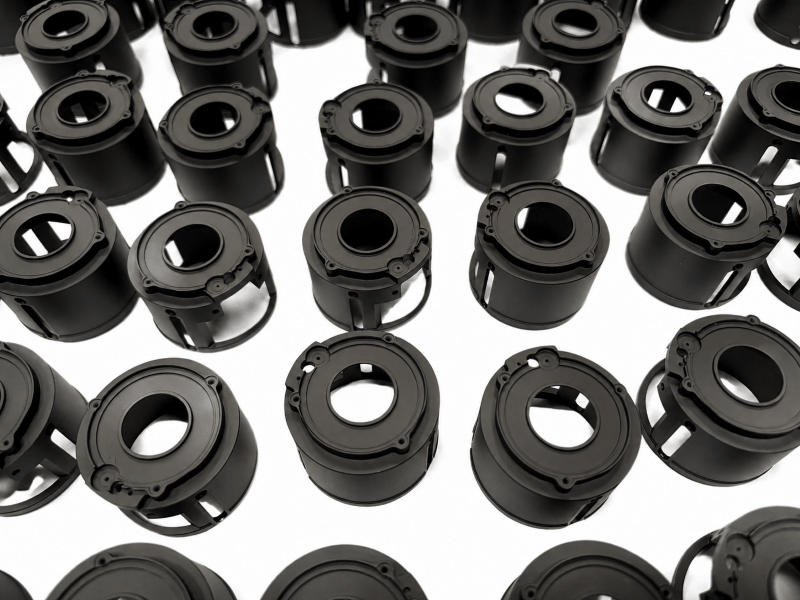
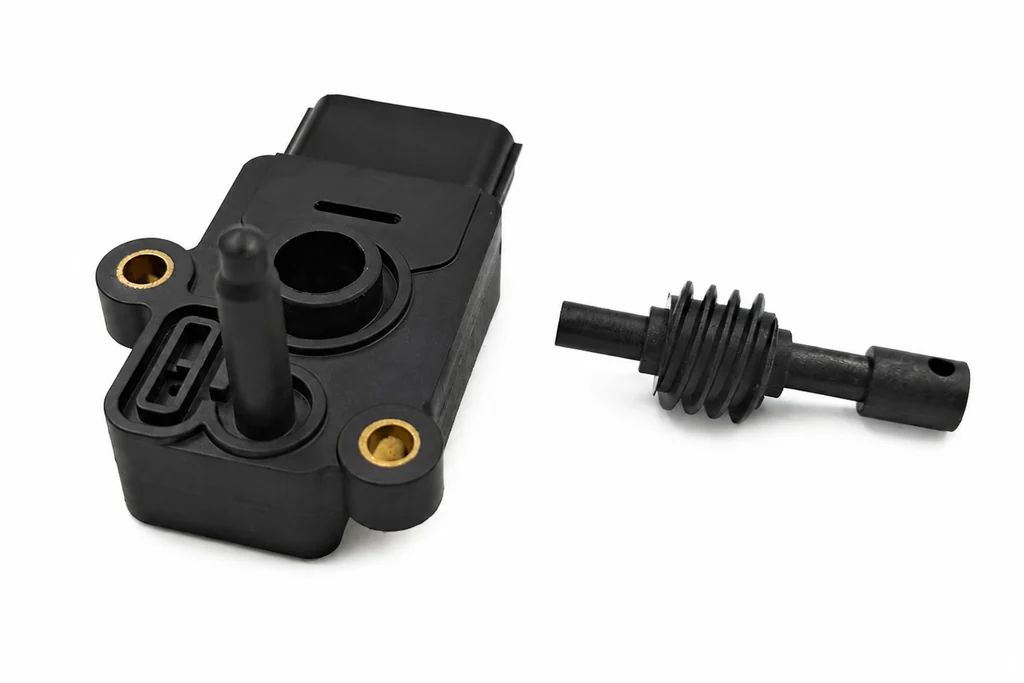
Injection Molding for Covers, Guides and Repeat-Production Parts
Plastic injection molding can support sensor covers, cable guides, protective caps, knobs, housings, clips and user-interface components when production quantity and design maturity justify tooling. Parts should include practical draft, consistent wall thickness, supported bosses and ribs, realistic texture expectations, and agreed gate and ejector locations.
Resin selection should reflect temperature, impact, wear, chemical exposure, flame requirements, dimensional stability and appearance. Color, gloss and texture standards should be agreed before tooling release rather than evaluated only from a generic material name.
Sheet Metal Fabrication for Frames, Guards and Enclosures
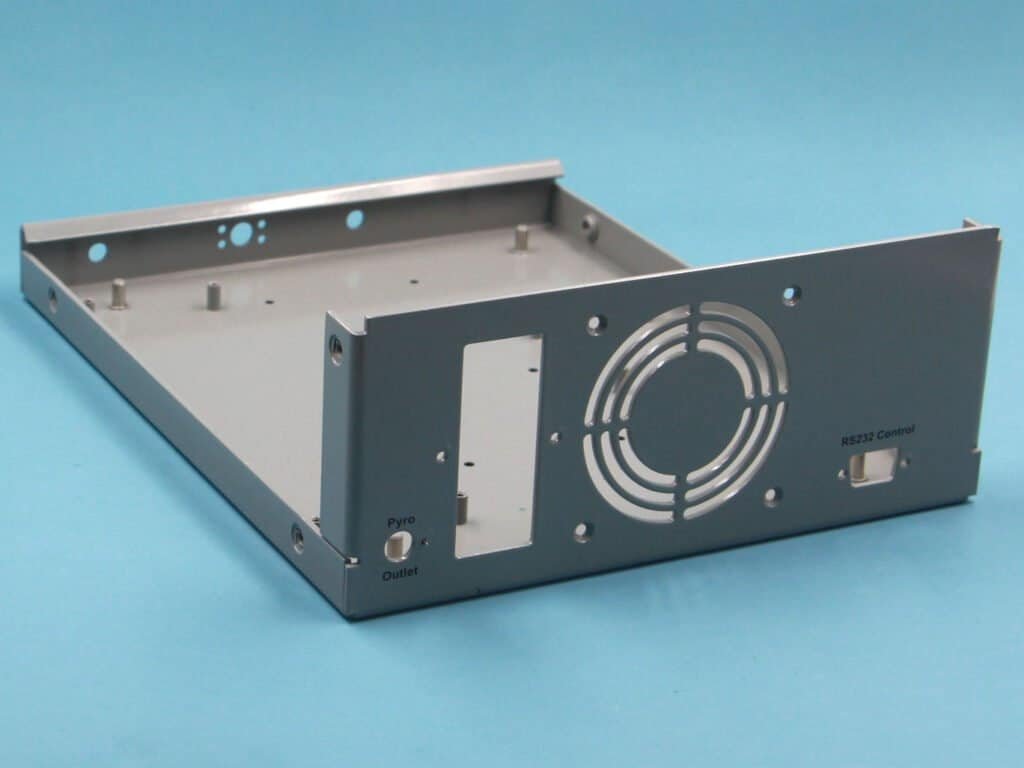
Sheet metal fabrication can produce controller enclosures, mobile-robot panels, equipment frames, sensor guards, brackets, cable-management features and protective covers. The manufacturing plan may combine laser cutting, punching, bending, hardware insertion, welding and finishing.
Drawings should identify material thickness, bend radius, hole-to-bend relationships, hardware, weld symbols, cosmetic faces and the condition in which dimensions apply. Large welded frames and thin panels can move during forming, welding and finishing, so functional datums and realistic acceptance conditions are important.
3D Printing and Vacuum Casting for Development
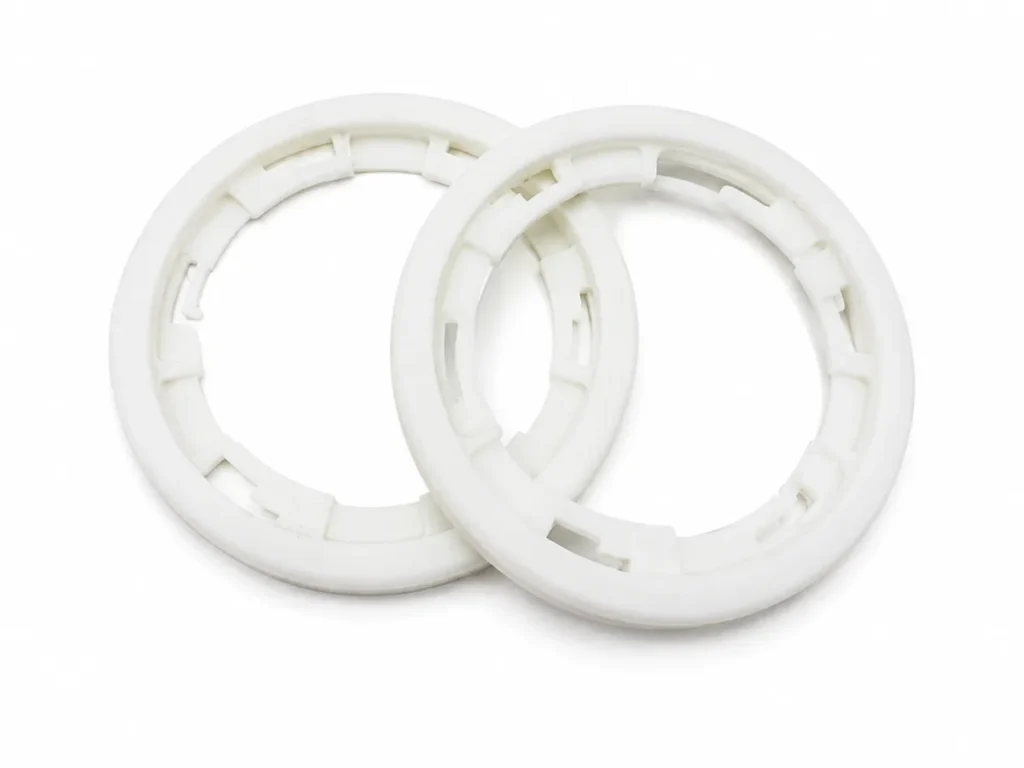
3D printing can accelerate gripper fingers, cable-routing trials, sensor mounts, ergonomic covers, airflow studies and assembly aids. Printed parts have process-specific anisotropy, surface and dimensional behavior, so the technology should match the test objective.
Vacuum casting can reproduce a master pattern in polyurethane for small groups of similar housings, covers or interface parts. Cast polyurethane may simulate the appearance and general behavior of molded plastic, but it is not automatically equivalent to a specified production thermoplastic.
Robotics Components We Manufacture
Joint and Actuator Housings
Joint housings may locate motors, bearings, gears, encoders and seals while transmitting loads through a compact structure. Drawings should distinguish bearing seats and alignment pilots from noncritical pockets, and should define the assembled or unrestrained condition used for inspection. Lightweight features must leave sufficient stiffness for machining, assembly and service loads.
End Effectors, Grippers and Tooling Interfaces
End-of-arm components include gripper bodies, fingers, tool plates, vacuum interfaces, adapters and quick-change elements. Important inputs include payload, center of gravity, contact geometry, gripping force, wear surfaces, air passages and replaceable interfaces. SAMSHION manufactures to the released design; application safety and gripping validation remain the responsibility of the system designer.
Vision, Sensor and Calibration Hardware
Camera housings, lens mounts, illumination brackets, encoder carriers and calibration fixtures depend on stable mounting datums and accessible adjustment. Where optical alignment matters, the drawing should define the relevant reference surfaces and acceptance method rather than relying on the external shape of the part.
Shafts, Pulleys, Hubs and Bearing Supports
Rotating components may require controlled concentricity, fits, shoulders, keyways, threads and surface finish. The design should identify the functional axis, mating component and measurement condition. Excessively tight limits applied to nonfunctional features add cost without improving system performance.
Frames, Brackets, Guards and Enclosures
Machine frames and protective structures need stable interfaces, practical assembly access and allowance for welding or forming variation. Controller and sensor enclosures may also require airflow, connector clearance, cable bend radius, grounding, sealing or service access. Those performance requirements must be defined and validated at system level.
Assembly Fixtures and Service Tools
Fixtures can control bearing installation, gearbox alignment, cable routing, sensor calibration and repeatable assembly. Good fixture design uses clear datums, accessible clamps, replaceable contact points and mistake-proof orientation. A fixture becomes an acceptance gauge only after its capability and control method have been established.
Materials for Robotics Components
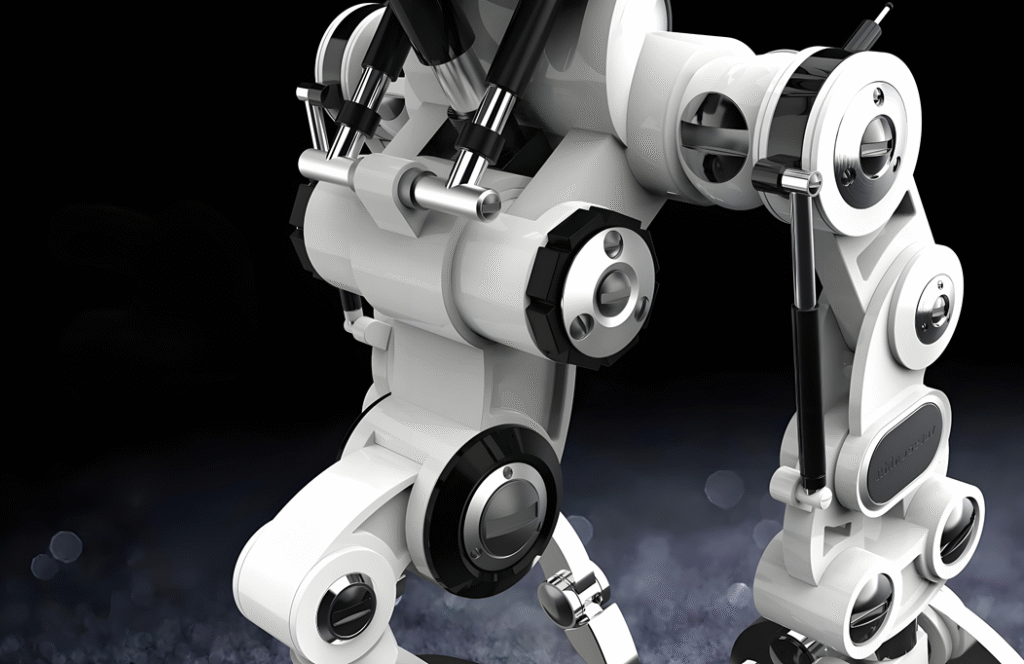
The right material balances stiffness, mass, wear, corrosion, thermal behavior, electrical needs, appearance, manufacturing route and cost. The manufacturing materials guide provides broader process-specific context, while the released drawing should state the exact grade and condition.

Aluminum Alloys
Aluminum is widely used for housings, arms, mounts, plates and end-effector bodies because it combines low mass, machinability and useful thermal conductivity. Alloy and temper affect strength, anodizing response and dimensional stability. Thin walls and heavy asymmetric material removal should be reviewed for movement during machining.
Stainless and Alloy Steels
Steels can support shafts, wear interfaces, pins, tooling elements and high-load structures. Grade, heat treatment, hardness, corrosion exposure and finishing sequence influence manufacturability and final performance. Hardened or slender parts may require a dedicated grinding or distortion-control plan.
Engineering Plastics
POM, nylon, polycarbonate, ABS, PEEK and other engineering polymers may be considered for guides, covers, insulators, wear parts and lightweight housings. Moisture, creep, temperature, impact, friction and chemical exposure should be reviewed for the exact grade. Plastic dimensions can also depend on conditioning and measurement environment.
Elastomers and Casting Polyurethanes
Flexible components can support bumpers, pads, cable protection and development seals. Hardness, compression, tear resistance, temperature, media compatibility and aging should be specified for the intended function. Prototype casting materials must not be assumed identical to production elastomers.
Surface Finishes for Robotics Parts
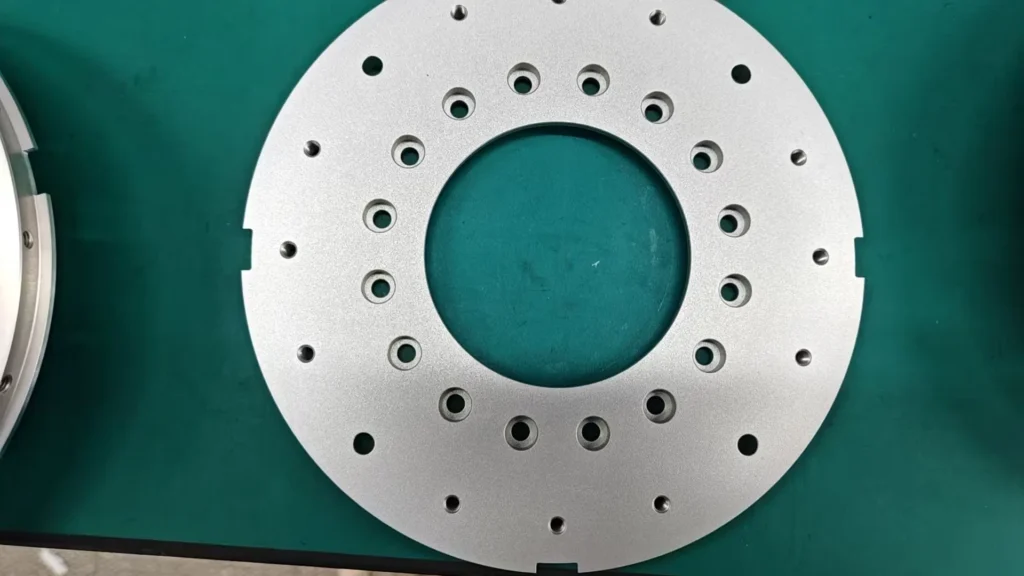
Finishing can improve corrosion resistance, wear behavior, cleanability, appearance and component identification. Available surface finishing services may include anodizing, conversion coating, passivation, plating, powder coating, painting, bead blasting, polishing and marking, depending on substrate and project requirements.
Critical fits, bearing seats, threaded features, electrical contact areas and grounding points may need masking or post-finish control. The drawing should identify cosmetic zones, color or gloss standards, allowable handling marks and whether dimensions apply before or after finishing. Generated color samples are not a substitute for an approved physical standard when appearance is important.
Design Guidelines for Robotics Parts
Start with Functional Datums and Interfaces
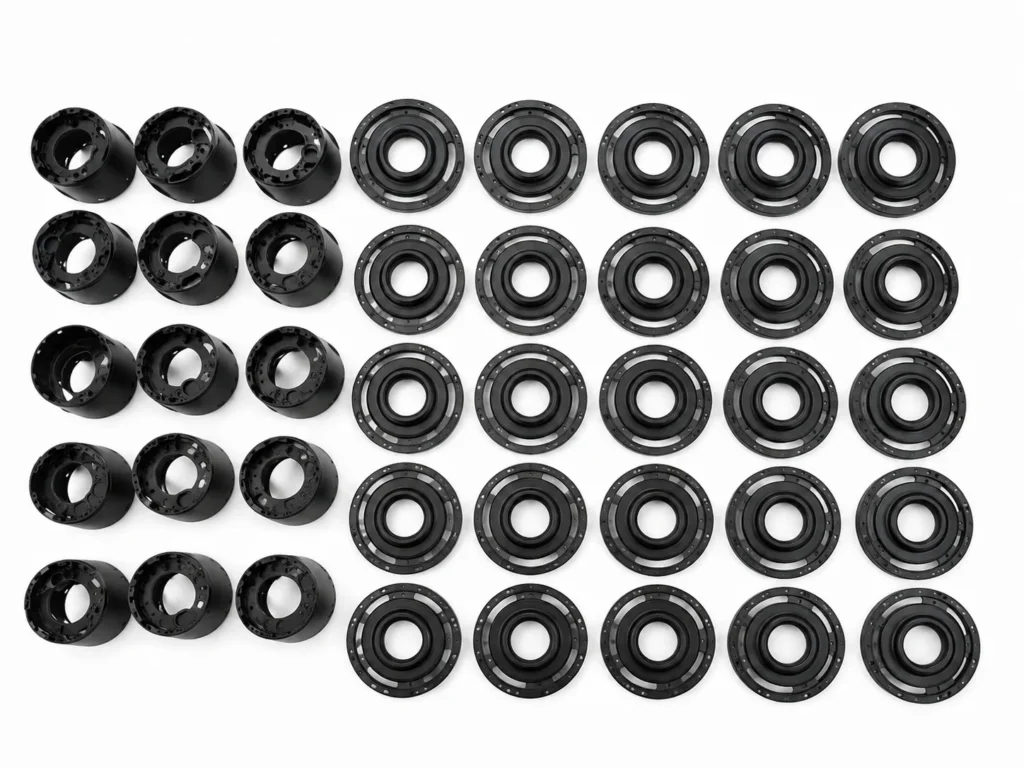
Define datums from the surfaces that locate the part in the actual assembly. Bearing pilots, gearbox interfaces, sensor seats and mounting faces should guide the dimensioning scheme. Avoid long chains of coordinates through nonfunctional geometry when a direct relationship can be inspected more reliably.
Manage Mass, Stiffness and Inertia Together
Removing material can lower moving mass but may also reduce stiffness, complicate workholding and increase vibration. Use ribs, webs and pockets where they support the load path, while leaving practical tool access and enough structure for stable machining and assembly.
Design for Bearing, Shaft and Gear Assembly
Fits should reflect the bearing type, load, housing material, temperature and installation method. Add lead-ins, shoulders, tool access and removal clearance where needed. Define the functional axis and avoid tolerances tighter than the system requires.
Protect Cable Routing and Connectors
Provide sufficient bend radius, strain relief, connector access and clearance through the full range of motion. Sheet-metal edges and machined slots should not damage cables. Service loops and removable covers should be considered during mechanical layout, not added after the enclosure is complete.
Separate Cosmetic and Functional Requirements
Not every visible surface needs precision machining, and not every functional surface needs a cosmetic finish. Mark critical interfaces, cosmetic zones, texture direction and acceptable witness locations clearly so manufacturing and inspection effort is applied where it matters.
Plan Assembly and Maintenance Access
Fasteners, tools, bearings, seals and cables need installation and removal paths. Captured hardware, replaceable wear elements and accessible adjustment points can reduce service time. Assembly order should be reviewed alongside the part geometry.
Quality Control for Robotics Components
Quality planning begins with the drawing and intended function. SAMSHION reviews material, revision, quantity, finish, critical dimensions and requested documentation before production. In-process checks are selected to control the manufacturing route; final inspection verifies the agreed characteristics in the defined part condition.
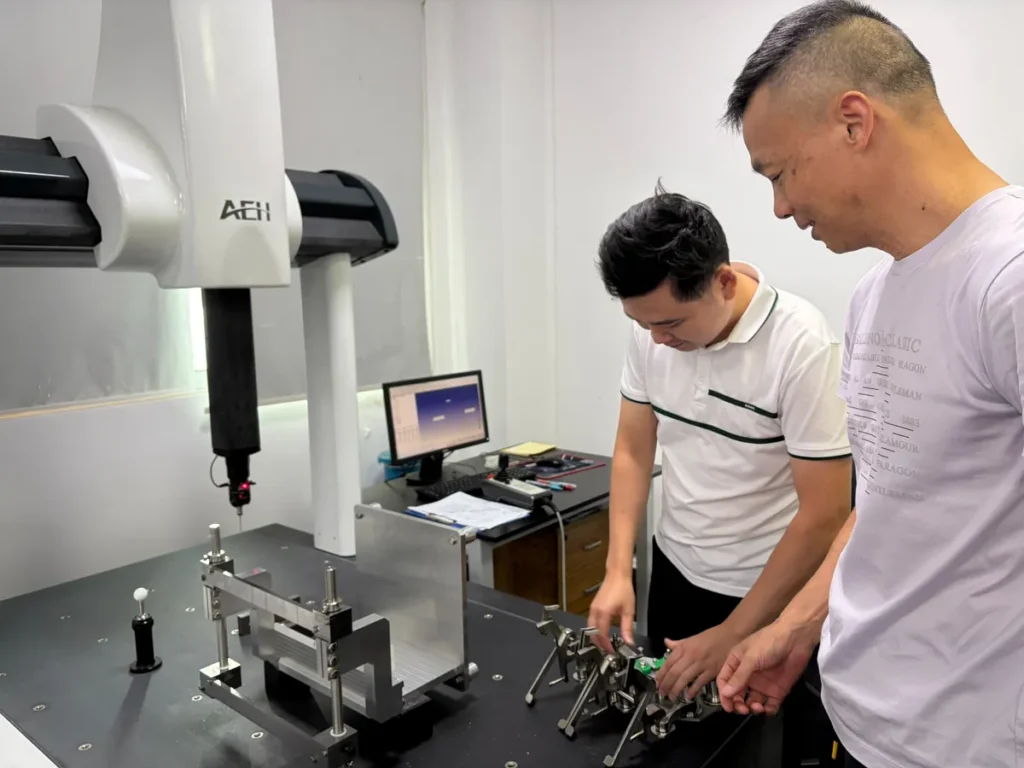
Measurement methods may include calipers, micrometers, height gauges, bore gauges, optical equipment or coordinate measurement, depending on feature geometry and required evidence. A calibrated instrument alone does not guarantee that a method is suitable for every tolerance. Accessibility, fixturing, temperature, datum simulation and measurement uncertainty should be considered.
Available records depend on the agreed order scope and may include dimensional results, material documentation or finish certificates when requested and available. The page does not imply robot safety certification, CE marking, functional-safety validation, load testing, endurance testing or system-level acceptance. Those activities remain with the responsible designer, integrator or approved test organization unless separately contracted.
Robotics Parts Manufacturing FAQ
What robotics components can SAMSHION manufacture?
Typical build-to-print work includes actuator and gearbox housings, motor mounts, shafts, pulleys, bearing supports, end-effector bodies, gripper fingers, sensor brackets, frames, guards, controller enclosures, covers and assembly fixtures. Suitability is reviewed from the actual files and requirements.
Can you support both a prototype and later repeat production?
Yes. A prototype may use machining, printing, fabrication or casting to validate the design. When the design and quantity stabilize, SAMSHION can review whether the original route, dedicated fixtures or injection-mold tooling provides the appropriate production path.
Do you design complete robots or control systems?
No. SAMSHION provides build-to-print manufacturing and DFM feedback for components. Robot architecture, electronics, software, functional safety, load calculations and system certification remain with the customer or responsible integrator.
What files should I send for a robotics parts quote?
Send STEP or another usable 3D format, a controlled PDF drawing for tolerances and notes, quantity, material, finish and required records. Include the mating component or a simplified assembly when an interface is difficult to interpret.
What tolerances can you hold?
Tolerance capability is reviewed feature by feature. Material, geometry, size, setup, finish, part condition and inspection method all influence feasibility. The quotation should confirm any critical requirement rather than relying on a general website value.
Can you manufacture lightweight aluminum robot parts?
Yes, subject to design review. Thin walls and deep pockets can reduce mass but may affect stiffness, workholding and dimensional stability. DFM can help balance weight reduction with practical machining and inspection.
Can you provide anodizing, powder coating or marking?
These finishes may be available depending on the material, geometry and specification. Define color, gloss, masking, cosmetic areas and post-finish dimensional requirements before quotation.
Can you make custom grippers or end effectors?
SAMSHION can manufacture customer-designed gripper bodies, fingers, adapters and tooling plates. Payload selection, gripping force, safety, collision behavior and application validation remain the customer’s responsibility.
What inspection documents are available?
Documentation is agreed by project. Dimensional results, material documentation or finish certificates may be available when requested and confirmed in the order scope. Do not assume every order includes the same report package.
How do I reduce cost without weakening a robotics part?
Prioritize functional interfaces, use realistic tolerances, reduce unnecessary setups, provide accessible internal radii, simplify hidden geometry and match the process to quantity. Weight reduction should follow the actual load path and be validated by the responsible design team.