“How long does it take to make an injection mold?” is one of the first questions on any plastic part project, because the tool is usually the longest step between a finished CAD model and the first molded parts. The honest answer depends on the type of tool, the part geometry and how quickly design questions are closed. This guide explains the typical timelines we work with at SAMSHION, what happens in each week, and what you can do to shorten the schedule.
Quick Answer: Typical Injection Mold Lead Times
At SAMSHION, a rapid tool usually takes about 15 working days from approved mold design to the first molded samples (T1). A production tool usually takes about 4 weeks to T1. These figures assume the part design is ready to tool and the DFM questions have been answered.
- Rapid tooling: usually prehardened P20 steel, about 10,000 shots of tool life, about 15 working days to T1. Suited to design validation, pilot builds and low-volume orders.
- Production tooling: usually S136 steel, about 300,000 shots of tool life, about 4 weeks to T1. Suited to stable designs with recurring demand.
T1 is the first trial of the finished mold, not the start of production. Allow additional time after T1 for sample review, any mold adjustment and final approval, as explained below.
Why We Can Quote These Timelines
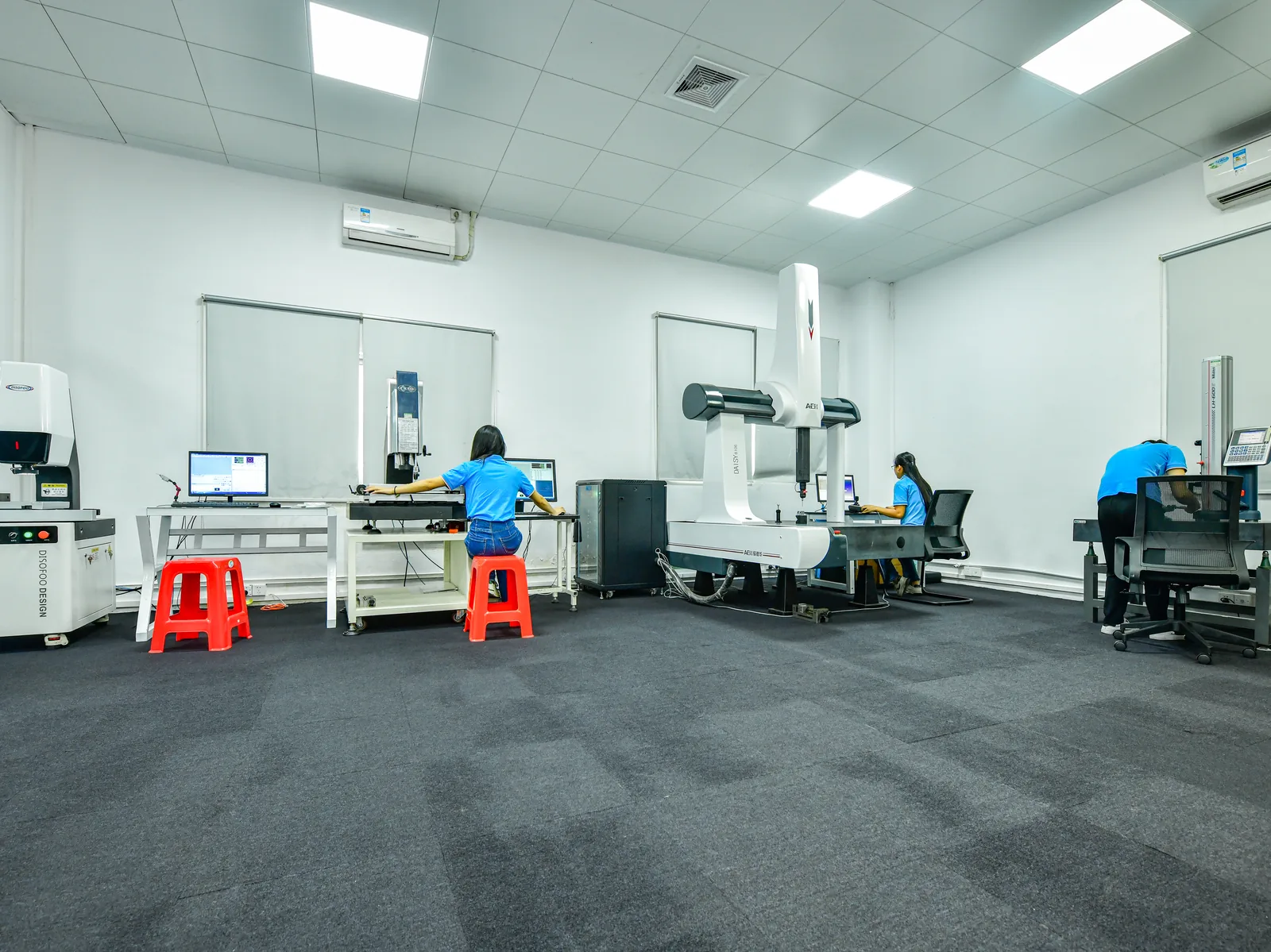
SAMSHION builds injection molds in our own toolroom and molds the parts on 40 in-house injection molding machines from 80 to 800 tons. Mold cavities and cores are cut on our CNC machining centers, and ribs, sharp details and textured areas are produced on our own sinker EDM machines. Because design, machining, fitting and the first trial all happen under one roof, a question found on the shop floor can be answered the same day instead of waiting for another supplier.
What Happens Between Order and T1
A mold schedule is a sequence of steps. Each one has to finish before the next can start, so a delay early in the chain moves every later date.
1. DFM review and mold-flow analysis
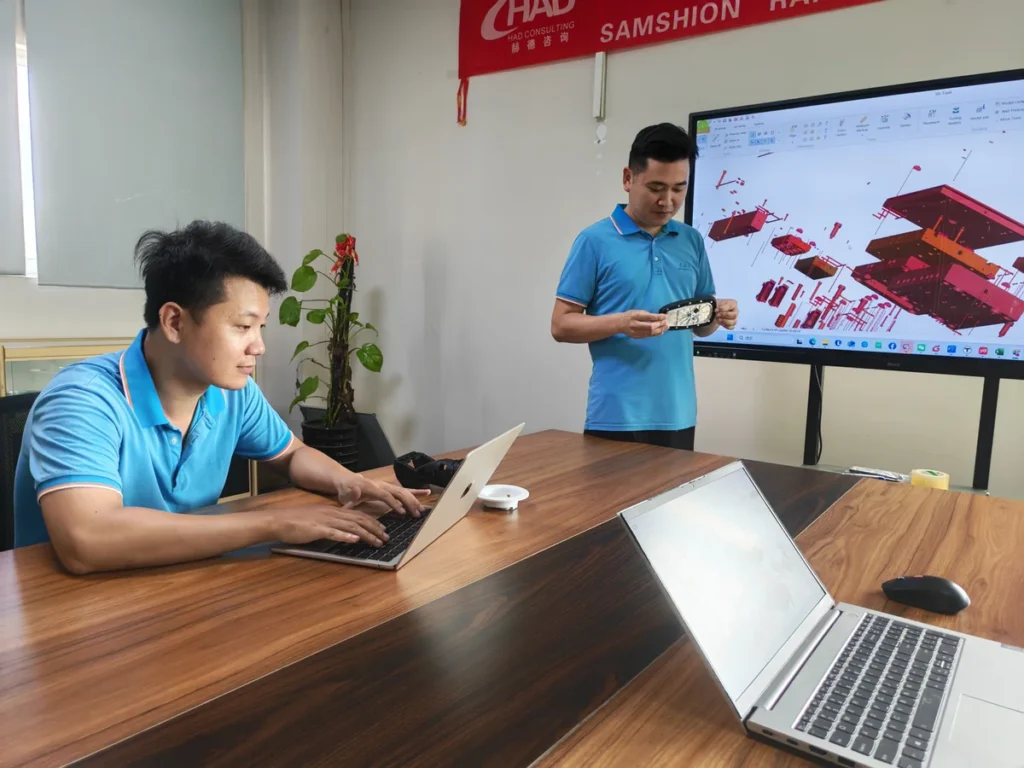
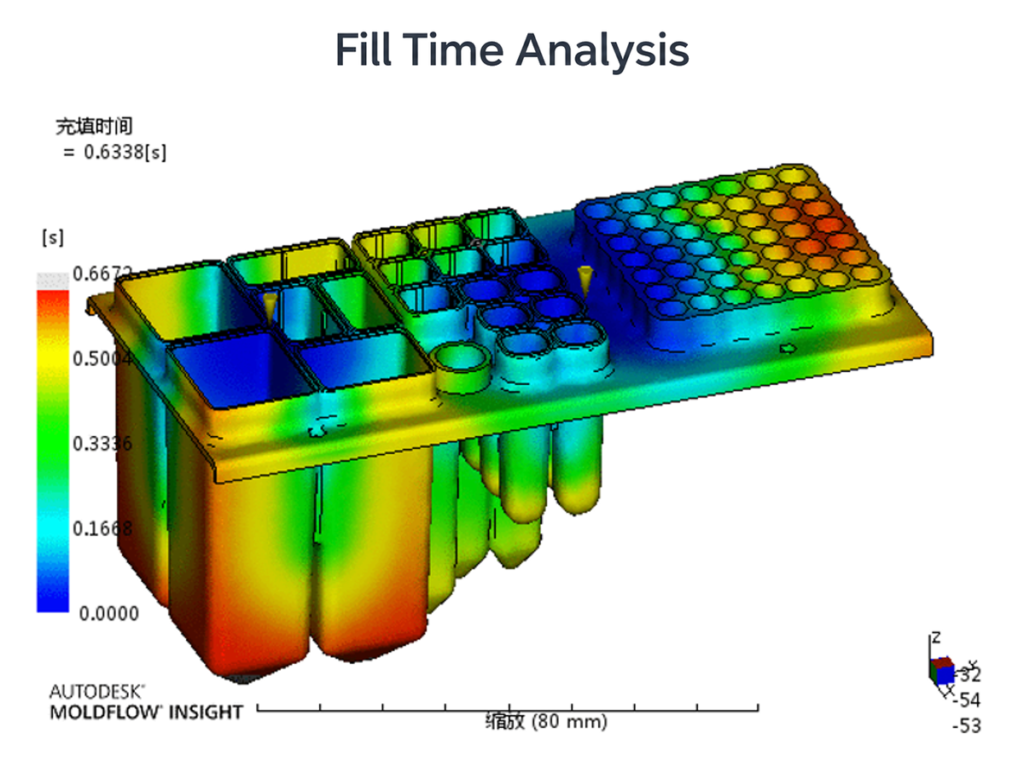
Before any steel is cut, our engineers review the part for draft, wall thickness, ribs, bosses, undercuts, snap fits, gate location and venting. We run our own mold-flow analysis to predict filling, weld lines and areas at risk of sink marks or air traps, and send the DFM report to you for approval. Most schedule risk is removed here: a change that takes an hour in CAD can take days once the cavity is machined.
2. Mold design and approval
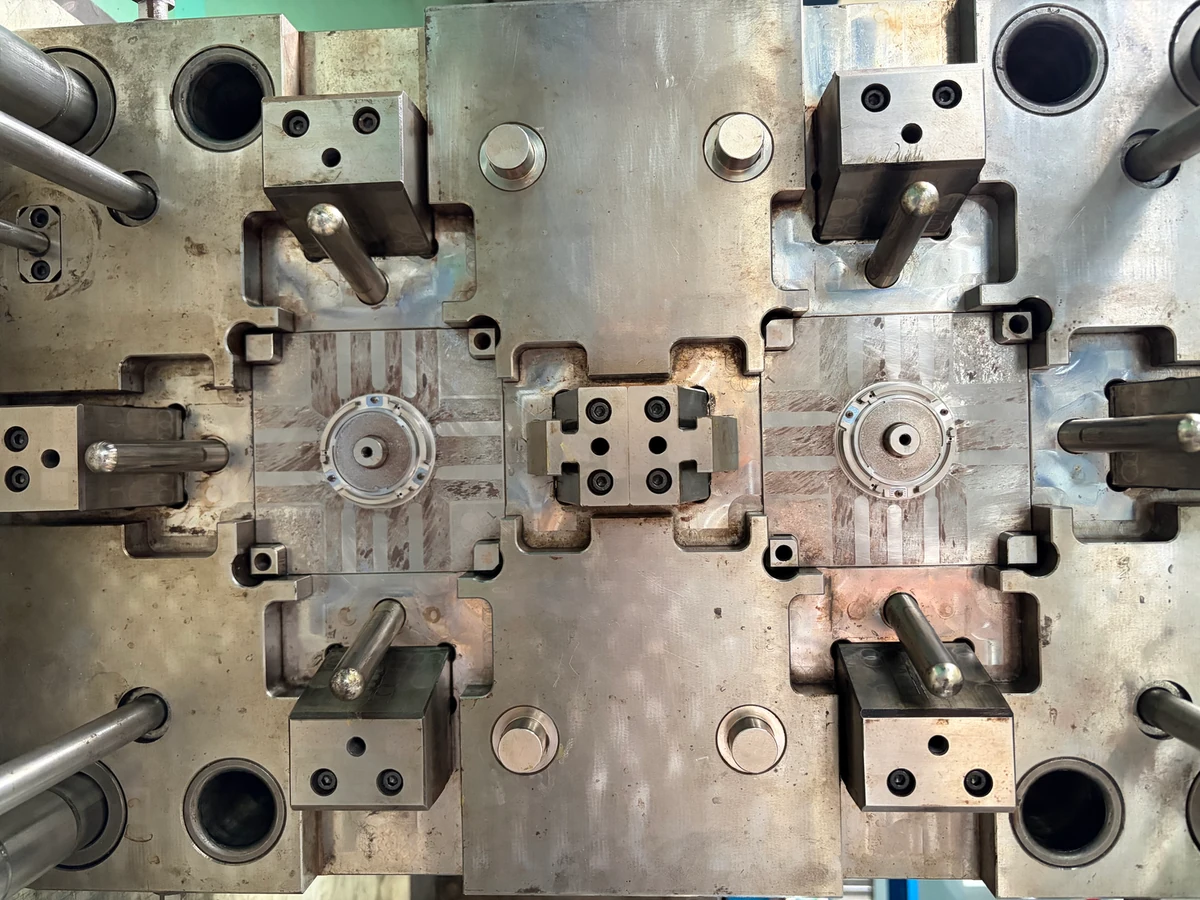
The approved part becomes a mold design: parting line, gate and runner, cooling layout, ejector positions, and any slides or lifters for undercuts. For insert-molded parts, the design also defines how each insert is located in the mold. Machining starts once the mold design is approved.
3. Steel, CNC machining and EDM
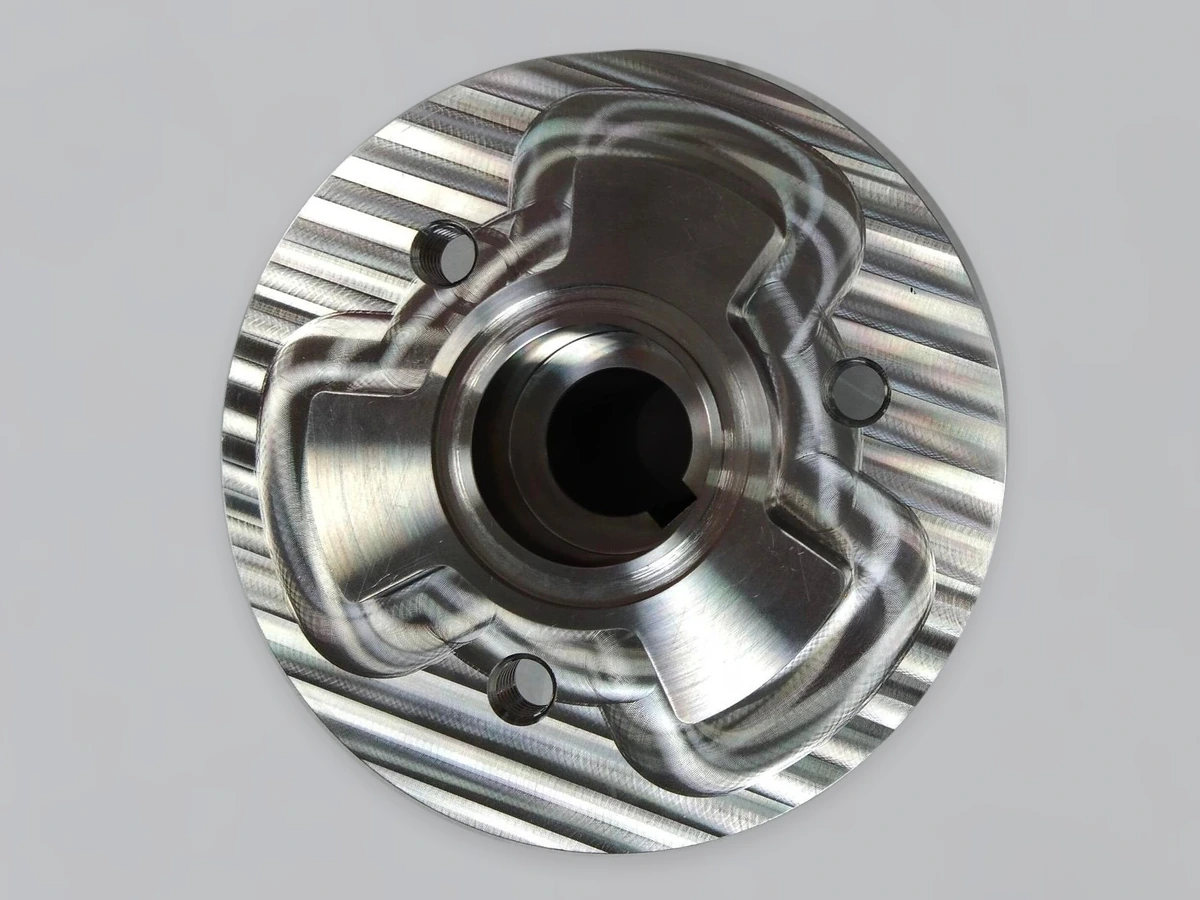
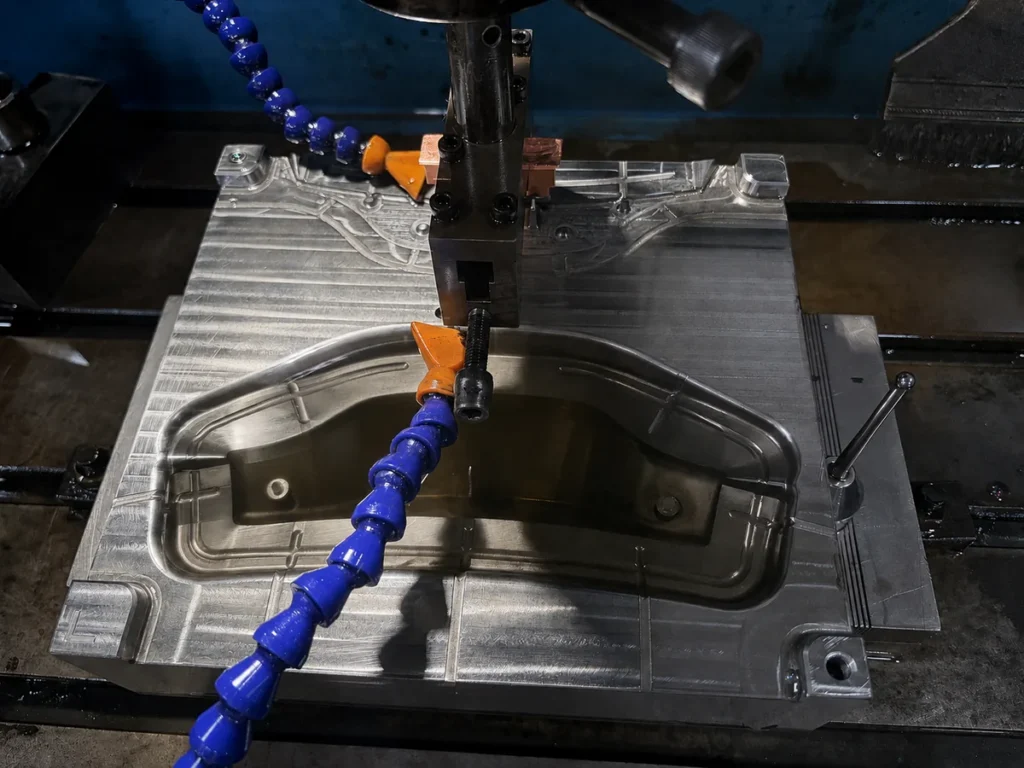
Cavity and core inserts are rough- and finish-machined on CNC machining centers. Details that a cutter cannot reach, such as deep narrow ribs or sharp internal corners, are burned with copper or graphite electrodes on sinker EDM machines. This is usually the largest block of time in the schedule, and it grows with the number of cavities, slides and lifters.
4. Polishing, texture, fitting and assembly
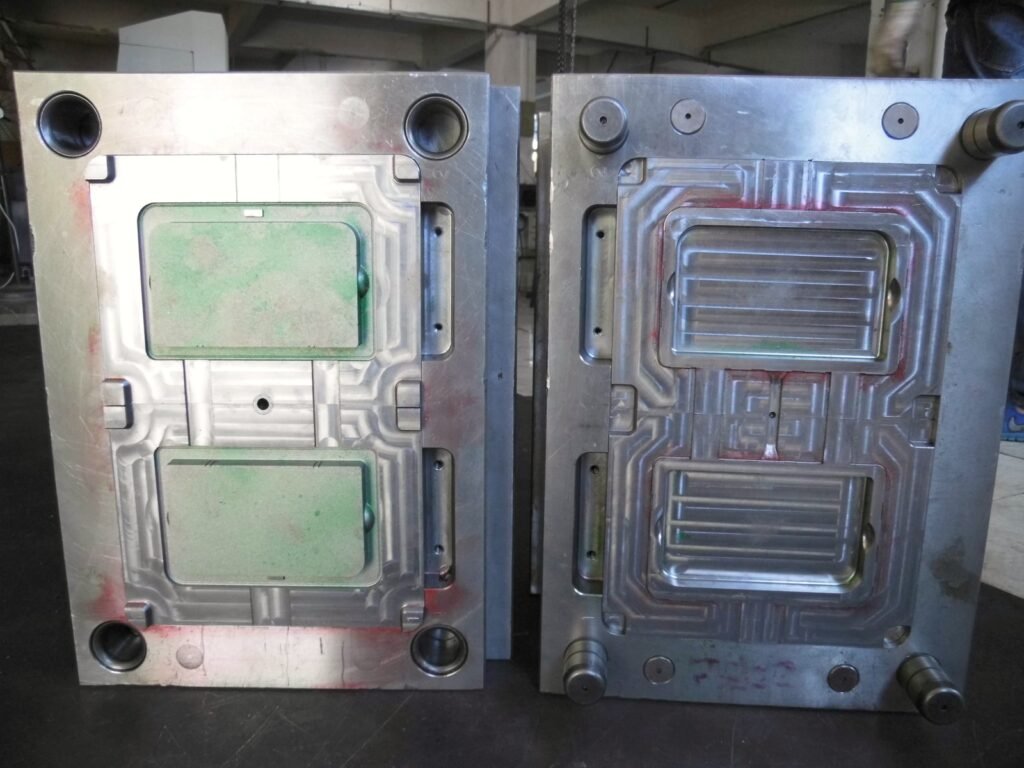
Forming surfaces are polished or textured to the agreed SPI, VDI or MT standard. VDI spark-erosion textures can be produced on our own EDM machines, while high-polish and chemical texturing are done by partner shops, which adds a few days. The mold is then assembled, the parting line and shut-offs are fitted, and cooling and ejection are checked.
5. T1 trial
The mold goes on an injection molding machine for its first trial. T1 checks filling, ejection, flash and cosmetic issues, and produces the first samples for measurement.
What Happens After T1
T1 samples are measured against the drawing and, where possible, test-assembled with the mating parts. Typical outcomes are:
- Approved at T1: the samples meet the drawing and the tool is released.
- Process adjustment: small dimensional or cosmetic issues are corrected with holding pressure, holding time or mold temperature, and new samples are run.
- Mold adjustment: if process changes are not enough, the mold is modified (for example, gate, cooling or venting changes) and a T2 trial follows.
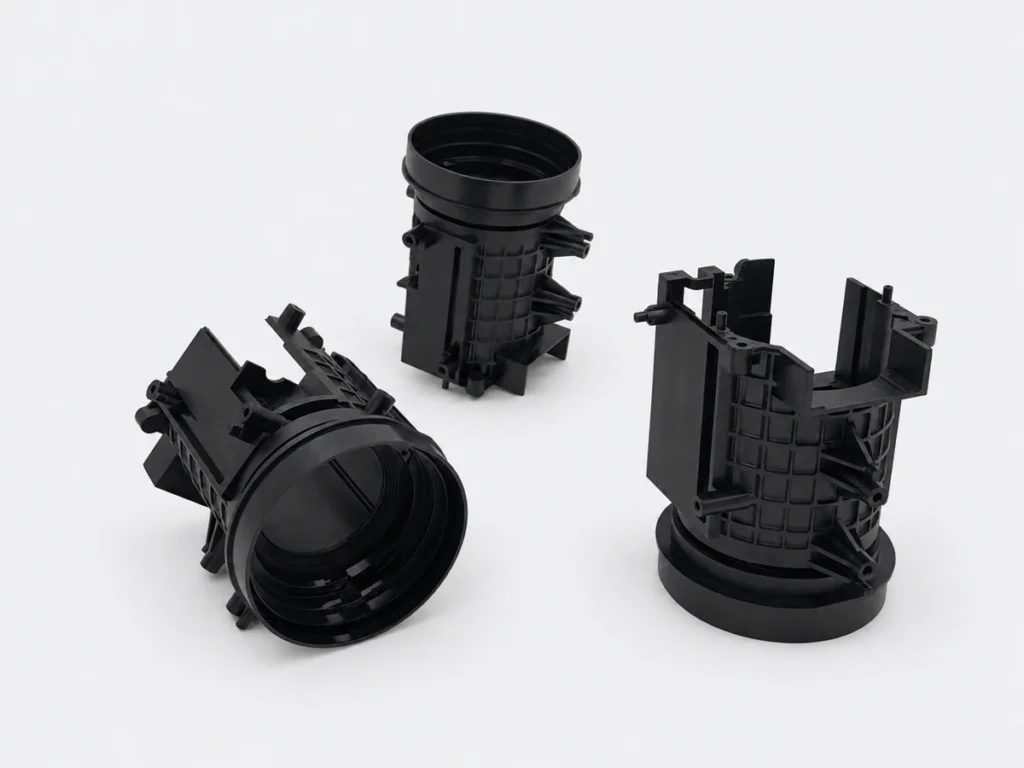
For tight-tolerance features we often leave extra steel on purpose, so the dimension can be brought into tolerance by removing material after T1 rather than welding the cavity. This adds one short loop but gives a more accurate result. Every order ships with a full dimensional inspection report and material certificates. For what to check on first samples, see our T1 sample approval checklist.
What Makes an Injection Mold Take Longer?
- Open design questions. Unclear tolerances, missing draft or a part that is still changing is the most common cause of delay.
- Undercuts. Each slide or lifter adds design, machining and fitting time.
- More cavities. A four-cavity tool needs more machining and balancing than a single-cavity tool.
- Cosmetic surfaces. High-polish or chemically textured surfaces need extra finishing steps, some of them at partner shops.
- Tight tolerances. Features that must be tuned after T1 add a measurement and correction loop.
- Inserts and overmolding. Locating features for metal inserts must be designed, machined and tested.
- Design changes after steel is cut. Every change after machining starts costs both time and money.
How to Shorten Your Mold Lead Time
- Test the design first. Many customers validate fit and function with CNC-machined prototypes before ordering a mold. A simple CNC part can ship in as little as 3 working days, which is far quicker than changing a cavity.
- Answer DFM questions quickly. The mold design cannot start until draft, wall thickness and gate location are agreed.
- Start with rapid tooling when demand is uncertain. A P20 rapid tool reaches T1 in about 15 working days and can supply parts while the production tool is being built. See rapid tooling vs production tooling.
- Identify critical dimensions early. Telling us which features are critical lets us plan extra steel and inspection from the start.
- Choose texture early. Confirm the SPI, VDI or MT finish with the DFM so finishing is not added at the end. Our mold surface finish guide compares the standards.
Rapid Tool or Production Tool?
Choose a rapid tool when you need molded parts in production resin quickly, the design may still change, or the expected quantity is within about 10,000 shots. Choose a production tool when the design is stable, demand is recurring and you need long tool life, better surfaces and, for high volumes, robot handling. For more detail, see our rapid tooling and production molding services.
Frequently Asked Questions
How long does it take to make an injection mold?
At SAMSHION, a rapid P20 tool usually takes about 15 working days to first samples (T1) and a production S136 tool about 4 weeks, after the mold design is approved. Sample review and any adjustments after T1 come on top of that.
Can a mold be made faster than 15 working days?
Simple single-cavity parts without undercuts can sometimes move faster, but it depends on geometry and our current toolroom schedule. Tell us your target date when you request a quote and we will confirm what is realistic.
Does T1 mean the parts are ready for production?
Not always. T1 is the first trial. The samples are measured and tested, and the process or mold may need adjustment before the tool is released for production.
How long does an injection mold last?
As a guide, our P20 rapid tools typically run about 10,000 shots and our S136 production tools about 300,000 shots. Actual life depends on the resin, glass fiber content, part design and maintenance.
Is shipping included in the mold lead time?
No. The lead time covers the tool and the first samples. Molded parts and the shipping method are scheduled separately.
Get a Mold Timeline for Your Part
Send your 3D CAD model, 2D drawing, resin, expected quantity and surface requirements through our quote page. We will review the design, recommend a rapid or production tool and confirm a realistic schedule to T1 with the quotation. See our injection molding services for materials and capacity.