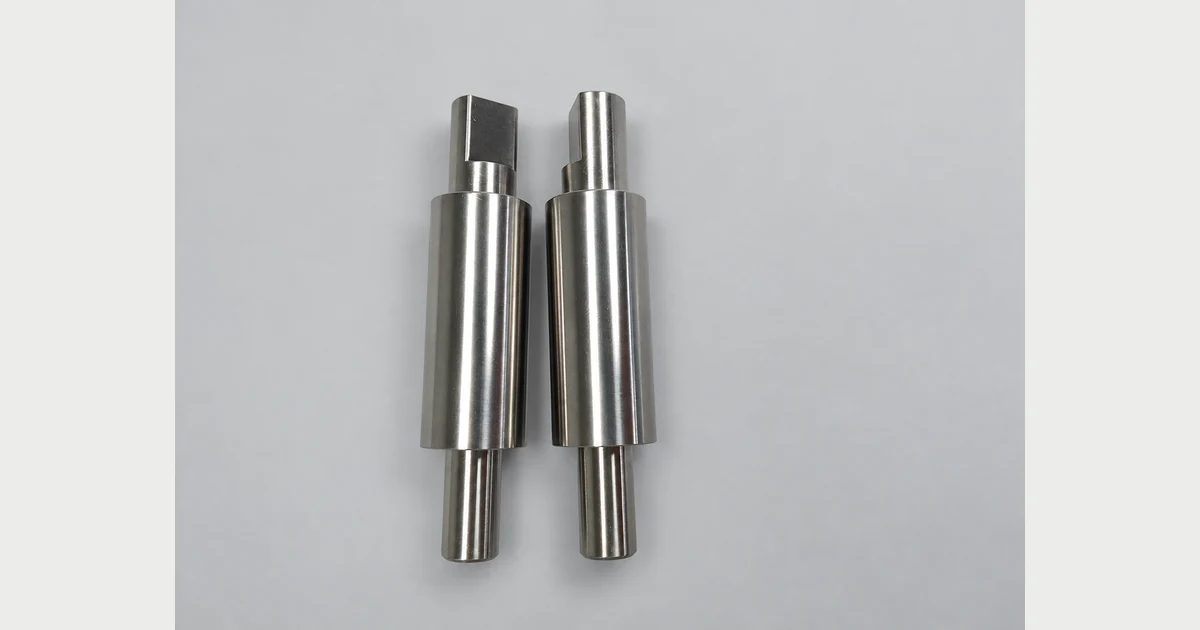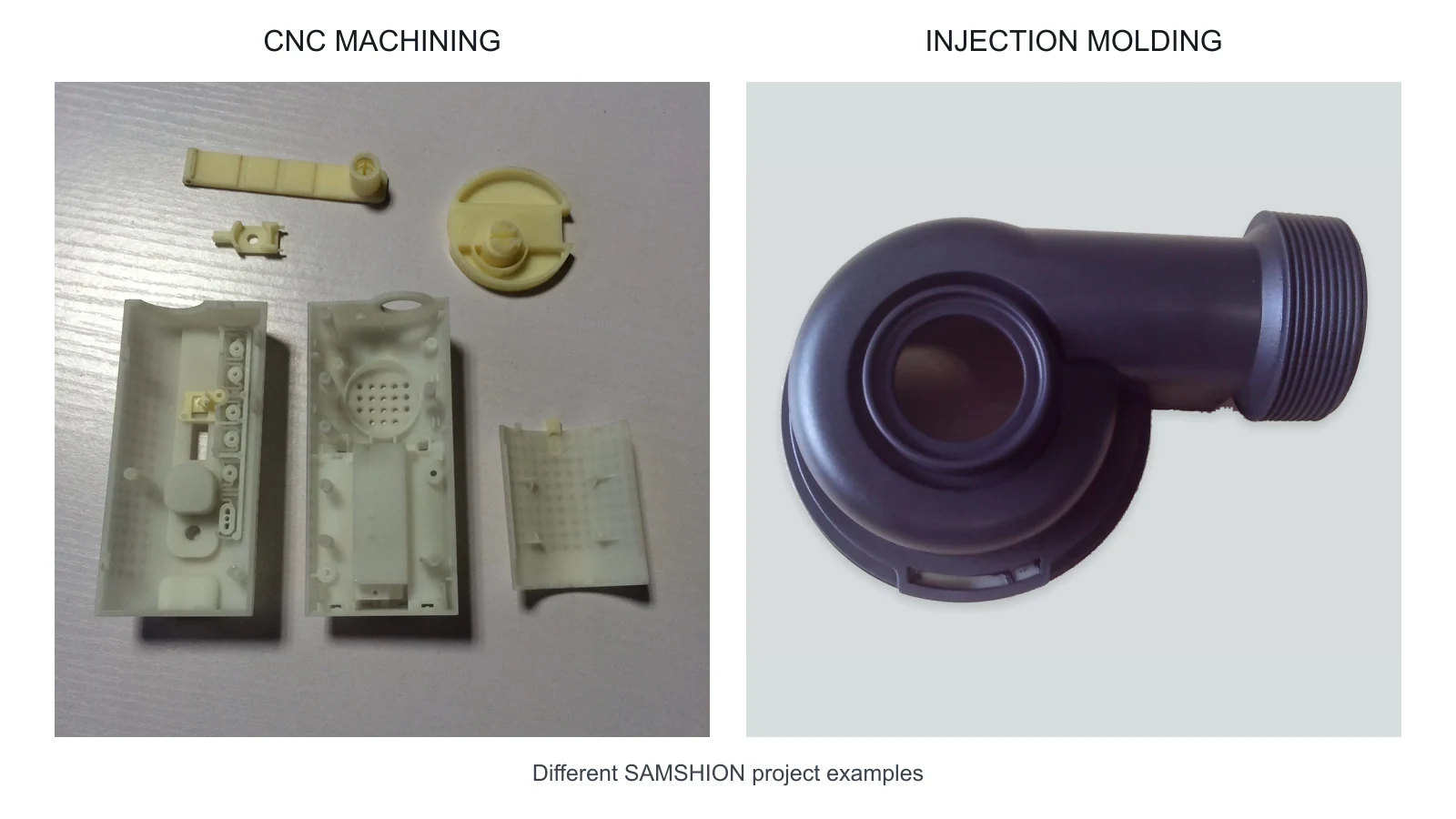
CNC production machining uses computer-controlled cutting processes to make multiple parts to an agreed drawing and model. For a buyer, the important questions extend beyond whether a supplier can machine one sample. How is the first setup checked? What happens if a dimension drifts during the run? Will a repeat order use the correct revision?
At SAMSHION, we inspect the first piece before continuing production, use timed sampling and quality-inspector patrol checks during machining, and inspect the completed batch. When an out-of-tolerance result appears, we pause machining and trace back to the parts produced since the last passing sample check. Every CNC production batch includes a dimensional inspection report by default.
This guide explains that workflow, the information customers should provide, and the factors that affect batch pricing. Our role is build-to-print manufacturing. We work to the customer’s specified material, geometry and acceptance requirements; dimensional inspection does not replace the customer’s product development or functional validation.
When CNC machining is suitable for batch production
CNC machining can support small production batches, replacement components and scheduled repeat orders without requiring a dedicated production mold. Milling suits features such as faces, pockets and holes, while turning suits rotational features such as diameters and bores. Some parts need both processes. Our introduction to what CNC machining is explains those fundamentals in more detail.
There is no universal quantity at which a job becomes production machining. A small order of complex components can require substantial setup and inspection work. A larger order of simple parts can have a short machining cycle. The useful comparison is the total manufacturing route at the requested quantity, including finishing and inspection.
A prototype gives the customer parts to evaluate. A production order requires the manufacturer to reproduce the agreed requirements throughout the batch. Reusing a successful program helps, but the current setup still needs checking, and the remaining pieces still need process checks.
For low-volume CNC machining, setup effort can account for a significant share of unit cost. With larger or recurring batches, machining time per part becomes increasingly important. If demand is not yet stable, discuss the immediate batch separately from a future forecast. A possible annual requirement is not the same as a confirmed release quantity. See our low-volume manufacturing services for projects that need smaller production runs.
Agree the drawing and inspection requirements before production
The production specification should identify the current 3D model and 2D drawing, material, quantity, finish and delivery requirements. A model communicates geometry, but a drawing can also define tolerances, datums, threads and requirements that are not clear from the shape alone.
If the model and drawing disagree, clarify the discrepancy before manufacturing. Neither an old sample nor a familiar part number should silently override the current approved files. A note such as “same as last order” is most useful when it includes the revision being repeated.
Identify the features that control acceptance
At SAMSHION, customer drawing annotations and assembly-fit requirements guide the identification of critical dimensions. A mating hole or contact face may need a different inspection approach from a noncritical exterior dimension.
For customers, the practical step is to identify the features that matter to the assembly and state their acceptance limits. If a particular gauge, report format or inspection coverage is required, include it with the request for quotation.
We use different sampling proportions for critical and ordinary dimensions. The proportion is not a universal percentage for every job. If your project requires every part to be checked for a particular characteristic, state that requirement so the inspection scope and quotation can be agreed before production.
Keep manufacturing review separate from product design
A manufacturing review can identify difficult tool access, extra setups or requirements that need clarification. It does not authorize the supplier to change the material, loosen a tolerance or alter a mating feature. Any proposed change to the customer’s specification needs agreement before it is used.
This distinction also applies to material selection. We manufacture using the specified material. We do not treat a successful dimensional inspection as proof of strength, service life or suitability for the customer’s end use.
Release the batch after first piece inspection
After the machining setup is prepared, we produce and inspect the first piece. Production continues when that inspection passes. If an inspected requirement is not met, the setup needs correction and a passing recheck before the run continues.
First-piece inspection provides a checkpoint between preparing a process and repeating it across the batch. It can reveal an issue that would otherwise be reproduced in subsequent parts. It does not prove that a tool, setup or process will remain unchanged for the rest of the order.
Our normal release is an internal inspection decision. It should not be confused with sending a first article to the customer and waiting for written approval. If customer approval is required before the rest of the batch is machined, agree that hold point in advance. It changes the production sequence and may affect the schedule.
A customer-specific first-article report also needs to be specified. The default dimensional report supplied with each production batch does not automatically include additional customer forms or qualification packages.
Check the process during the machining run
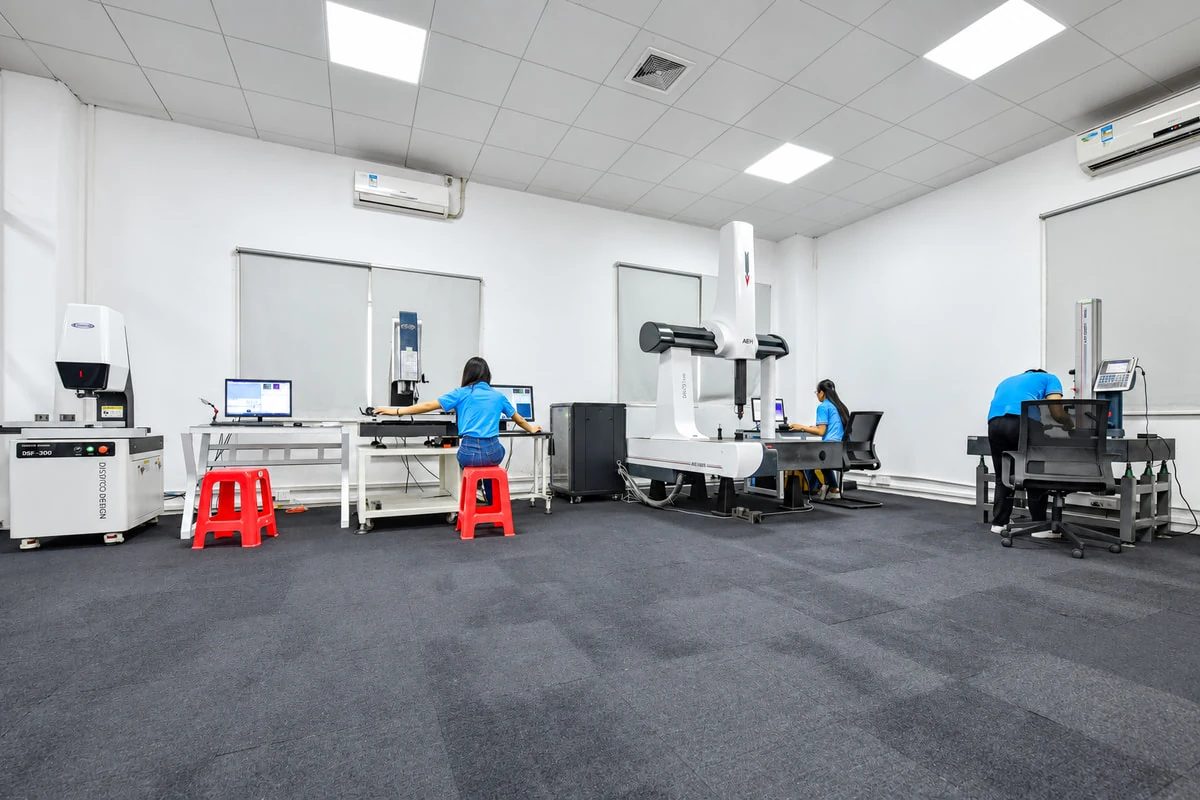
At SAMSHION, in-process inspection includes timed sampling and patrol checks by quality inspectors. After machining is completed, we also carry out a batch inspection. These checks occur at different stages because a passing first piece alone does not establish the condition of every later part.
Critical dimensions and ordinary dimensions have different sampling proportions. Drawing annotations and assembly-fit requirements help establish which features need particular attention. The inspection scope should remain tied to those requirements throughout production rather than relying only on the external appearance of the parts.
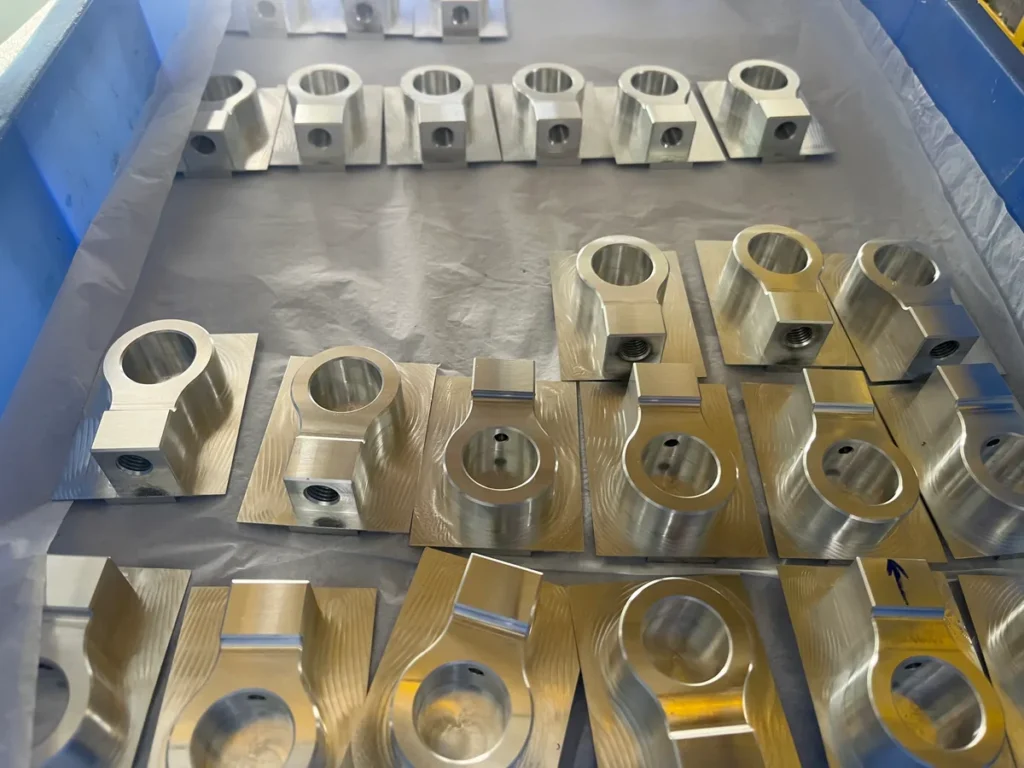
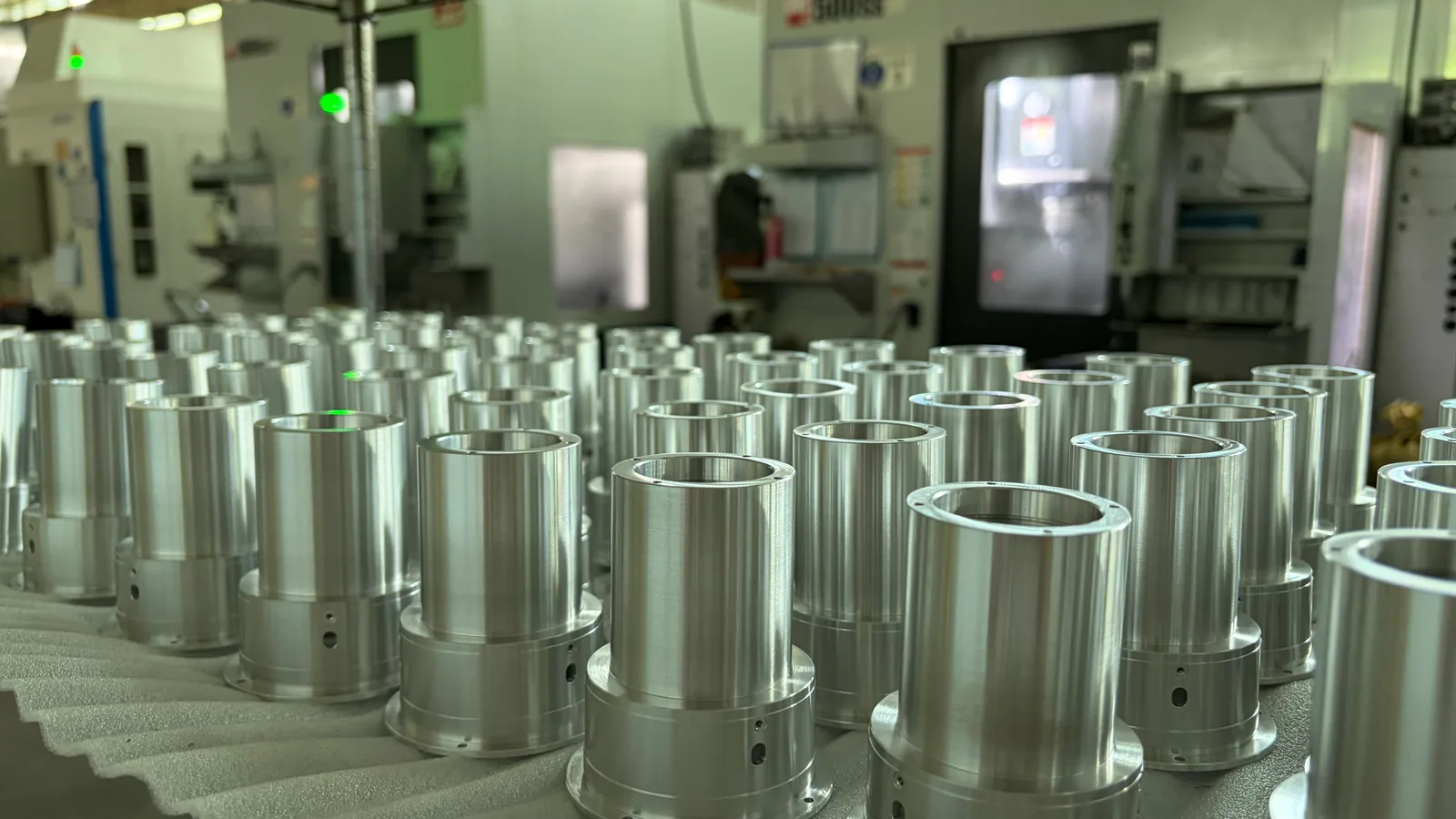
Machined parts arranged in a lined tray during batch production at SAMSHION.
For buyers comparing suppliers, ask how checks are distributed across the run, not just whether the supplier has inspection equipment. Also ask what happens to previously machined parts when a check fails. The answer determines how a discovered problem is contained before more parts are produced or shipped.
The following checkpoints summarize our production inspection sequence.
Contain an out of tolerance result before restarting
An out-of-tolerance measurement requires action on both the machining process and the parts already made. Adjusting the machine addresses future production; it does not establish whether earlier pieces are acceptable.
Our response follows this sequence:
- Pause machining when the out-of-tolerance result is identified.
- Trace back to the parts produced since the last passing sample check.
- Inspect the affected parts, separate conforming and nonconforming pieces, and mark and record their status.
- Adjust the process and reinspect before machining resumes.
- Assess whether nonconforming parts can be reworked. If they cannot, scrap them.
- Analyze the cause and develop preventive actions.
Why the previous passing check matters
The last passing sample gives a practical starting point for checking the intervening production. The failed sample may not be the only affected piece. For example, a dimension may have moved outside its limit before the next scheduled check detected it. The earlier pieces in that interval therefore need examination, not an assumption that they are good.
Marking and separation matter while that assessment is in progress. Parts waiting for a decision should not be mixed with parts already confirmed as conforming. The check, adjustment and disposition records also give the internal review a basis for investigating what happened.
Rework is an assessment rather than an automatic outcome
Whether a part can be reworked depends on the feature and the remaining manufacturing options. Further machining is not a universal remedy for a dimensional error. The decision must be based on whether the part can meet the agreed requirement after the proposed work.
The machine is restarted only after adjustment and a passing reinspection. That release addresses the corrected process; the previously identified nonconforming pieces still need their own disposition.
Recheck dimensions after finishing and provide the batch report
Where surface treatment can affect a critical dimension or assembly interface, the finished condition needs checking. At SAMSHION, we recheck those affected dimensions and fits after treatment. A pre-finish measurement alone does not answer whether the delivered condition meets the drawing.
The order should make clear which dimensions apply after finishing and identify any masking or protected surfaces. This is especially important when a hole, thread or mating face has a defined fit. Resolve unclear finishing notes before processing the batch. Our guide to CNC machining surface finish options covers the broader finishing choices.
Every CNC production batch includes a dimensional inspection report by default. This gives the customer a record of the reported measurements. It does not mean that every dimension on every part has been measured: inspection coverage follows the applicable sampling and customer requirements.
If you need a particular report template, additional measured characteristics, full inspection of selected features or separate certificates, include those requirements before quoting. A dimensional report and a material or finishing certificate serve different purposes. Neither should be substituted for the other without agreement. Our quality assurance page provides more information about inspection capabilities.
Check revisions and the first piece on every repeat order
For repeat orders, we reuse the previous CNC program and fixture where applicable. Before doing so, we compare the current 3D model and check the revision number on the 2D drawing. A repeat part number is not enough to establish that the geometry and requirements are unchanged.
The model comparison and revision check address different risks. The model may contain a geometric change, while the drawing may contain a changed tolerance, finish note or other requirement. Customers should send the current files together and clearly identify any revision rather than relying on the supplier to infer it from an email subject line.
We still perform first-piece inspection for the repeat run. An existing program and fixture do not remove the need to verify the current setup. Production continues after that first-piece check passes, followed by the in-process and completed-batch checks.
Reusing a program does not automatically reduce the repeat price
Under our normal quoting practice, a repeat order with the same design, material, quantity and agreed scope keeps the same unit price. A change in order quantity can change the unit price. We do not promise an automatic discount simply because a program or fixture was used before.
When comparing a repeat quotation, compare the actual scope as well as the part number. A different quantity, drawing revision, finishing requirement or inspection requirement can make it a different manufacturing job. The applicable quotation remains the basis for the order.
What drives CNC production machining cost
Quantity matters, but it cannot describe the full cost of a production part. The quote also needs to account for material, preparation, machining time, inspection, finishing and delivery requirements.
Programming and setup are shared across the batch, so a larger quantity can spread that effort across more parts. Cutting, handling and other recurring operations still take time on each piece. Increasing quantity therefore does not make a long machining cycle disappear.
For a useful cost review, ask which features or requirements contribute most to the quotation. Any cost-saving proposal still needs to preserve the customer’s accepted specification. A supplier should not silently remove an inspection step or substitute a material to match a lower price.
The same approach applies when comparing CNC with molding or casting. Compare routes at the same material and performance requirements where feasible, and include tooling, secondary machining, finishing and inspection. There is no universal crossover quantity that applies to all geometries. A block-machined part and a machined casting can have different sourcing assumptions even when the finished shapes look similar.
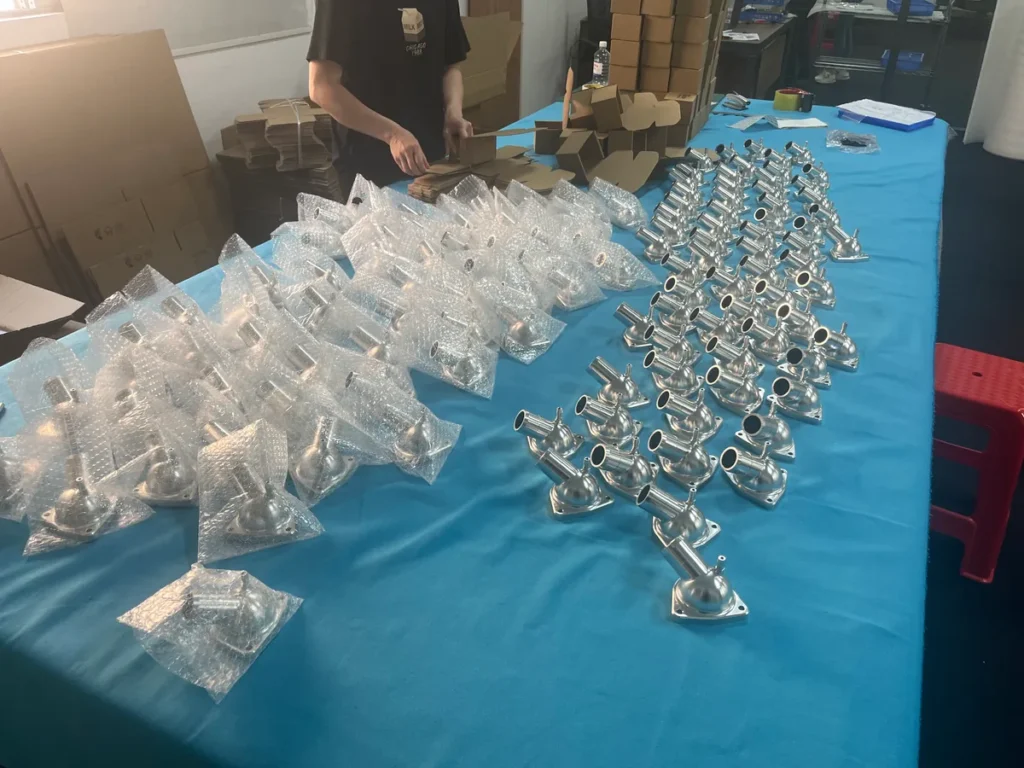
When reviewing a production quotation, include packaging in the comparison. A requirement for individual protection or customer-specific labeling needs to be communicated as part of the delivery scope, alongside the requested reports and shipment quantity.
What to send for a production machining quotation
A complete request reduces ambiguity about what is being manufactured and what will be checked. Send:
- The current 3D CAD model and 2D drawing, with their revision identifiers.
- The specified material and condition.
- The quantity for this order and any planned repeat-release quantities.
- General tolerances, critical dimensions, datums and assembly-fit requirements.
- Surface treatment, roughness, masking and cosmetic requirements.
- Required inspection coverage, report format and any additional certificates.
- Any customer approval hold point before batch production.
- Packaging requirements and the requested delivery schedule.
For a repeat order, also reference the previous order and state whether the files or requirements have changed. For a new job, identify unresolved requirements before requesting a firm production price. You can review our CNC machining services or send the files for a production quotation.
Frequently asked questions
What is the difference between prototype and production machining
Prototype parts allow the customer to evaluate a design. Production machining focuses on making the agreed specification repeatedly across an order. Both require appropriate inspection. At SAMSHION, batch production includes first-piece inspection, checks during machining and inspection of the completed batch; it does not include product strength or functional validation by default.
How many parts count as CNC batch production
There is no single threshold. Geometry, setup effort, machining time and repeat demand affect how a batch is planned and priced. State the quantity per order rather than relying on labels such as low volume or mass production.
Must the customer approve the first piece before machining continues
Not under our normal internal release process. We continue after the first-piece inspection passes. If customer approval is required before the remaining batch is machined, agree that hold point before production starts.
Are all dimensions measured on every production part
Not by default. We use proportional sampling, with different proportions for critical and ordinary dimensions. Specify any requirement for every-part inspection of a feature when requesting the quote so the coverage can be agreed.
What happens to parts made before an out of tolerance result is found
We trace back to the pieces produced since the last passing sample check, inspect the affected parts, and separate and record conforming and nonconforming pieces. Rework feasibility is assessed internally; parts that cannot be reworked are scrapped.
Does a repeat order still require first piece inspection
Yes. We compare the current 3D files and check the 2D revision, then perform first-piece inspection even when reusing the previous program and fixture. A passing result is required before the repeat run continues.
Is a dimensional inspection report included
Yes. Each CNC production batch includes a dimensional inspection report by default. Customer-specific formats, additional inspection coverage and separate certificates should be specified before quotation. The report describes the reported inspection results, not unperformed functional testing.