Aluminum threads may need reinforcement when the joint carries repeated assembly cycles, high clamp load or repair risk. The insert is part of the engineered joint, not an interchangeable afterthought.
Helical-wire inserts use little radial space and distribute load elastically. Solid key-locking inserts require a larger parent hole but provide a robust mechanical locking system. The surrounding boss, depth and application decide which is appropriate.
Key Takeaways
- Select the insert system during design, before the boss and hole are frozen.
- Follow the selected manufacturer’s parent-thread dimensions and tools.
- Provide enough edge distance and bottom clearance.
- Define installed depth, length and locking requirement.
- Inspect the parent thread and final installed condition according to risk.
Why Reinforce an Aluminum Thread
Repeated assembly, high-strength fasteners and field service can justify an insert, but not every tapped hole needs one. See our CNC threaded holes guide.
Helical-Wire Inserts
Wire inserts need a special parent thread and controlled installation depth. Free-running and locking styles serve different functions. Parent-thread dimensions, installation tools and insert variants must follow the selected system; the Bollhoff HELICOIL technical resource is one manufacturer reference for this insert family.
Solid Key-Locking Inserts
Solid inserts use more boss diameter and lock through driven keys. Nearby walls and passages must be reviewed.
Design the Boss and Blind-Hole Clearance
The outside thread, installation tool, tang or keys and chip removal all require space.
Installation and Inspection
Control parent-thread gauge result, insert depth, locking feature and the final internal thread. See our CNC production machining.
Helical vs Key-Locking vs Press-In Inserts at a Glance
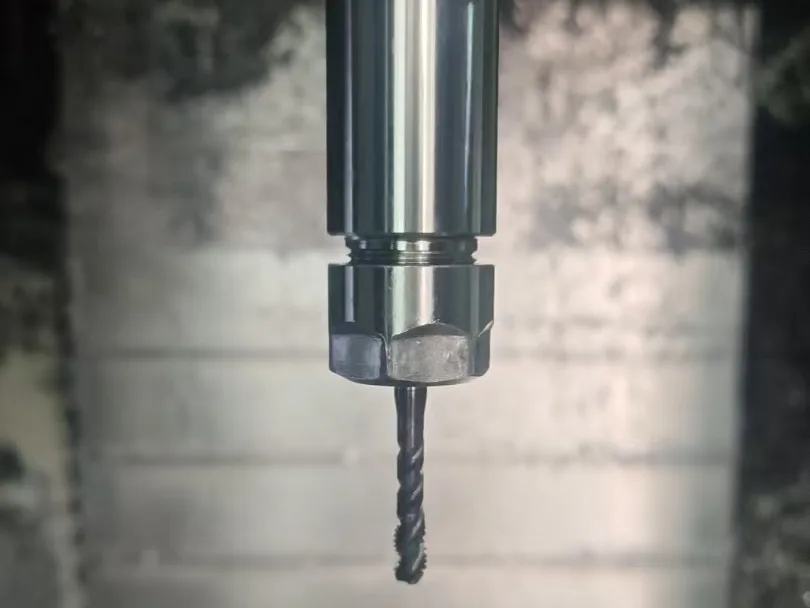
- Helical wire inserts (coil inserts): a diamond-section wire coil screwed into a special tapped hole. Small outside diameter, light weight and low cost. Need a special STI tap and an installation tool, and the tang must be removed in through holes or left in blind holes with enough depth.
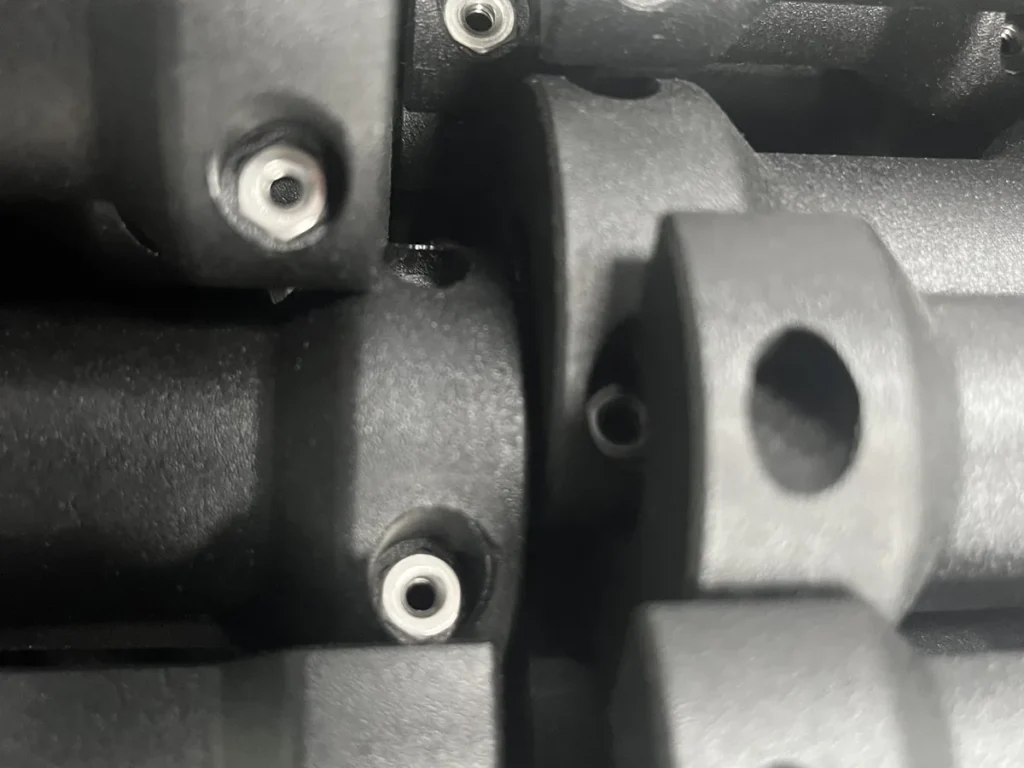
- Key-locking inserts: solid threaded bushings with small keys hammered into the parent material to stop rotation. Very strong and easy to replace in the field, but need a larger hole and more wall around them.
- Self-tapping inserts: cut their own thread in a plain drilled hole. Quick to install, but less precise.
- Press-in and heat-set inserts: used mainly in plastic parts; knurled brass inserts are pressed or melted into a molded or machined hole.
- Self-clinching nuts: used in sheet metal rather than machined parts; pressed into thin sheet to give a strong thread.
When an Aluminum Thread Needs an Insert
A plain tapped thread in aluminum is strong enough for many applications, especially when the engagement length is at least 1.5 to 2 times the bolt diameter. Inserts become worthwhile when:
- The screw will be removed and refitted many times, such as a service cover or test fixture.
- High-strength steel bolts are tightened to high torque, and the aluminum thread could strip first.
- The part is soft or thin, so there is not enough thread length.
- The thread must resist wear, vibration or loosening, and a locking insert is required.
- A damaged thread must be repaired without scrapping an expensive part.
See our thread design guide for tapping, thread milling and engagement length.
A Worked Example: Aluminum Plate With Mixed Threads
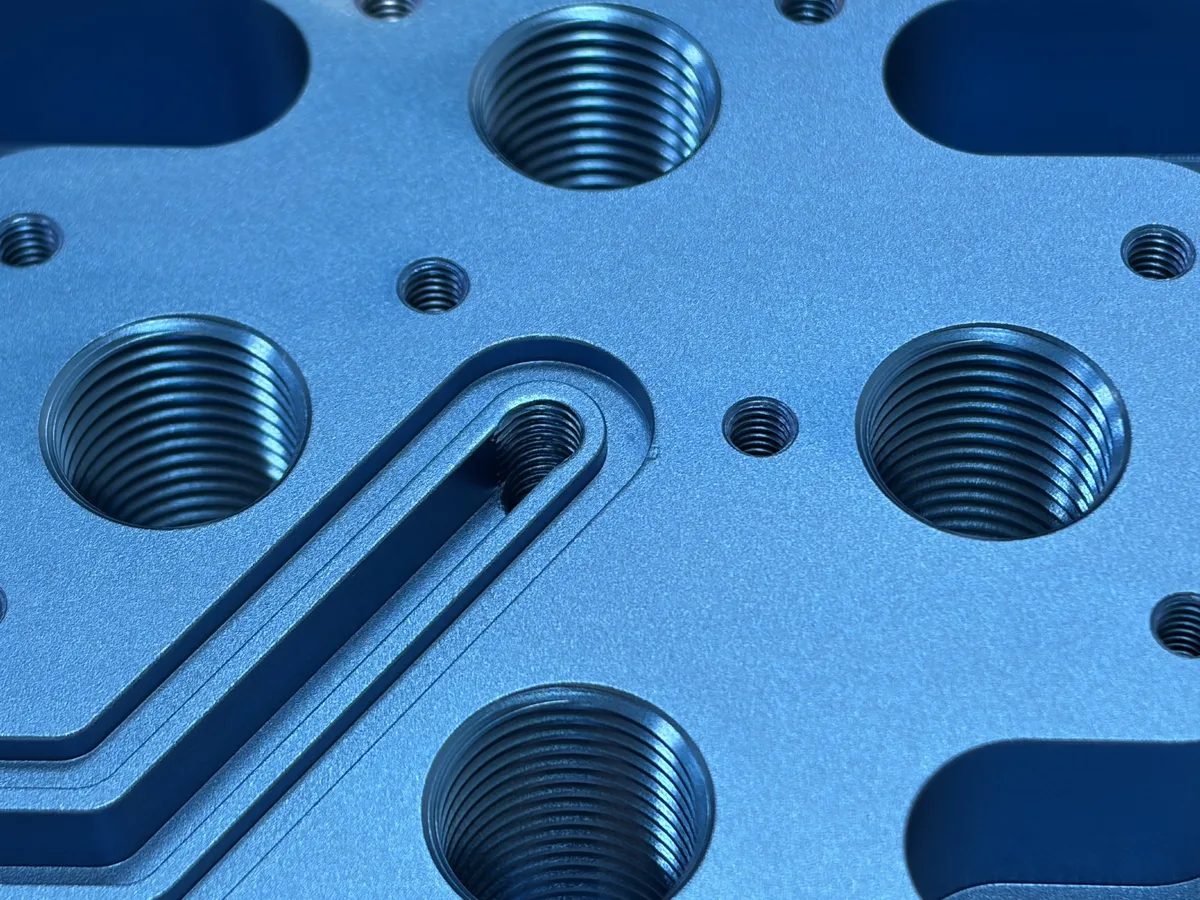
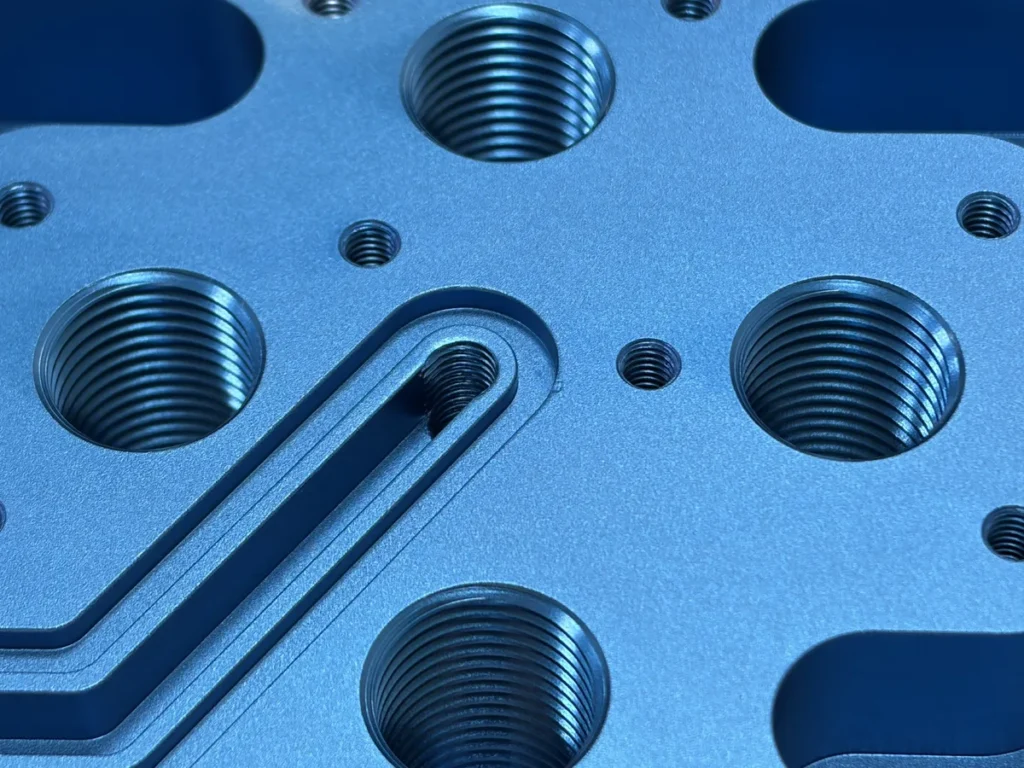
Consider an anodized aluminum plate with several large threaded holes and many small tapped holes. A practical approach:
- The large threads are cut by thread milling, which gives good control of size and works well on large diameters.
- The small threads are tapped, which is faster for many small holes.
- If some holes carry a screw that will be removed often, they are drawn as STI holes for helical inserts, with the insert part number and length on the drawing.
- Inserts are usually installed after anodizing, so the coating does not change the insert fit and the coil is not damaged by the process.
- The finished threads are checked with thread gauges.
At SAMSHION we install both helical wire inserts and key-locking inserts in machined parts when the drawing calls for them, and check the finished threads with gauges.
What Drives the Cost of Thread Inserts
- Insert type: key-locking inserts cost several times more than helical coils.
- Special tooling: STI taps, installation tools and tang break-off tools add cost on small batches.
- Installation labor: each insert is installed individually.
- Sequence with finishing: masking or installing after anodizing adds handling.
- Inspection: checking depth and thread function of each insert.
Common Thread Insert Mistakes
- Drawing a standard thread size on the hole when an insert is required, so the hole is tapped to the wrong size.
- Not leaving enough depth in blind holes for the insert length and the tang.
- Placing key-locking inserts too close to a wall or another hole.
- Not stating whether the insert is installed before or after finishing.
- Using inserts everywhere when a longer plain thread would be enough.
Frequently Asked Questions
Are helical inserts only for thread repair?
No. They are widely used as planned thread reinforcement as well as repair components.
Are key-locking inserts stronger in every design?
Not automatically. Parent material, boss size, load, insert series and installation quality all matter.
Can the final thread callout omit the insert standard?
That creates ambiguity. The insert family, size, length and locking style should be controlled.
Should the insert be installed before anodizing?
The sequence depends on finish, masking, electrical contact and dimensional requirements and must be agreed for the project.
Can inserts be used in plastic parts?
Yes. Plastic parts typically use brass press-in or heat-set inserts, or inserts molded directly into the part during injection molding.
How long should a helical insert be?
Common lengths are 1, 1.5, 2 and 2.5 times the nominal diameter. Longer inserts carry more load, but need a deeper hole.
Can a stripped thread be repaired with an insert?
Yes. A stripped thread can be drilled out, retapped with an STI tap and fitted with a helical insert, restoring the original thread size. See our CNC machining services.
Get an Engineering Review
Upload the CAD model and controlled drawing for an engineering review before production. When the model and drawing are ready, use request an insert-ready DFM review and include the material, quantity, finish and inspection requirements.
For a review of thread inserts for CNC aluminum, send the native CAD model, controlled drawing, material specification, quantity, finishing route and required acceptance records. SAMSHION’s engineering team can return project-specific DFM questions and documented quotation assumptions before production begins.