Molded silicone and rubber parts are everywhere in engineered products: seals and O-rings, gaskets, keypads and buttons, protective covers, feet and grips, and soft-touch layers molded over metal or plastic. All of them are made by the same basic principle, vulcanization, in which a rubber compound is shaped in a heated mold and cured into a permanent elastic part.
At SAMSHION we mold silicone rubber in-house, using both solid silicone (compression molding) and liquid silicone rubber (LSR injection molding), from prototype quantities to production. This guide explains how the processes differ, how to choose hardness and material, how to design parts that mold well, and what drives cost and lead time.
What Vulcanization Does
Raw rubber compound is soft and plastic: it can be shaped, but it has little strength and no lasting elasticity. During vulcanization (curing), heat and a curing agent create chemical cross-links between the long polymer chains. Once cured, the part keeps its molded shape, springs back after it is compressed or stretched, and resists heat, oil or chemicals according to the material chosen.
- Under-cured parts feel sticky, tear easily and take a permanent set when compressed.
- Over-cured parts become brittle, lose elongation and may crack.
- Post-curing (a second bake in an oven after molding) is often used for silicone to remove volatile by-products and stabilize properties, especially for food-contact, medical and high-temperature parts.
Solid Silicone vs Liquid Silicone Rubber (LSR)
Silicone parts are made from two main types of raw material, and each has its own molding process:
- Solid silicone (high-consistency rubber, HCR): a dough-like compound that is cut or preformed, placed into an open heated mold and pressed closed. This compression molding uses simple, lower-cost molds and suits larger parts, thick sections and low to medium quantities. Parts usually need deflashing after molding.
- Liquid silicone rubber (LSR): a two-part liquid that is mixed and injected into a closed, heated mold. LSR injection molding is highly automated, fills thin walls and fine details well, gives consistent dimensions and very little flash, and suits medium to high quantities. The molds are more complex and cost more.
We run both processes. As a guide, a standard solid silicone compression mold takes about 2 weeks to make, and an LSR injection mold about 3 weeks, depending on part size and complexity.
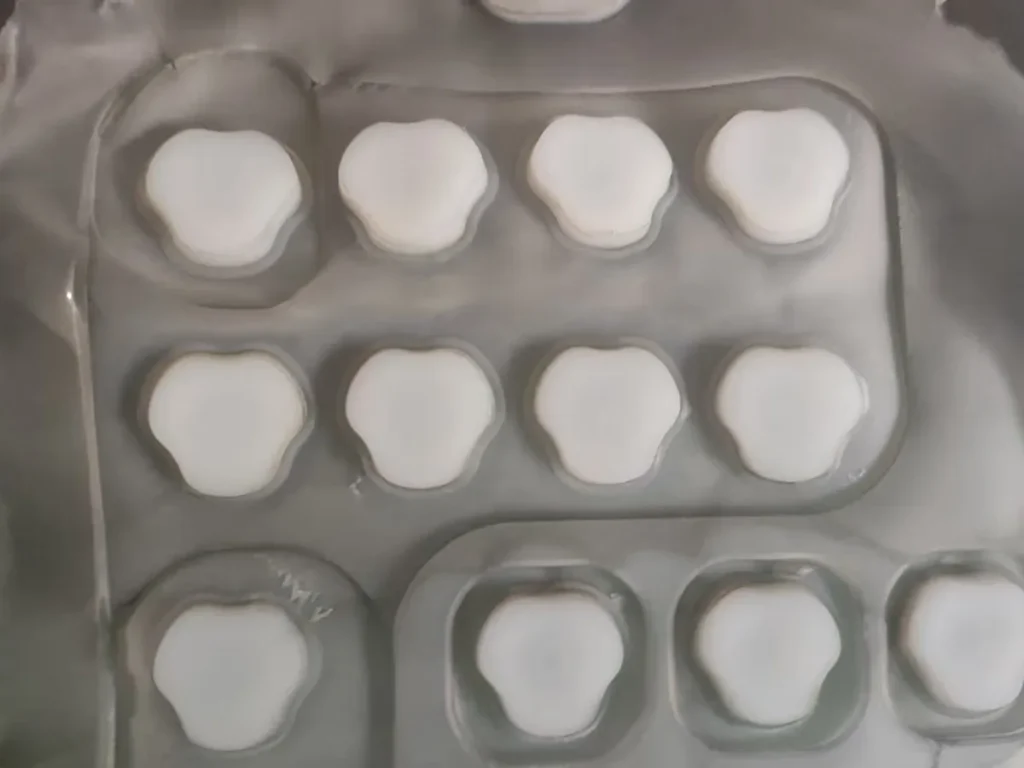
The white parts above are compression-molded silicone parts still in the molded sheet, before they are trimmed out. The thin web of material between the parts is the flash, which is removed after curing.
Compression, Transfer and Injection Molding Compared
- Compression molding: lowest mold cost and no runner waste; good for large gaskets, thick parts, prototypes and small batches. Cycle times are longer, there is more flash to trim and dimensions are less consistent.
- Transfer molding: the compound is pushed from a pot through runners into a closed mold. Less flash and better accuracy than compression molding, and good for parts with metal or plastic inserts, at a higher mold cost and with some runner waste.
- Injection molding (including LSR): fully automatic with the shortest cycle and the best consistency, ideal for small precision seals, keypads and high volumes. Molds and equipment cost the most, so it pays off at larger quantities.
Choosing Hardness: Shore A 30 to 80
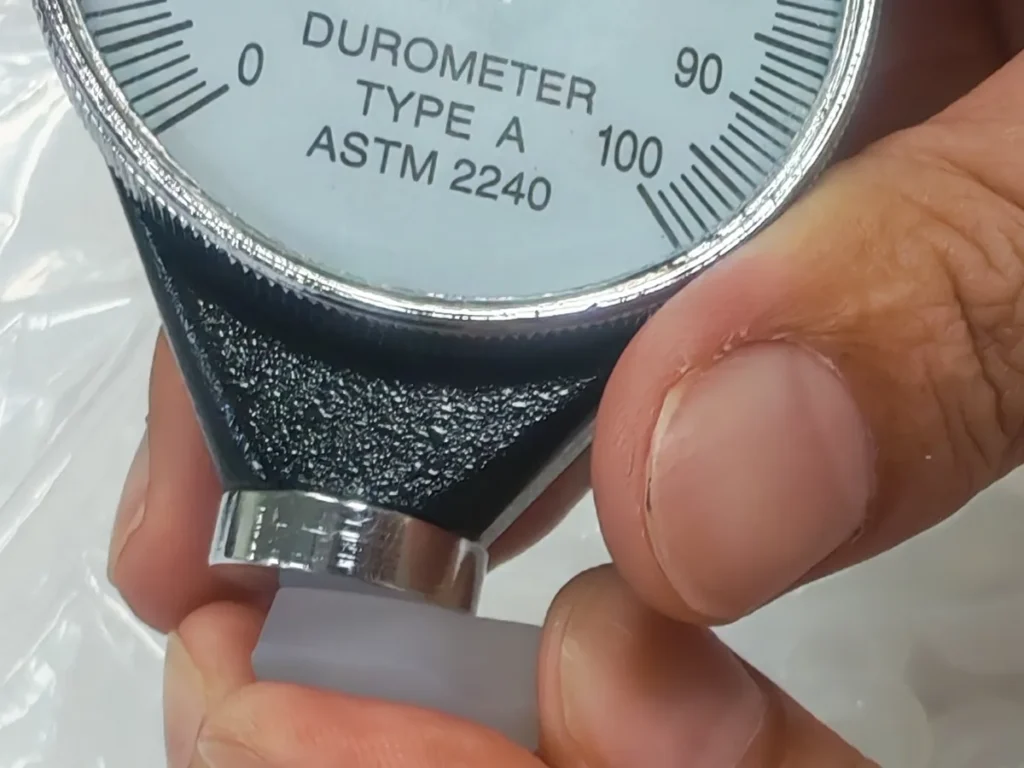
Rubber hardness is measured on the Shore A scale with a durometer, which presses a small indenter into the surface. We mold silicone from about 30 to 80 Shore A. Typical uses by hardness:
- 30 to 40 Shore A: very soft and flexible, for soft-touch grips, cushions and low-force seals.
- 50 to 60 Shore A: the most common range for gaskets, keypads, covers and general seals, balancing softness and durability.
- 70 to 80 Shore A: firm parts that hold their shape, such as feet, bumpers, wear pads and seals for higher pressure.
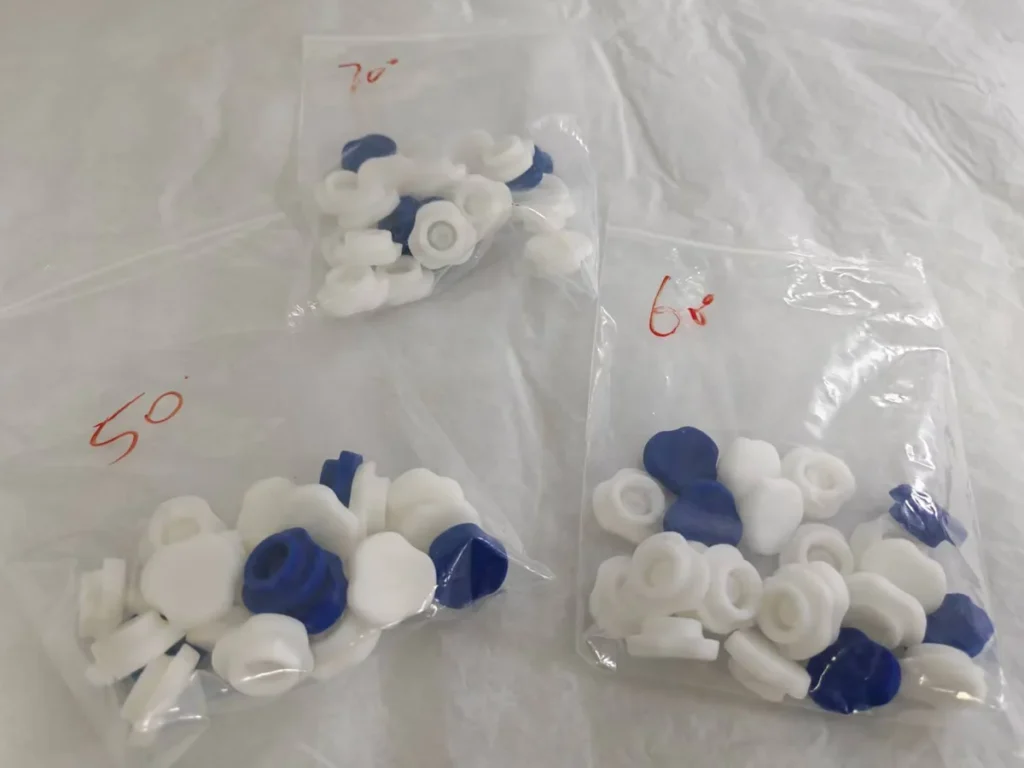
Softer silicone seals well at low clamping force but is easier to tear; harder silicone resists wear and extrusion but needs more force to compress. The samples below show the same part molded at 50, 60 and 70 Shore A; molding samples at more than one hardness is a simple way to compare the feel before production.
Hardness is checked on molded parts with a Type A durometer, as shown below. Readings should be taken on a flat area of adequate thickness, because thin or curved sections give lower readings than the true material hardness.
Common Molded Rubber Materials
- Silicone (VMQ) and LSR: wide temperature range from about −50 to +200 °C, good weathering and ozone resistance, available in food-contact and medical grades, easy to color. Moderate tear strength and poor resistance to fuels and many oils.
- Fluorosilicone (FVMQ): silicone modified for fuel and oil resistance, used in aerospace and automotive seals.
- EPDM: excellent for water, steam, weathering and outdoor use; not suitable for oils and fuels.
- NBR (nitrile): the standard choice for oil and fuel resistance in O-rings and seals.
- FKM (fluoroelastomer): high temperature and chemical resistance for demanding seals, at a much higher material cost.
- CR (neoprene): balanced weather, oil and flame resistance for general industrial parts.
- NR (natural rubber): high elasticity and tear strength for dynamic parts, but poor heat, ozone and oil resistance.
Besides silicone, we also mold other rubbers such as EPDM, NBR and FKM. Tell us the operating temperature, media and required certifications, and we will recommend a suitable compound.
Overmolding Silicone onto Metal Inserts
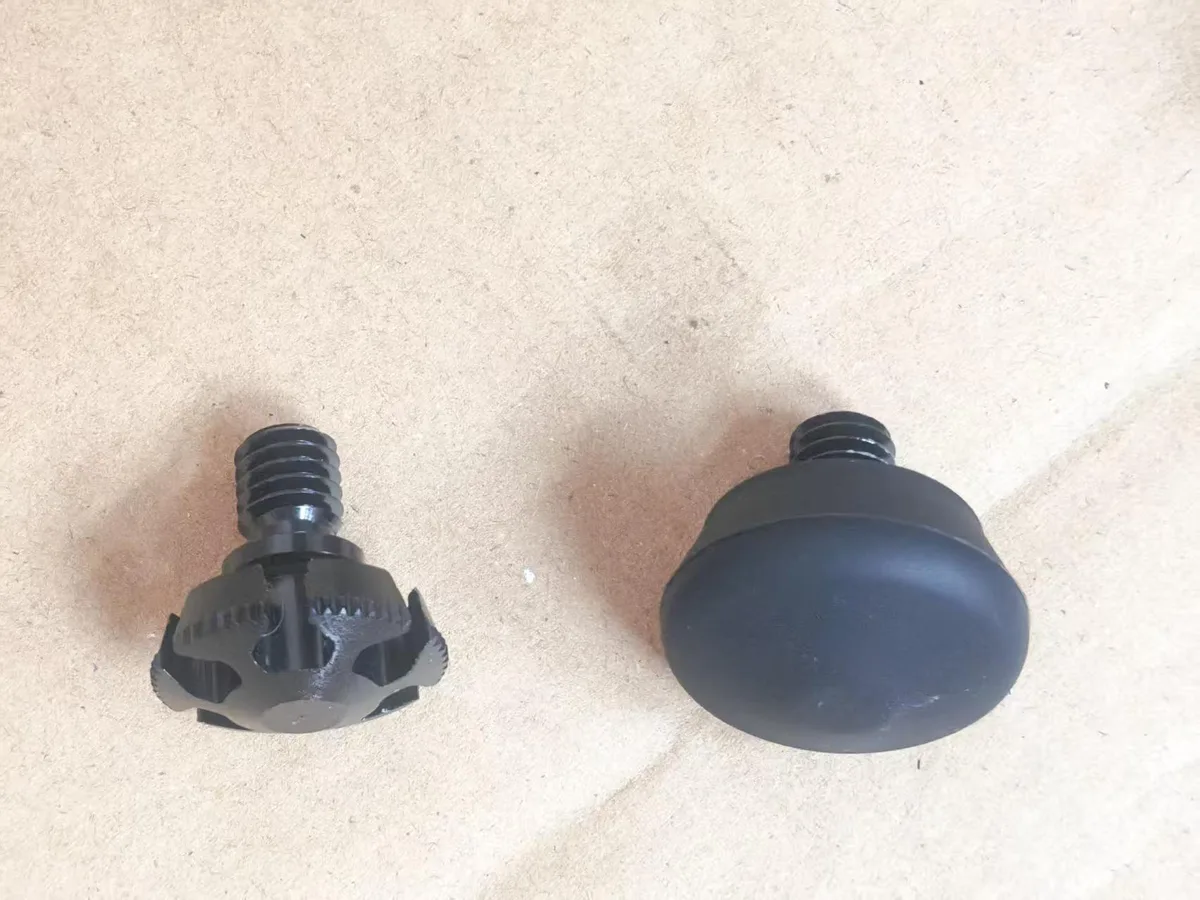
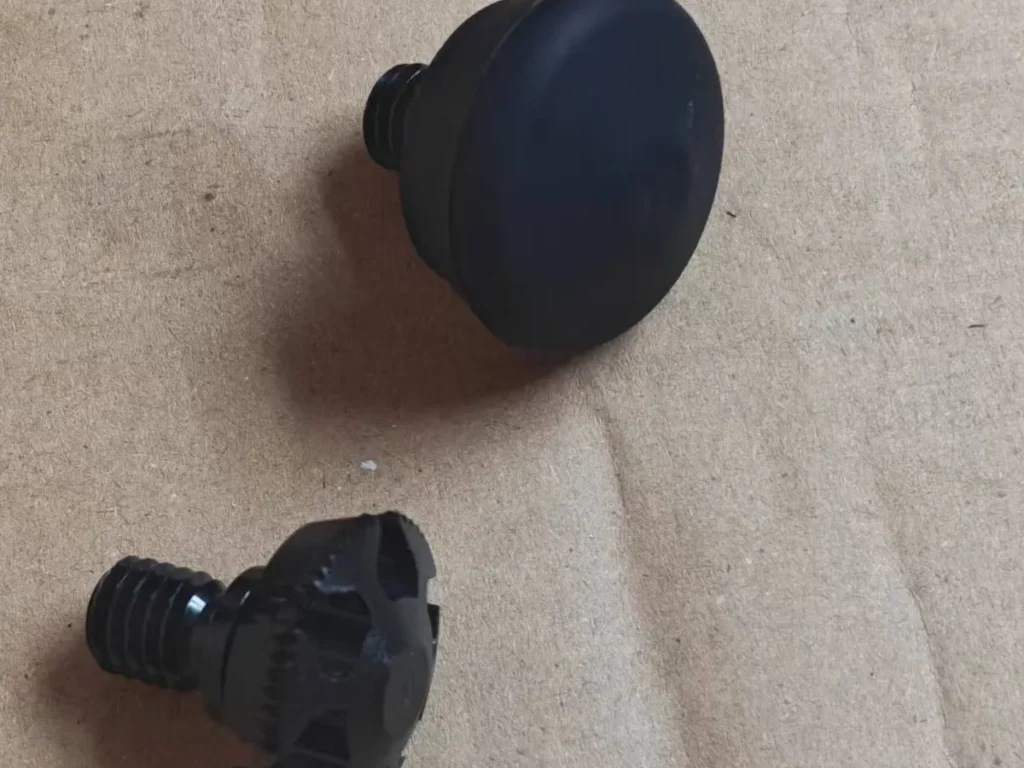
Silicone can be molded directly onto a metal or plastic insert to create a single part with a rigid core and a soft surface, such as a knob, grip, seal or foot. The example below is a black anodized aluminum threaded insert, CNC machined in-house, and the finished part after silicone has been overmolded over its head.
- The insert has slots and serrations so the silicone flows through and locks mechanically, in addition to any chemical bonding agent.
- The insert surface must be clean, and a primer is usually applied to the bonding area before molding.
- The thread is protected in the mold so it stays free of silicone and can be used without cleaning.
- The insert must locate accurately in the mold so the silicone thickness is even around it.
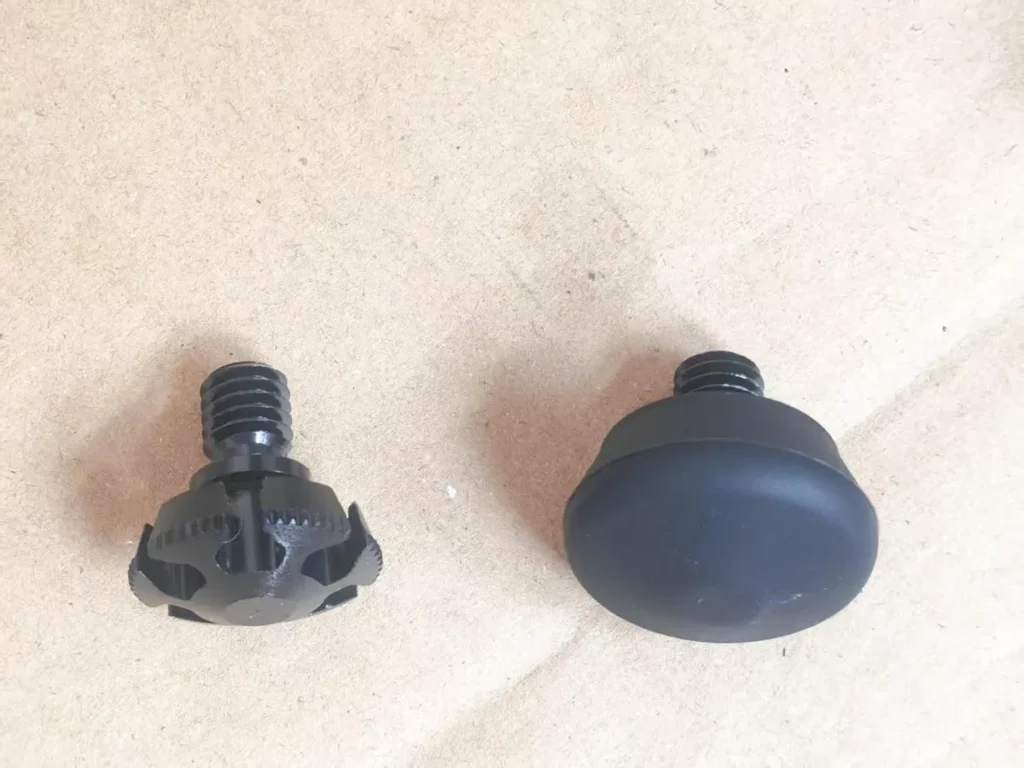
Because we machine the inserts and mold the silicone in the same company, the insert design, mold design and bonding can be reviewed together. See our overmolding guide and insert molding guide.
Design Guidelines for Molded Silicone Parts
- Wall thickness: keep walls as uniform as possible. Silicone can mold walls well under 1 mm, but very thick sections take longer to cure.
- Draft: silicone is flexible and often releases with little or no draft, but about 1 to 3 degrees helps on deep features and harder grades.
- Undercuts: modest undercuts can be stripped from the mold because the part stretches; deep undercuts on hard grades may tear.
- Radii: add radii to inside corners to improve flow and reduce tearing during demolding.
- Parting line and flash: agree where a thin parting line or trimmed flash is acceptable, and keep it away from sealing surfaces.
- Shrinkage: silicone shrinks after molding and post-curing, so mold dimensions are adjusted for the specific compound.
- Sealing design: for seals and gaskets, specify the compression and the groove size, not only the part size.
Tolerances for Molded Rubber Parts
Rubber parts cannot hold the same tolerances as machined metal, because the material is soft, shrinks during curing and is measured without clamping force. ISO 3302-1 defines tolerance classes for molded rubber, from M1 (high precision) through M2 and M3 (commercial, the most common) to M4 (coarse). In practice:
- LSR injection molding can reach the tighter classes on small parts.
- Transfer molding sits in between, and is good for insert parts.
- Compression molding normally achieves the commercial class.
- Tolerances should be applied only to functional dimensions, such as sealing diameters and fit features, with general tolerances elsewhere.
What Drives the Cost of Silicone Parts
- Process and mold type: compression molds cost less than LSR injection molds, but LSR has lower part cost at higher volumes.
- Number of cavities: more cavities raise the mold cost and lower the cost per part.
- Material grade: food-contact, medical, flame-retardant and special-color grades cost more.
- Inserts: overmolding adds insert cost, preparation and bonding steps.
- Secondary operations: deflashing, post-curing, printing, coating and assembly.
- Tolerances and inspection: tighter classes need more precise molds and more measurement.
Common Molding Problems and Their Causes
- Flash: thin excess material at the parting line from mold wear, overfilling or insufficient clamping.
- Bubbles and voids: trapped air or moisture; improved by venting, degassing and better preform shape.
- Short shots: not enough material or premature curing before the cavity fills.
- Sticky surface: under-cure, corrected by adjusting time and temperature or adding post-cure.
- Tearing at demolding: sharp corners, deep undercuts or demolding too early.
- Poor bonding on overmolded parts: contaminated inserts or missing primer.
Frequently Asked Questions
What is the difference between cured and uncured rubber?
Uncured rubber is soft, plastic and has little strength. Curing cross-links the polymer chains, so the cured part is elastic, keeps its shape and resists heat and chemicals.
Why is post-curing used for silicone parts?
Post-curing in an oven removes volatile by-products left from molding and stabilizes hardness and compression set. It is commonly required for food-contact, medical and high-temperature applications.
Should I choose compression molding or LSR injection?
Compression molding with solid silicone is usually more economical for prototypes, larger parts and smaller quantities. LSR injection is better for small precise parts, thin walls and higher volumes. We make both and can recommend the right route for your quantity.
How long does a silicone mold take?
As a guide, a standard solid silicone compression mold takes about 2 weeks and an LSR injection mold about 3 weeks, depending on size and complexity.
What hardness should I choose?
Most gaskets, keypads and covers use 50 to 60 Shore A. Choose softer grades for low-force sealing and soft touch, and harder grades for wear resistance and shape stability. We mold from about 30 to 80 Shore A.
Can silicone be molded onto aluminum or plastic parts?
Yes. Silicone can be overmolded onto machined aluminum, steel or plastic inserts, using mechanical locking features and a primer for bonding.
Get a Quote for Silicone Rubber Parts
Send your 3D model and drawing with the required material, hardness, color and quantity. Our engineers will review the design, suggest compression molding or LSR injection, and quote the mold and parts. See our injection molding services or contact us.