Choosing CNC plastic machining vs injection molding starts with what the next batch needs to establish. A few housings for an assembly review, a display model for an approaching exhibition and samples intended for a defined test program can require different materials, finishes and manufacturing routes. Quantity matters, but it does not answer the whole question.
At SAMSHION, customers choose CNC plastic parts when quantities are small, drawings are still changing or delivery dates are approaching. Typical purposes include appearance evaluation, structural and assembly checks, exhibition models and samples for certification-related work. Customers can specify the material, with the grade, available material form and project requirements confirmed during the manufacturing review.
The useful comparison is the total work needed to deliver an acceptable batch at the current design revision. This guide explains that comparison and the additional review needed when a CNC prototype becomes an injection-molded product.
Define the decision the next batch must support
Start by stating what will be evaluated. An appearance model may need the correct outer form, color and markings. An assembly prototype may need accurate mating faces, holes and internal clearance. A part used for a specified test can need a particular material grade, manufacturing condition and documentation.
These purposes can overlap, but they should be identified separately in the RFQ. A polished exhibition model might be unsuitable for a test that depends on the untreated material surface. Likewise, an unpainted fit-check component may be sufficient for the engineering review even though it is not ready for a public display.
This is a starting point for review. Injection molding can produce prototypes, while CNC machining can produce finished components for continuing use. The purpose of the batch determines which manufacturing evidence is useful.
Why small quantities and changing drawings often favor CNC
CNC plastic machining removes material from a suitable blank to produce the required features. The project needs programming, workholding, tools and inspection planning, but it does not require a dedicated injection mold for the finished part geometry.
For a small order, that difference can make direct machining practical. A simple component may require relatively little cutting and finishing. A complicated housing may require several setups, small tools, extensive material removal or hand work, which changes the comparison substantially.
Design changes also affect the total effort. Moving a connector opening or changing a mounting feature may require a revised machining program and a new blank. The same change in a mold can require a tool modification, an insert replacement or a wider review of the molding arrangement. The effect depends on the feature and the existing tool.
Avoid assuming that an existing CNC part can always be modified. Removing additional material may be possible where stock remains. Adding material to a wall or recovering an oversized hole can require a new part. When the design is evolving, identify which revision each sample represents and whether remaking it is more useful than altering it.
At SAMSHION, changing drawings are one reason customers request CNC prototypes. The manufacturing review should therefore establish the released revision for the order, the quantity required at that revision and the date after which changes affect the quoted work.
Compare total batch cost and the likely cost of revisions
The cost of CNC parts includes material, programming, setup, machining time, finishing and inspection. For injection molding, the comparison also includes the tool and its development, with the remaining cost depending on resin, cycle, cavity arrangement, handling and the agreed quality requirements.
Tooling expenditure is spread over the quantity ordered from that tool. This can make molding attractive for repeat demand, but the relevant quantity is the realistic demand for the approved design. A large forecast offers little benefit if the geometry is likely to change before those parts are needed.
Compare quotations for the same deliverable. A price for raw machined parts cannot be compared directly with a price for molded, painted and assembled units. Include the same material requirement, appearance condition, inserts, secondary machining, reports, packaging and delivery scope.
Consider the next design decision as well. If a short CNC batch will answer an unresolved assembly question, it may prevent a tool change later. If the unresolved question concerns molded shrinkage, a weld line or ejection, a CNC batch cannot supply that process evidence, however inexpensive it is.
There is no universal number of parts at which injection molding becomes cheaper. The difference between a compact solid part and a thin housing with many repeated features can be significant. Evaluate initial orders and expected repeat batches using the actual geometry and quoted scope.
SAMSHION’s prototype machining cost guide provides the machining cost context. For this comparison, keep the tooling investment and possible revision work visible alongside the finished batch price.
Review the geometry for each manufacturing route
A CNC design must allow tools to reach the required surfaces. Cutter diameter affects internal corner radii, and tool length affects access to deep features. Thin walls, small ribs and features on several sides can require a carefully planned setup sequence. Removing most of a large blank to leave a thin shell can be inefficient even when the design is technically machinable.
Injection molding introduces a different set of decisions. The part must fill, cool and release from the tool. Wall transitions, draft, ribs, bosses, parting lines, gates and ejector contacts can affect the design and final appearance. An undercut may need a moving tool element or a change to the part geometry.
These differences matter during early prototyping. A CNC housing with thick walls and square external sides may demonstrate the enclosure layout, while the production version still needs a molding review. Adding draft or changing wall sections can affect available space, mounting details and mating features.
Conversely, some molded features can be expensive or difficult to reproduce by cutting from solid stock. A complex internal passage, inaccessible recess or flexible retaining detail may need a different prototype arrangement. If a component is split and bonded for access, identify the joint and its effect on the intended evaluation. Our CNC plastic splitting and bonding guide covers that route.
BASF’s injection molding design discussion connects filling behavior with outcomes such as weld lines and voids. These are molding questions that machining an external shape does not resolve.
Specify the plastic grade and the material form
Customers can specify the material for a SAMSHION project. A useful specification identifies the polymer, grade and relevant requirements, rather than relying only on a broad name such as ABS, nylon or polycarbonate. Color, reinforcement, additives and required documentation can also affect the choice.
CNC machining usually requires an appropriate stock shape such as plate, rod or another suitable blank. Injection molding uses a resin selected for the molding process. A grade available as molding pellets is not automatically available as a machinable sheet of the necessary thickness. Confirm the available form before treating two quotations as equivalent.
Material suppliers can offer different starting forms for different manufacturing routes. Ensinger’s machining overview describes conventional stock shapes and other possible blanks. For a custom order, availability and the required properties need to be checked for the particular material and dimensions.
The same polymer family does not establish identical behavior in a machined and molded component. Processing history, reinforcement orientation, material condition and the finished geometry can influence performance. A machined prototype may answer a dimensional question while leaving production material behavior for a later evaluation.
If the purpose is appearance and assembly only, an agreed prototype material can be suitable even when the production resin has not been finalized. Record the substitution and the evaluation it supports. If a grade is mandatory for a defined test, confirm that requirement before ordering material or choosing an alternative.
Use CNC prototypes to evaluate appearance and assembly
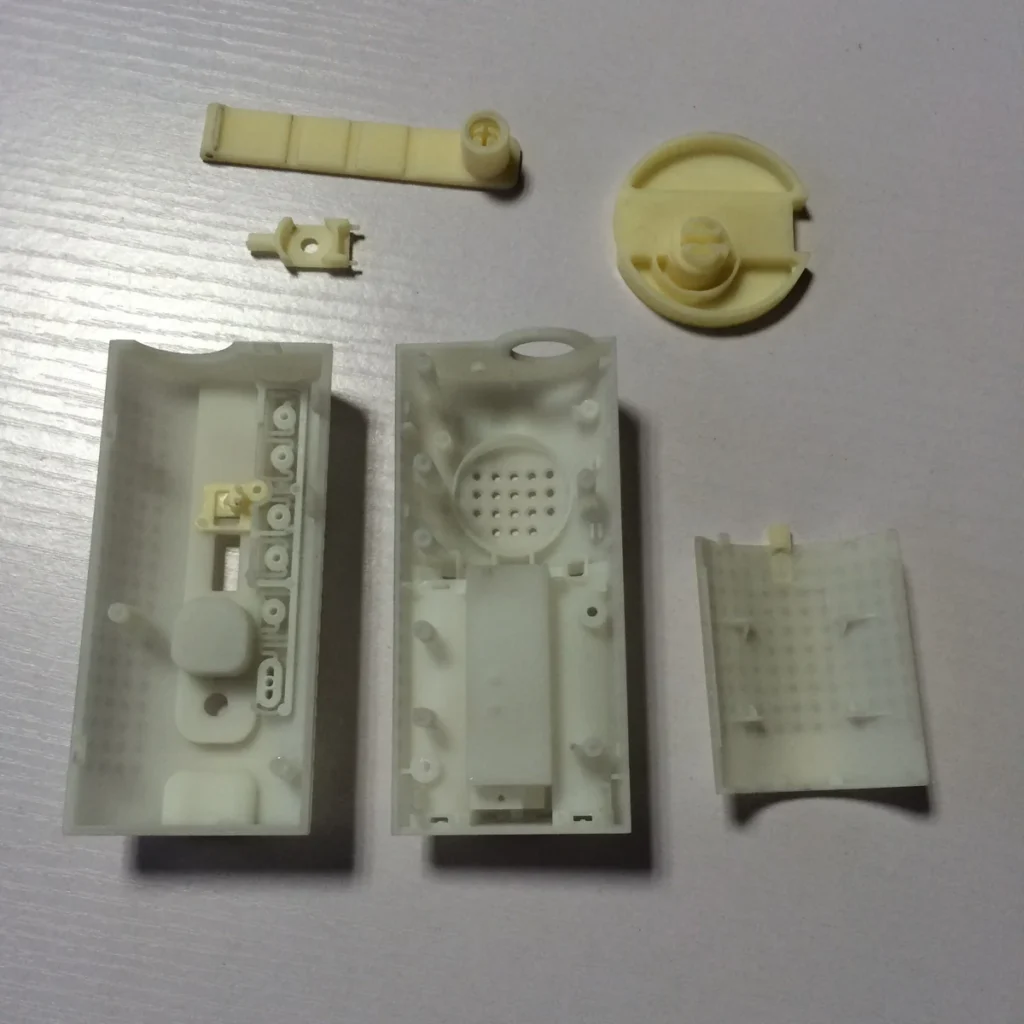
A CNC plastic prototype can help examine the overall form, component placement and access for assembly. A complete set can reveal whether holes align, an enclosure closes, a fastener can be reached or a neighboring component interferes. These checks are most useful when the mating components and current design revision are available.
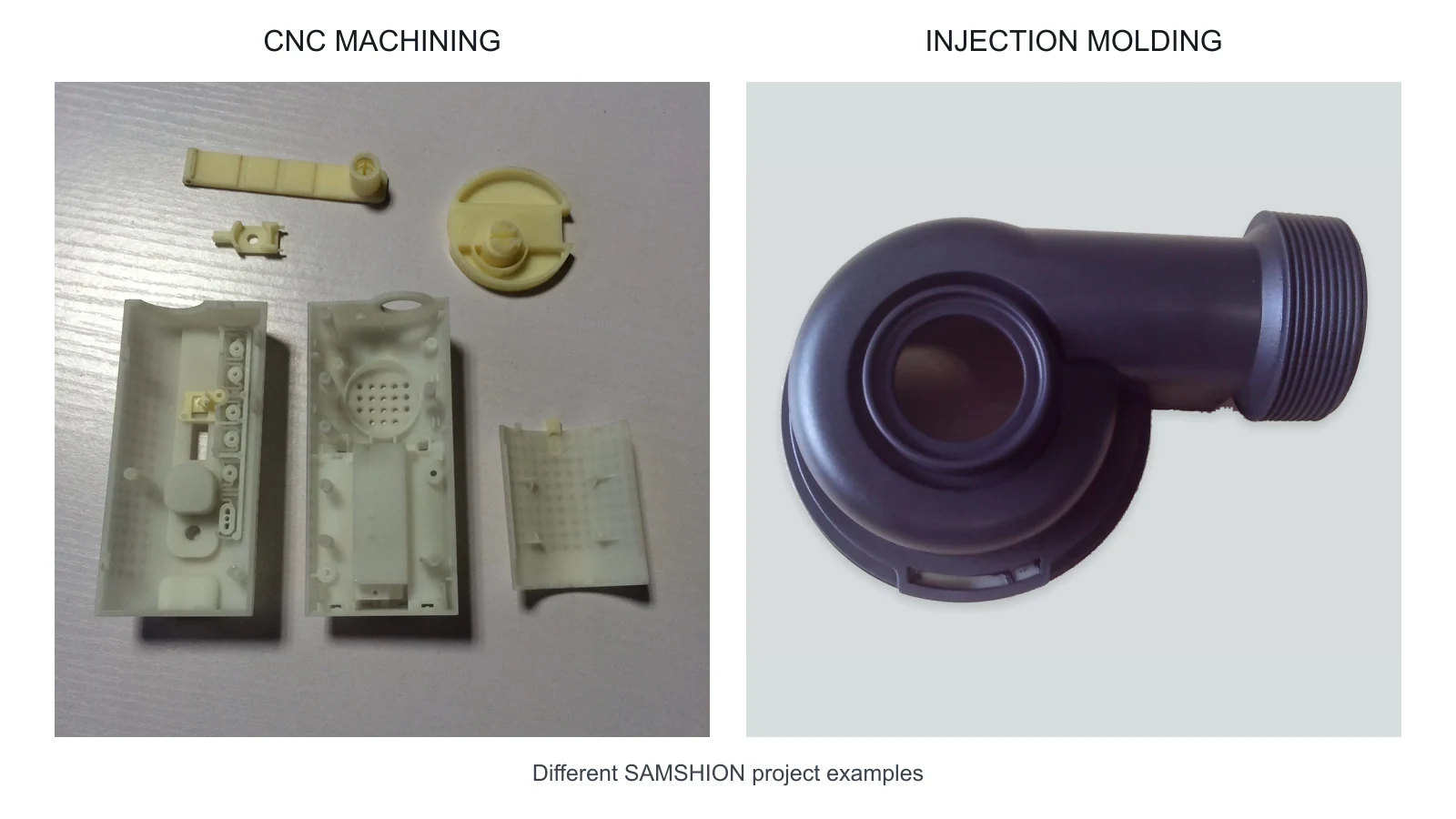
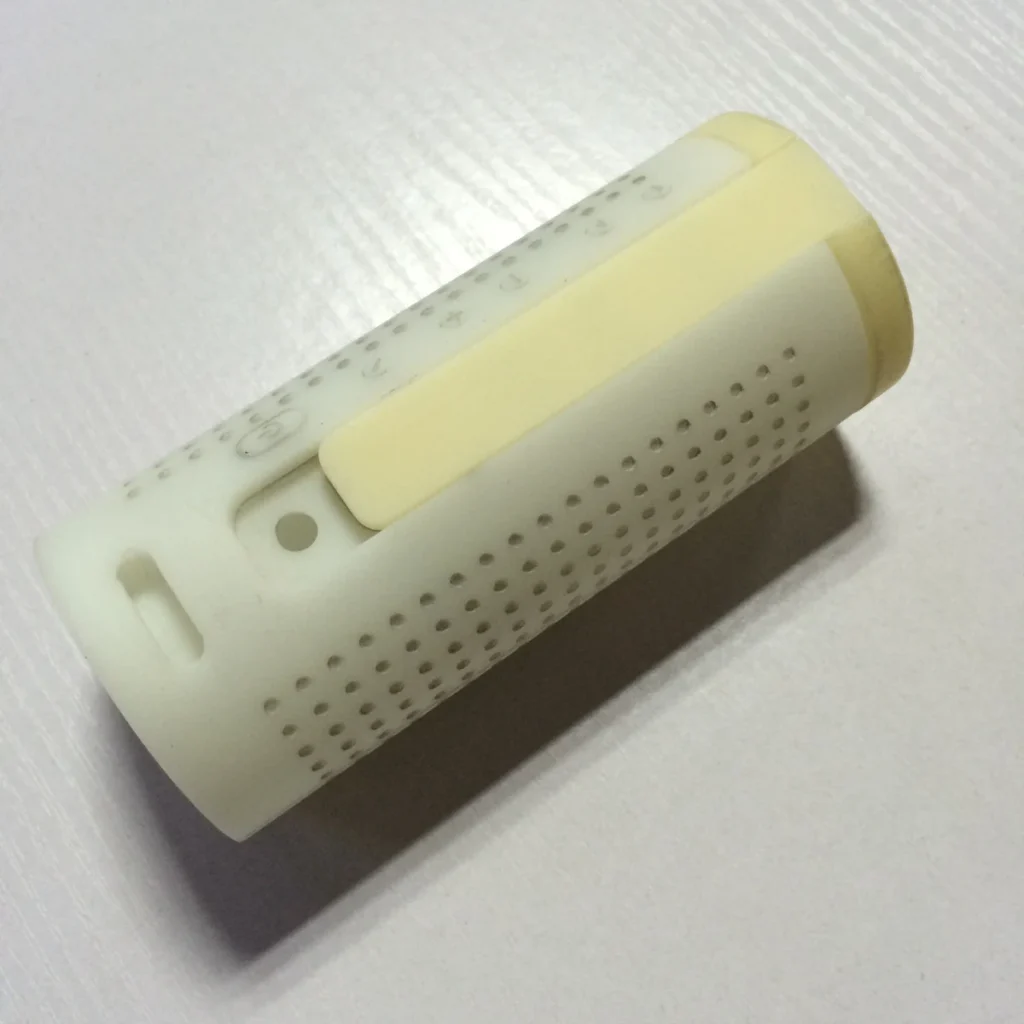
At SAMSHION, prototype orders include appearance and structural assembly evaluation. For the CNC-machined ABS example shown here, the components were made as a set and assembled with screws. The photographs show the separate parts and assembled condition; they do not establish a strength rating or a production molding result.
Define what must be checked during assembly. The review may concern connector clearance, cover seating, fastener access, an internal mounting feature or another drawing requirement. Where an actual mating component is needed, agree on its revision and who will provide it.
Assembly behavior can depend on surface finish. Painting can change a narrow clearance or the condition around a mating face. Adhesive joints, prototype fasteners and temporary supports can also affect what the model demonstrates. Identify those features so the review remains tied to the intended production arrangement.
Our prototype assembly checks guide explains the related inspection and delivery discussion. For a CNC-to-molding project, retain the accepted prototype revision and the open issues that still require molded samples.
Plan exhibition models around the required presentation date
An exhibition model can require a different finish from a machining sample. Color, paint texture, markings, seams, display fixtures and the condition of visible faces may matter more than an internal feature that visitors will never see. Explain the intended display and handling conditions when requesting the quotation.
Distinguish a static model from a demonstration that people will operate. A model with moving parts, lighting, buttons or repeated visitor handling needs a defined scope for those functions. A photograph of a finished housing does not establish that it contains working electronics or that its mechanism has been evaluated for repeated use.
Work backward from the date the model must arrive. Allow for the agreed finishing, assembly checks, protective packing and transport. If several people need to approve color or appearance, include those decisions in the schedule rather than leaving them until the end of machining.
The approaching deadline is one reason SAMSHION customers choose CNC plastic prototypes. Feasibility still depends on material supply, geometry, the requested finish and the work needed after machining. A delivery commitment should cover the completed item the customer needs to receive.
For finish planning, our plastic painting guide explains the relationship between presentation surfaces and protected functional areas.
Define samples for testing and certification related work
Certification-related requests need the intended test and sample requirements before the manufacturing route is fixed. The customer and relevant testing organization should confirm the acceptable material, manufacturing method, thickness, finish and assembled condition for the evaluation.
A CNC sample may be useful for an agreed preliminary evaluation, but its acceptability for a particular test must be confirmed. A material data sheet, a dimensional report and a finished product test result establish different things. A prototype produced in a specified polymer does not automatically establish the production product’s certification status.
UL Solutions’ mechanical testing overview for plastics notes that both the material and the product design influence mechanical properties. The practical implication is to define what the sample represents and which result is required, rather than treating the polymer name as sufficient evidence.
When requesting these samples, provide the applicable test plan or laboratory requirements, required material identification and any finishing restrictions. SAMSHION can review the manufacturing request against those inputs. The pictured components illustrate manufacturing and assembly; no certification or test outcome is assigned to them.
Choose injection molding when molded process evidence is needed
Injection molding can be appropriate before high-volume production when the next decision depends on the molded condition. Examples include evaluating filling, a gate location, a weld line, shrinkage, warpage, ejection or a molded retaining feature. These characteristics are not reproduced simply by cutting the same nominal CAD shape.
Rapid injection tooling can provide an earlier molded batch where its construction, material compatibility and expected use suit the project. It remains injection molding and needs a tool review. Its suitability depends on the geometry and program requirements, not just a label such as prototype tooling.
SAMSHION’s rapid mold and production mold comparison introduces the tooling decision. For an individual project, the quotation should state the expected use, tool arrangement and scope of sample development.
Repeated demand for an established part can also favor a molded route. Features such as ribs, bosses and repeated contours can be formed in each molding cycle rather than cut individually. Additional finishing, inserts, secondary machining and inspection still belong in the cost and delivery plan.
Review the transition from CNC to injection molding
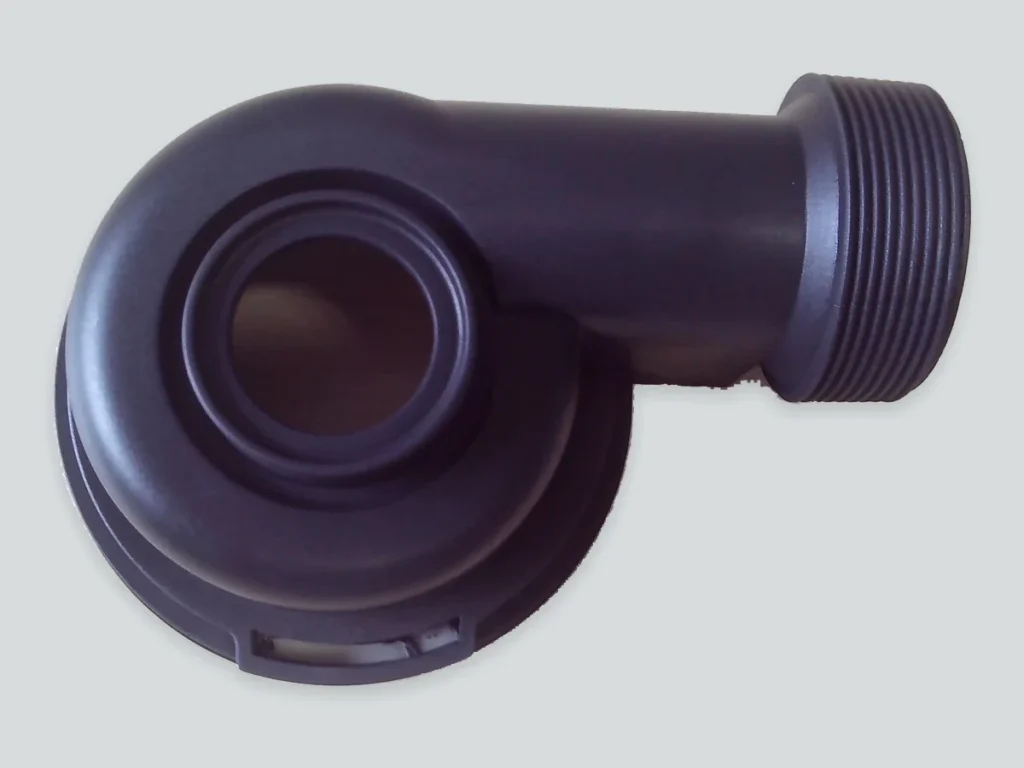
Treat the accepted CNC prototype as evidence for the questions it answered. Record the approved geometry, mating components, appearance decisions and outstanding issues. Then review the design for the production process before releasing the tool.
Check changes required for draft, wall sections, radii, gates, ejection and tool movement. A change made for molding can affect a previously accepted interface. Review the revised production geometry with the same assembly requirements rather than assuming the earlier fit check covers every later change.
Agree which dimensions and surfaces need particular attention on the first molded samples. Useful priorities include the features that locate mating parts, control enclosure closure or influence the intended test. The drawing and sample review should refer to the same revision and final material condition.
Molded sample evaluation may reveal an issue that was absent from the CNC version. Investigate whether it arises from geometry, material condition, shrinkage, the molding process or another cause before modifying the component design. A CNC reference can help communication, but it is not an automatic acceptance standard for every molded surface or dimensional characteristic.
Our T1 injection molding sample checklist gives the corresponding review framework. The aim is to carry confirmed product decisions forward while evaluating the manufacturing characteristics introduced by molding.
Send a complete comparison request
A useful RFQ connects the geometry with the purpose of the batch. Include the following where applicable.
- The current drawing and CAD revision, with critical features identified.
- Quantity required now, expected repeat demand and which design decisions remain open.
- Requested polymer grade, acceptable alternatives and material documentation requirements.
- Whether the parts support appearance, assembly, exhibition, a defined test or several purposes.
- The required finish, markings, protected mating surfaces and assembly scope.
- Mating components, inspection reports and any laboratory sample requirements.
- The arrival date, approval steps, packing and delivery expectations.
If requesting both routes, ask for the same finished batch scope and identify tooling costs separately. Where the two routes need different geometry or materials, have those differences stated clearly so the comparison remains meaningful.
Frequently asked questions about CNC plastic machining vs injection molding
Which process is cheaper for a small quantity
CNC often avoids the dedicated injection tool investment, which can help on a small batch. Part complexity, cutting time, finishing and the need for molded process evidence can change the decision. Compare complete quotations rather than using a universal quantity threshold.
Can I specify the plastic material
Yes. Provide the material grade and the requirements that make it necessary. The quotation review should confirm availability in the required form and whether any proposed alternative is acceptable for the stated prototype or test purpose.
Can a CNC prototype prove that an injection molded part will assemble
It can support review of the nominal geometry and the tested mating arrangement. The molded version introduces process effects and may include design changes for tooling. Check the production revision and molded samples against the defined assembly requirements.
Is CNC always the fastest way to obtain a plastic sample
The complete route determines the date. Material availability, cutting access, painting, assembly and delivery can dominate a CNC schedule. An existing suitable mold or a need for molded process evaluation can make another plan more appropriate.
Can CNC samples be used for certification related testing
Confirm the sample requirements with the customer and testing organization before manufacturing. The required resin, material form, manufacturing route, dimensions and finish can affect whether the samples are suitable for the particular test.
When should a project move from CNC to injection molding
Review the change when the design and demand justify tooling, or when the next evaluation needs molded parts. Confirm the material, production geometry, total cost and sample acceptance plan together. Continuing CNC production can remain appropriate for some parts and demand patterns.
Discuss the next batch and the production plan together
CNC plastic machining vs injection molding is a decision about the current requirement and the evidence needed for the next step. Small quantities, drawing changes, approaching deadlines and appearance or assembly reviews can favor CNC. Molded behavior and stable repeat demand can make injection molding the appropriate route to review.
Send your CAD model, drawing revision, quantity, material request and intended sample use to SAMSHION for a manufacturing review. Include the arrival date and any test requirements so the quotation addresses the finished batch and the decisions it must support.