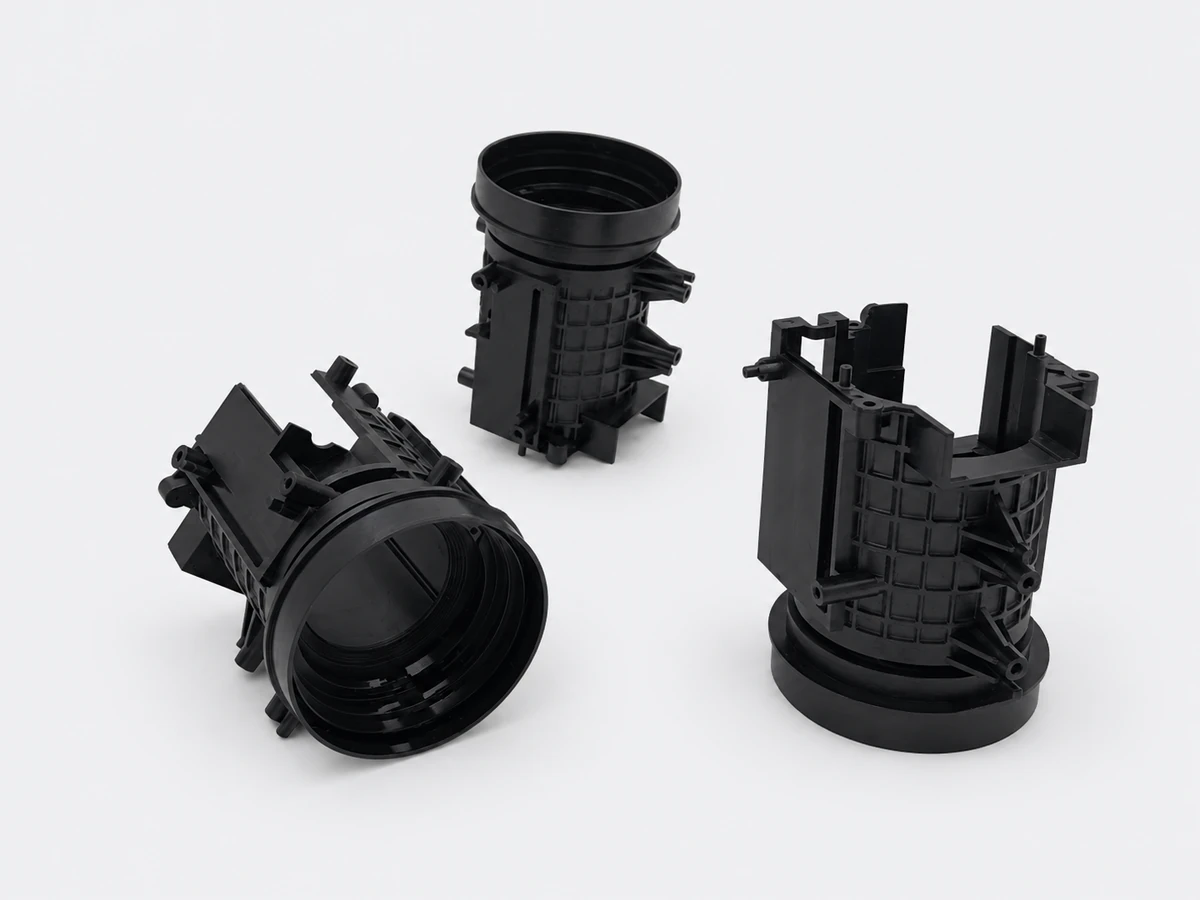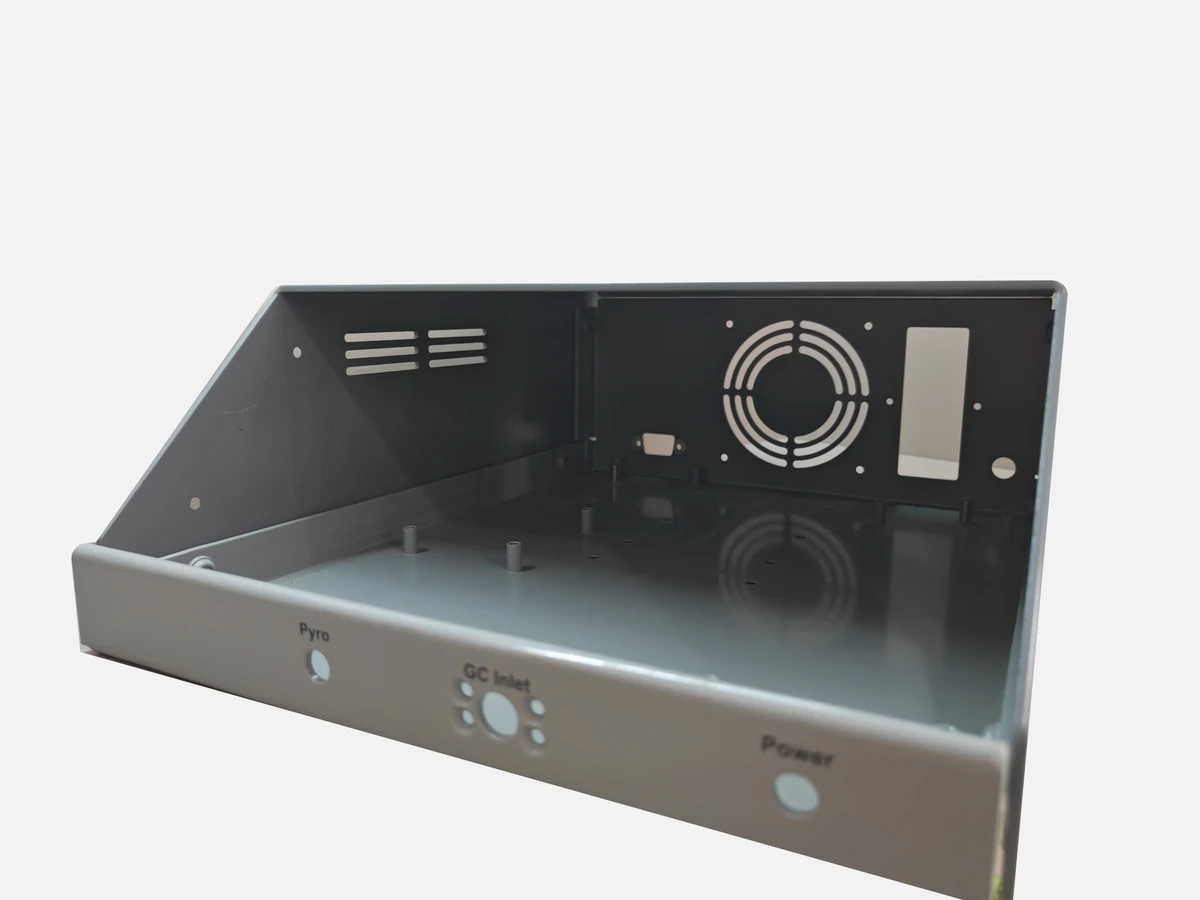
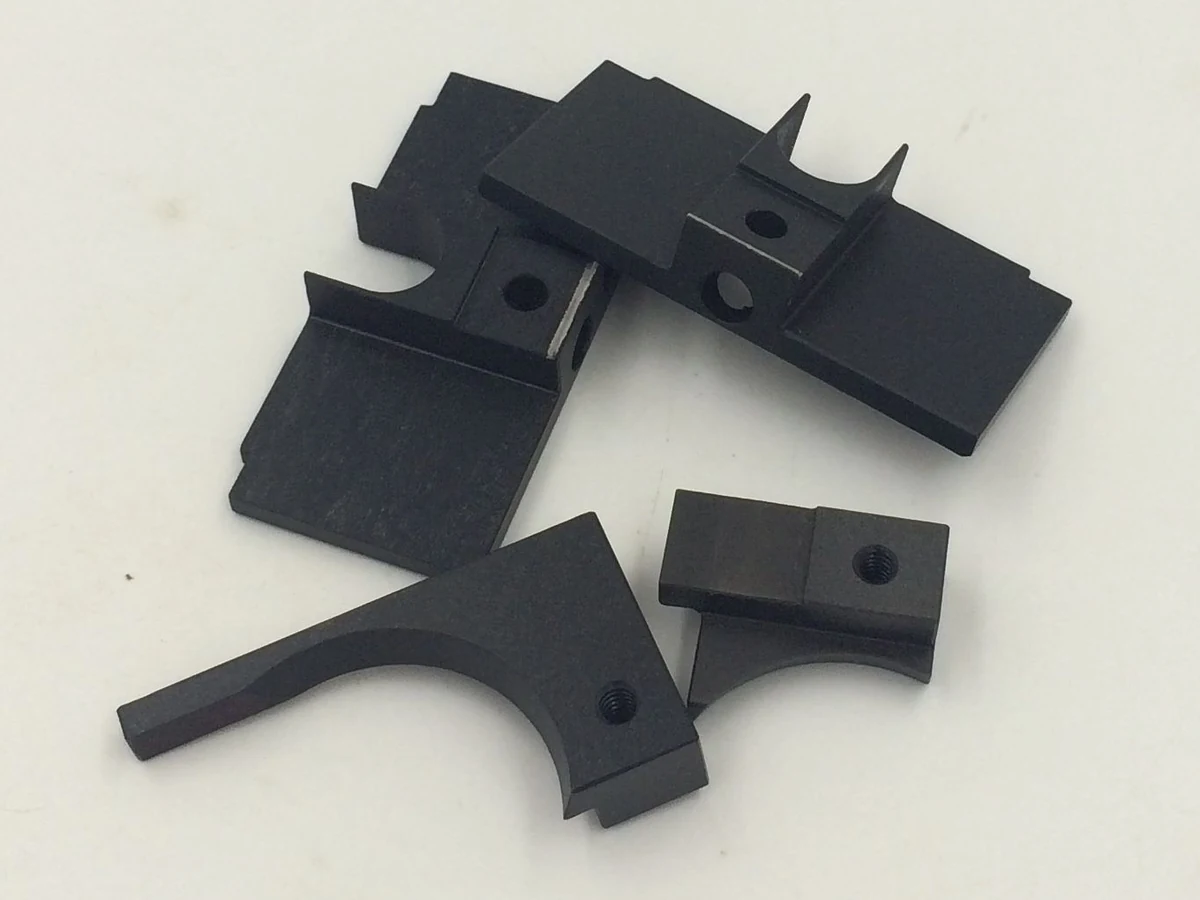
Black oxide coating can give machined steel parts a dark finish with low dimensional buildup. For a precision component, the useful question is how the complete finishing route affects the drawing requirements, mating features and intended environment. The steel grade, preparation, blackening process and protective post-treatment need to be considered together.
At SAMSHION, we machine steel parts and arrange black oxide finishing through external suppliers. Machining and inspection follow the agreed drawing and order requirements. Specifying the finish before production helps us communicate critical dimensions and acceptance conditions to the finishing supplier.
This guide explains what to define when ordering black oxide for CNC machined steel parts, including material identity, surface preparation, holes and threads, corrosion expectations and final checks. It also distinguishes steel blackening from black anodizing on aluminum, so the color description does not replace a manufacturing specification.
What Black Oxide Means for Steel Parts
Conventional black oxide on ferrous materials is a conversion treatment that forms a dark oxide surface. It is commonly selected when a black appearance and low dimensional buildup are useful. Its appearance still depends on the material, preparation and underlying texture. A blackened machined surface may retain a different sheen from a blasted or ground surface.
Commercial steel blackening is not one interchangeable process. Hot and some intermediate-temperature routes form black magnetite, while products sold as room-temperature blackening can use different chemistry. Birchwood Technologies explains these process distinctions. Confirm the route required by the drawing or accepted by the customer before assuming that different black finishes are equivalent.
The term black oxide should therefore identify more than a desired color. Where a specification is required, record its designation, revision and applicable class or process requirement. Also define the post-treatment and any protected areas. A generic request to make the part black leaves these details open.
Our surface finishing overview introduces black oxide alongside other finishing options. Selecting between them requires the base material and the part’s use conditions, rather than a comparison of color alone.
Confirm the Steel Grade and Material Condition
Provide the actual material designation shown on the drawing. Carbon steel, alloy steel, tool steel and stainless steel do not necessarily use the same preparation or blackening route. The word steel is too broad to establish process compatibility. Existing plating or another surface treatment also needs to be disclosed.
Material condition matters alongside grade. A supplier may need to know whether the component has been heat treated, ground, welded or previously finished. Scale, oxides, cutting residues and differences between surfaces can affect preparation and the resulting appearance. For an assembly containing several materials, identify each material and ask whether the components should be finished separately.
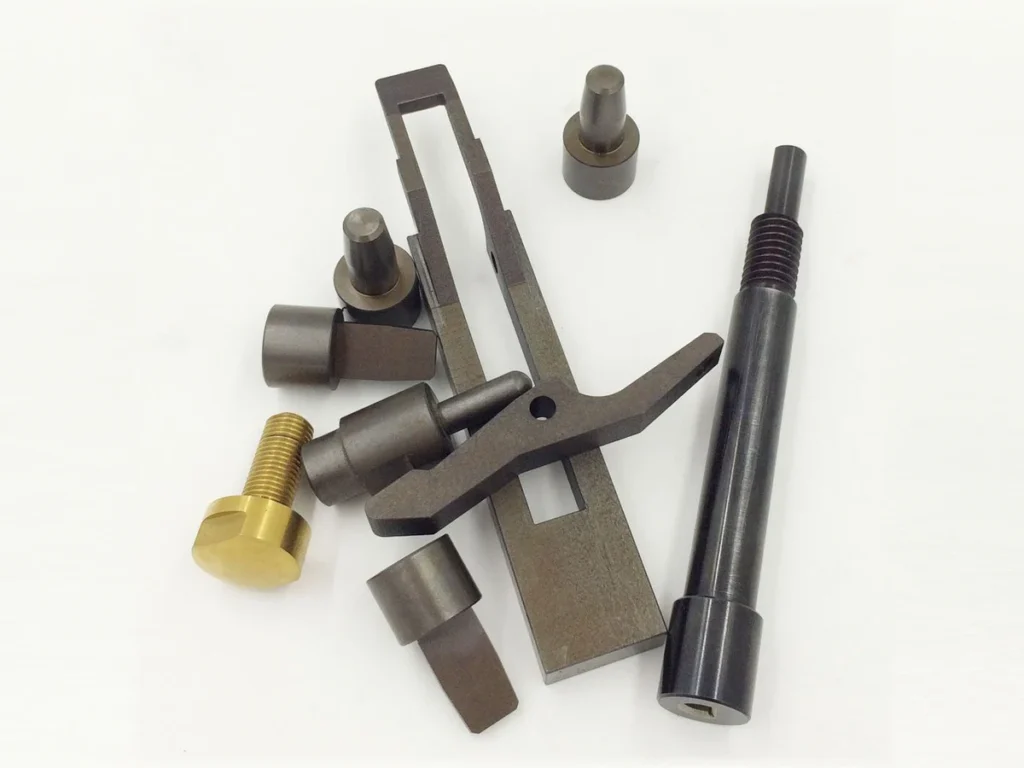
Set the sequence of machining, heat treatment and finishing as part of the project plan. A drawing may require a particular condition before finishing or require certain features to be completed afterward. Do not assume that a finishing operation can correct a heat-treatment distortion or a dimensional error left from an earlier operation.
For tool steel components, our guide to machining hardened tool steel discusses a related manufacturing decision. The grade, hardness condition and finish requirement should remain consistent across the drawing, quotation and supplier instructions.
Communicate the Requirements Across the Supplier Route
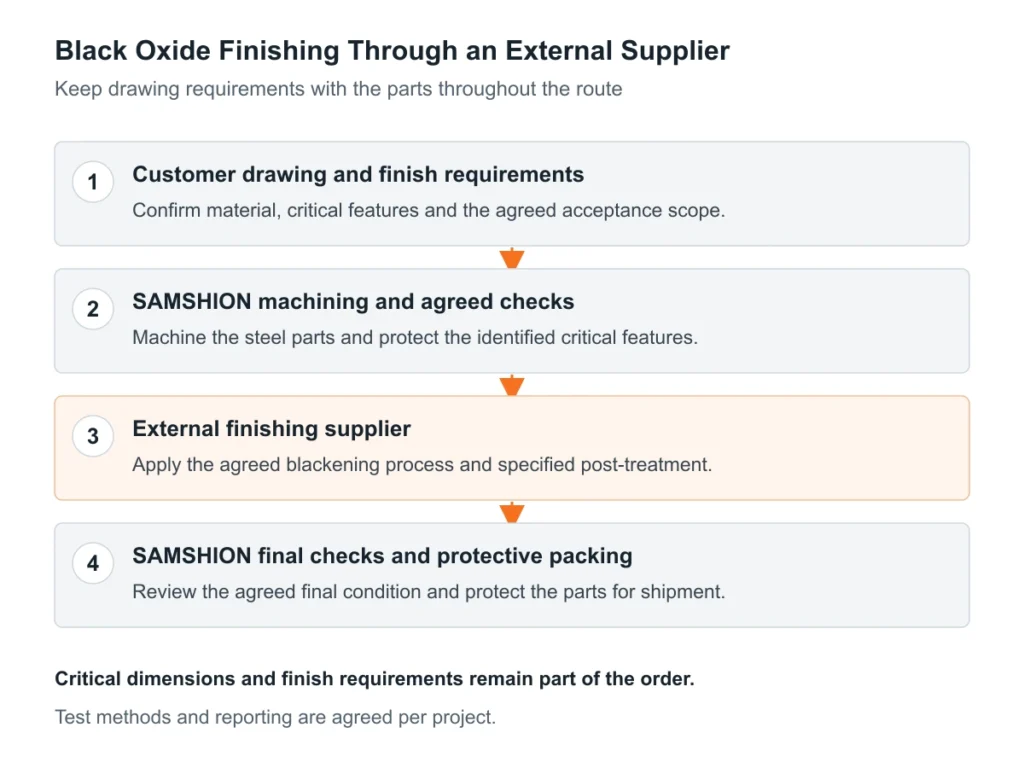
Using an external finishing supplier makes a clear handoff important. The drawing revision released for machining should also identify the finishing requirements. If a critical diameter is accepted in the finished condition, that requirement needs to remain visible when the parts are sent for blackening.
For SAMSHION projects, the finish is coordinated with the external supplier as part of the agreed order scope. The manufacturing plan should establish what is checked before the parts leave for finishing, what the supplier is required to provide, and which checks are needed after return. This avoids treating the finishing instruction as a separate color request with no connection to the dimensional drawing.
Any special inspection, test report or supplier certificate should be included in the quotation and order. A requirement introduced after the batch has been processed may need additional review or testing. Define the evidence needed for approval early enough for the responsible party to plan it.
Define the Condition in Which Dimensions Apply
Low Buildup Does Not Replace a Finished Dimension
Black oxide is often described as having little dimensional effect. That is useful when choosing a finish, but it does not establish that every finished feature will meet every tight tolerance. Surface preparation, the particular blackening route, residues and the protective post-treatment can all matter to a close fit or measurement.
Avoid assigning one universal black oxide coating thickness to all suppliers and processes. Also avoid treating the full film thickness as deposited metal growth. A conversion treatment changes the surface differently from a plated layer. Where dimensional change matters, ask the supplier to explain the proposed route and agree how the finished feature will be accepted.
Mark whether the drawing dimensions apply before or after finishing. For a dimension that controls installation, the intended acceptance condition will usually need to represent the part as supplied or assembled. If a feature is to remain uncoated, identify it explicitly and agree the process sequence.
Critical Features to Review
Features worth discussing include bearing or mating diameters, precision bores, locating holes, shoulder lengths, thread fits and mounting faces. A small change in surface condition can matter at one interface while being irrelevant on a nearby clearance surface. This is why the critical features should be identified rather than assigning the same level of concern to the whole part.
Consider a hypothetical locating sleeve with a close outside fit and a less critical outer flange. The same finishing instruction can apply to both areas, but their acceptance requirements differ. Discuss the fit diameter before processing and establish whether a finished-part measurement or a trial with an agreed mating component is required. This example illustrates a planning question, not a claimed result from a customer project.
Review Holes Threads and Processing Access
Recesses and blind holes need particular attention because cleaning, treatment, rinsing and drainage depend on the actual geometry. A hole that can be machined is not automatically easy to process or inspect after finishing. Inform the supplier about internal features and any areas where retained liquid or residue would be unacceptable.
For threaded parts, communicate the thread form, size and tolerance requirements on the drawing. If gauging after finishing is required, include that check in the agreed scope and define the condition of the part during gauging. The relevant question is whether the supplied thread meets its specification after the complete route.
Our CNC threaded hole guide covers thread manufacturing and specification. Finishing adds another coordination step; it does not replace the original thread requirement. Where a threaded area must remain untreated, confirm whether masking, a different sequence or another approach is practical before release.
Avoid approving a change to hole access, a drain feature or a critical edge solely to make finishing easier. Such a change may affect the part’s function. Refer it to the customer and update the approved drawing where necessary.
Agree Surface Preparation and Appearance
Preparation Can Affect the Starting Surface
Cleaning and preparation must suit the material condition and the specified finish. Existing rust, scale, residues or another coating may require additional work, as discussed in Hubbard Hall guidance on preparation for black oxide. Aggressive preparation can affect a precision surface or edge, so the supplier needs to know where the drawing restricts material removal or a change in texture.
Do not use blackening as a substitute for resolving a scratch, dent or machining defect. A dark color does not establish that the original surface is acceptable. Identify any surface defect that requires review before the batch is sent for finishing, and agree corrective work before it changes a critical feature.
If blasting or another texture-producing operation is requested, state it separately from black oxide. The preparation can influence gloss and texture independently of the chemical treatment. A sample made with one preparation route should not automatically become the appearance reference for a different route.
Appearance Acceptance Needs a Reference
Define which surfaces are visible in normal use and what appearance matters there. A reference sample can help communicate the intended black tone, sheen and permissible handling marks, provided the supplier understands the reference material and process. Photographs can support that discussion but may change color with lighting and screen settings.
Agree the treatment of rack or handling contact locations where relevant. A part that looks uniform from one angle may still have a local mark in a customer-visible area. Specify the location restrictions and inspection scope rather than relying on an undefined request for a perfect black finish.
Set Realistic Corrosion Expectations
Blackening does not make steel immune to rust. The performance of the supplied finish depends on the process, base material, preparation, protective post-treatment and exposure. Humidity, condensation, handling and contact with other substances can create different demands from dry indoor storage.
The published scope of ISO 11408 for black oxide coatings on iron and steel describes limited protection in mildly corrosive conditions, including with preservative treatment. Define the actual exposure and acceptance requirement before selecting the finish for a demanding environment.
An appropriate protective oil or other specified post-treatment can be an important part of the system. Birchwood Technologies describes oil protection with black oxide. Identify whether the supplied parts may have an oily film, whether the customer will clean them before assembly, and whether the protection is compatible with the intended use.
Cleaning off a protective film can change the condition being relied on for storage or use. If the application requires a dry or clean contact surface, discuss that requirement with the supplier and customer when selecting the finish. Do not silently substitute a different oil, wax or sealer to obtain a preferred feel or appearance.
If corrosion performance must be demonstrated, specify the applicable test, exposure conditions, acceptance criteria and responsible party. A chemical supplier’s published result for its own system is not a test result for a SAMSHION component. Supplier documentation and project-specific testing need to address the agreed requirement.
Specify Masking and Areas That Must Remain Untreated
Some interfaces may require an untreated surface or a different finishing condition. Show the boundary clearly on the drawing and state why it matters, such as a precision fit, joining operation or contact requirement. The reason helps the supplier assess whether the proposed process and masking method can meet the intent.
Masking capability depends on the finishing route and geometry. Ask for an assessment rather than assuming that every tiny hole, narrow groove or internal face can be isolated consistently. A nominally protected area can also be affected by nearby preparation, handling or fluid retention, so define the accepted boundary condition where it is critical.
Do not assume that a black surface provides a specified electrical contact condition. The surface and any protective film may need to be assessed for the actual interface. Similarly, a later adhesive, paint or assembly operation may have cleanliness requirements that need to be reconciled with post-treatment and packing.
Distinguish Black Oxide from Other Black Finishes
Black Oxide and Black Anodizing
Black anodizing is commonly associated with aluminum parts, while this article addresses blackening of steel. Similar color does not make them interchangeable finishes on the same substrate. The base material and the required performance determine which routes should be considered.
When a reference photograph shows a black aluminum component, identify its material and finish before requesting the same treatment for a steel component. A photograph communicates appearance; the drawing still needs to identify the manufacturing requirement. Our CNC machining surface finish guide provides a broader comparison of available routes.
Black Oxide and Powder Coating
Powder coating introduces a coating system with different thickness, masking, appearance and curing considerations. A part designed for one route may need a different dimensional or interface plan for the other. Compare the actual specification and use conditions instead of selecting solely by a black color sample.
Our powder coating guide for sheet metal parts discusses coating coverage, interfaces and finish requirements for that route. The comparison is particularly useful when a visible enclosure and a precision internal component need different surface treatments within the same assembly.
Black Oxide and Plated Finishes
Plating may be considered when the application requires a different corrosion, wear or appearance characteristic. The coating build and resulting dimensions then need their own review. Ask for quotations and acceptance requirements for the specific alternatives; a different finishing process is not automatically an equivalent substitute for a drawing callout.
Plan Inspection Documentation and Packing
For black oxide orders, define the checks needed at each stage. Before finishing, the relevant work may include confirming drawing revision, material identity, important dimensions and visible surface condition. After the supplier completes the process, the agreed checks should address the supplied condition and the requirements that finishing can affect.
Possible acceptance items include critical dimensions, thread fit, visible coverage, permitted marks, cleanliness and the specified post-treatment. The method and reporting level should match the order. A general visual check cannot establish film composition, corrosion performance or a precise thickness requirement.
If a supplier process certificate, dimensional report or test report is required, identify which document is needed and what it must reference. Keep the part number, drawing revision and batch identification consistent where traceability is part of the order. Do not treat every document described as a certificate as evidence of the same property.
Protection after finishing also belongs in the delivery scope. Separate contact-sensitive parts and choose packing compatible with the specified surface condition. If parts must remain oiled, dry or ready for a later cleaning step, state that condition before shipment. This helps the customer understand the condition of the parts on arrival.
Information to Include in a Black Oxide Enquiry
Provide a 3D model and dimensioned drawing, then identify the requirements that affect the finishing plan:
- Steel grade and the required material condition.
- Part number, drawing revision and order quantity.
- Finish specification, revision and applicable process or class if required.
- Critical dimensions and whether limits apply before or after finishing.
- Threads, blind features and internal areas that require attention.
- Surfaces to remain untreated and clearly marked boundaries.
- Required appearance and any approved reference sample.
- Protective oil, sealer, cleanliness or later assembly requirements.
- Agreed inspection, documentation and any performance testing.
- Packing condition and the required delivery milestone.
If the finish callout is incomplete, resolve the open points before manufacturing release. A quotation can then address the same material, finishing route and acceptance scope the customer intends to order.
Common Questions About Black Oxide on Machined Parts
Does Black Oxide Affect Dimensions
It is generally selected for low dimensional buildup, but the complete preparation and finishing route still needs to be considered. Define the finished limits for critical features and agree the appropriate checks rather than relying on a blanket promise of zero change.
Does Black Oxide Prevent Rust
The finish system can provide protection appropriate to its process and post-treatment, but steel can still rust under unsuitable exposure. Specify the intended environment, protective film and any required corrosion acceptance criteria.
Can Threads and Precision Holes Receive Black Oxide
They may be included when the material, geometry, process and final acceptance requirements allow it. Review access, drainage and the completed fit with the supplier. Identify untreated areas explicitly where the drawing requires them.
Will Black Oxide Hide Scratches or Machining Marks
It should not be relied on to correct an unacceptable underlying surface. Agree the preparation and appearance standard before finishing, and assess defects before corrective work changes the part.
Is Cold Blackening the Same as Hot Black Oxide
Commercial names can cover different processes and chemistry. Confirm the actual route against the required specification and intended performance. A matching black appearance alone does not establish process equivalence.
Does SAMSHION Perform Black Oxide Finishing In House
We machine the steel components and arrange black oxide finishing through external suppliers. Drawing requirements, finishing scope and agreed inspection or documentation are coordinated for the project.
Send your drawings, steel grade, quantity and finish requirements through our project quotation page. Our team can review the machining requirements and clarify the information needed for supplier finishing and acceptance.