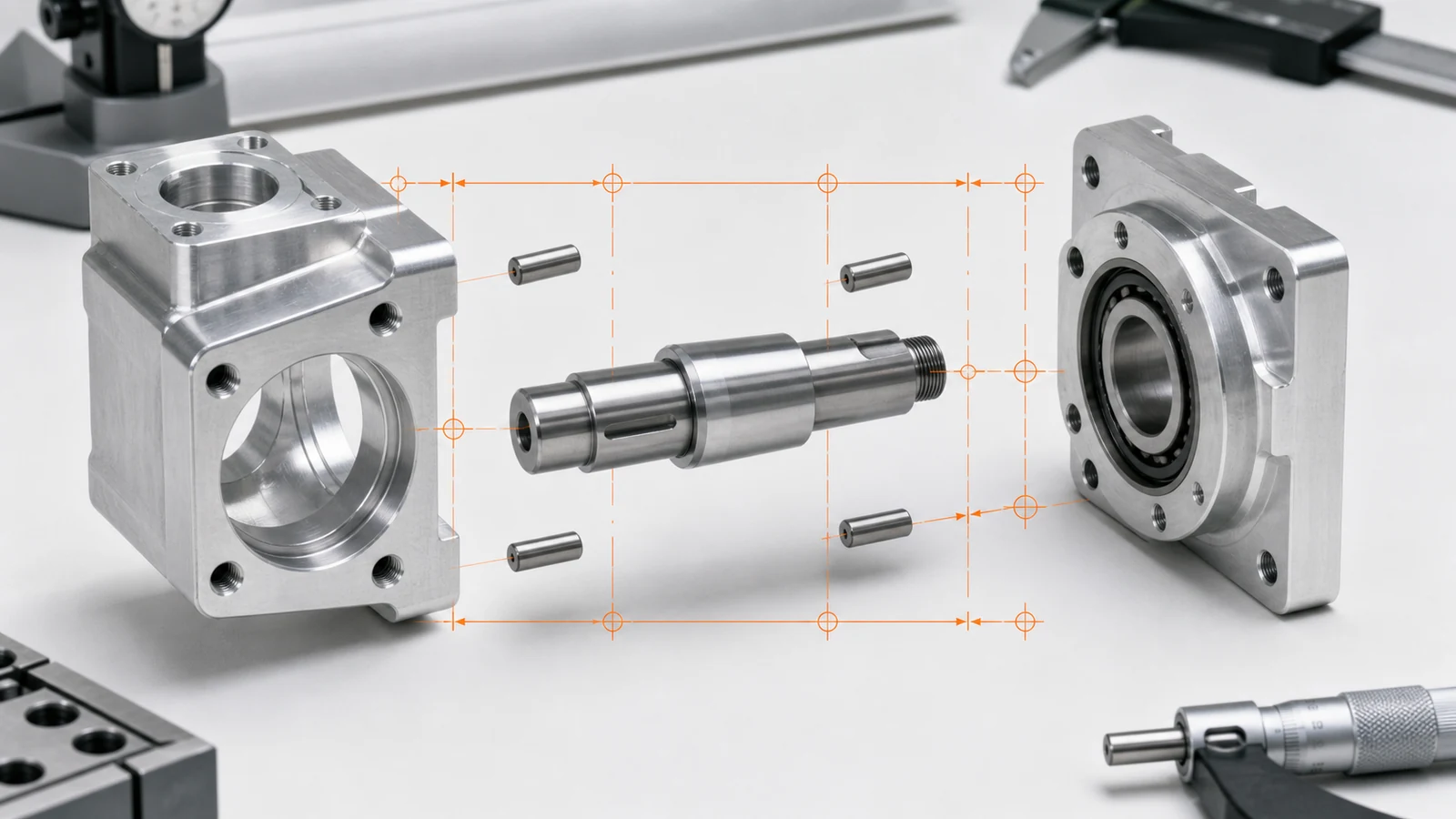
A tolerance stack is the chain of dimensions and geometric relationships that determines an assembly result. Every component may pass its drawing and the mechanism can still bind, rattle, miss alignment or lose sealing compression if the functional loop was not defined correctly.
The solution is not to tighten every dimension. It is to identify the closing requirement, choose functional datums, model the contributors, allocate tolerances according to process and risk, then verify the same loop in manufacturing and inspection.
Scope, Search Intent and Technical Boundary
This article explains assembly-level accumulation and datum logic. It complements the GD&T quotation guide but does not repeat symbol definitions or promise universal machining capability. For an additional authoritative reference, consult ASME Y14.5 dimensioning and tolerancing standard.
Designers, quality teams and sourcing personnel can use this workflow to expose assumptions about CNC tolerance stack-up before material is released. For broader geometry and specification guidance, use the request a DFM and tolerance review alongside this feature-level discussion.
Key Takeaways
- Start with the assembly requirement that closes the loop.
- Include geometric variation and datum mobility, not only plus/minus sizes.
- Use worst-case analysis when every allowed combination must assemble.
- Use statistical methods only with justified distributions and process evidence.
- Avoid tightening non-contributing dimensions that add cost without protecting function.
Define the Functional Loop
The stack begins and ends at the clearance, preload, alignment, travel or seal condition that the assembly must protect. For the corresponding manufacturing decision and capability context, consult SAMSHION’s CNC machining services.
Build the Datum Reference Strategy
Functional contact surfaces should establish repeatable orientation and location through design, machining and measurement.
Choose Worst-Case or Statistical Analysis
Worst-case protects interchangeability at limits; statistical models can predict population behavior only when their assumptions are controlled. For the corresponding manufacturing decision and capability context, consult SAMSHION’s CNC hole tolerance guide.
Allocate Tolerance to Real Manufacturing Processes
Machining, finishing, heat treatment and assembly each contribute variation and should not be hidden inside one arbitrary bilateral dimension. For the corresponding manufacturing decision and capability context, consult SAMSHION’s surface finishing services.
Validate the Stack with Inspection and Assembly Evidence
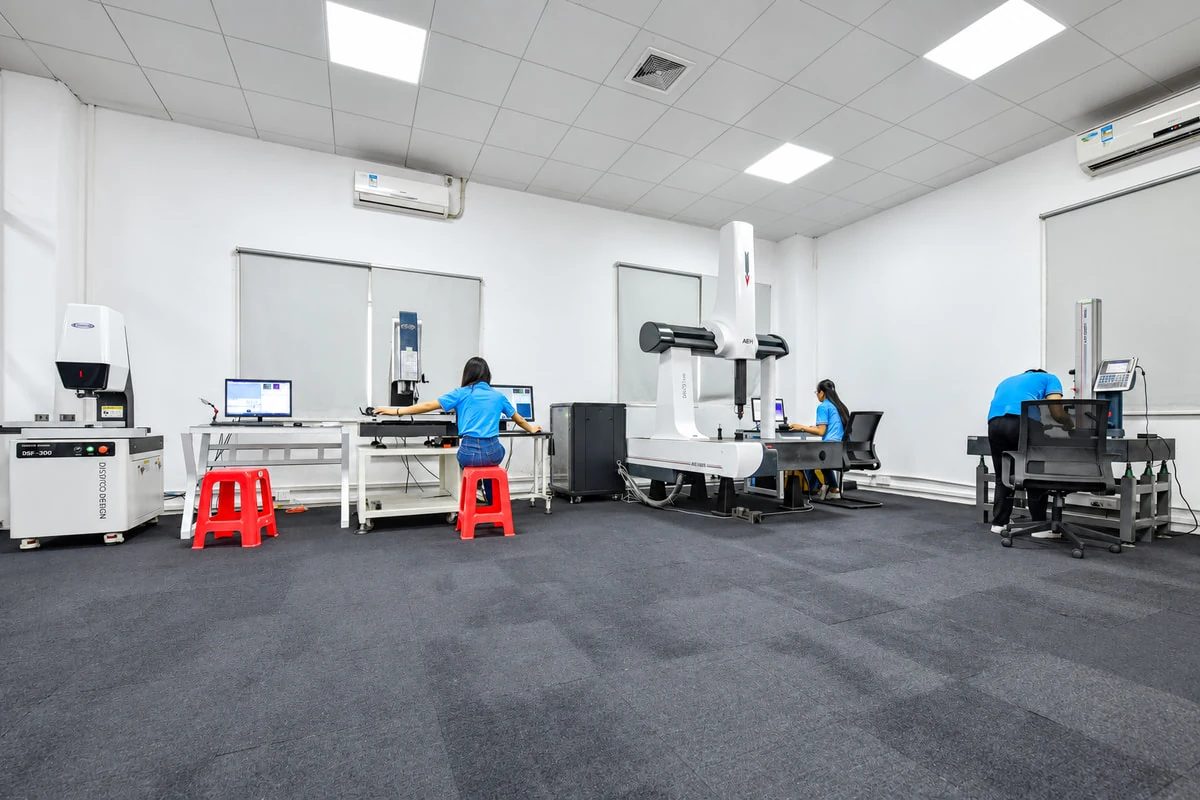
Measurement must reconstruct the intended datum frame and correlate individual results with the final functional check.
Engineering Variables to Confirm Before Quotation
Functional closing requirement and direction
For CNC tolerance stack-up, functional closing requirement and direction requires an explicit engineering decision. Treat this as an RFQ input, not a shop-floor surprise. Ask which function depends on it, which datum or material state establishes it, and at what production stage it will be accepted. It can alter support strategy, cutter access and the order of finishing operations. Where two documents disagree, obtain a controlled clarification before releasing material.
Datum contact sequence and mobility
For CNC tolerance stack-up, datum contact sequence and mobility requires an explicit engineering decision. Make the functional intent visible before tooling is selected. Ask which function depends on it, which datum or material state establishes it, and at what production stage it will be accepted. A different answer may require different stock, clamping pressure or inspection equipment. If the customer cannot confirm it, state the working assumption and its commercial effect in writing.
Size, position, profile and orientation contributors
For CNC tolerance stack-up, size, position, profile and orientation contributors requires an explicit engineering decision. Resolve this point while the process route is still flexible. Ask which function depends on it, which datum or material state establishes it, and at what production stage it will be accepted. Its interpretation changes datum selection, setup count and verification effort. Quote alternatives separately when more than one technically credible interpretation exists.
Coating or heat-treatment dimensional change
For CNC tolerance stack-up, coating or heat-treatment dimensional change requires an explicit engineering decision. Reconcile the model, drawing and purchase specification at this point. Ask which function depends on it, which datum or material state establishes it, and at what production stage it will be accepted. The decision can move a feature from a routine check to a controlled first-article characteristic. Tie any relaxation to the actual function rather than to a generic shop capability statement. Available grades, stock forms and supplied conditions can be cross-checked against the manufacturing materials guide before quotation.
Clearance, transition or interference fit intent
For CNC tolerance stack-up, clearance, transition or interference fit intent requires an explicit engineering decision. Do not allow a default title-block tolerance to answer this question indirectly. Ask which function depends on it, which datum or material state establishes it, and at what production stage it will be accepted. A different answer may require different stock, clamping pressure or inspection equipment. Where two documents disagree, obtain a controlled clarification before releasing material.
Assembly force and measurement uncertainty
For CNC tolerance stack-up, assembly force and measurement uncertainty requires an explicit engineering decision. Use this requirement to frame the first technical review. Ask which function depends on it, which datum or material state establishes it, and at what production stage it will be accepted. It can alter support strategy, cutter access and the order of finishing operations. Where two documents disagree, obtain a controlled clarification before releasing material.
Failure Modes and Root-Cause Diagnosis
All part dimensions pass but the assembly holes do not align
A characteristic failure for CNC tolerance stack-up occurs when all part dimensions pass but the assembly holes do not align. The observation is evidence, not yet a root cause. Evaluate material behavior, support, cutter condition, programmed sequence and the measurement alignment as separate hypotheses. Repeat the measurement with a second suitable method before rewriting the machining program. Confirm that the remedy does not transfer error to a mating feature or datum.
Datum shift is ignored and predicted clearance is optimistic
A characteristic failure for CNC tolerance stack-up occurs when datum shift is ignored and predicted clearance is optimistic. The observation is evidence, not yet a root cause. Evaluate material behavior, support, cutter condition, programmed sequence and the measurement alignment as separate hypotheses. Map the symptom by feature location, tool life and operation sequence instead of averaging it into one result. Confirm that the remedy does not transfer error to a mating feature or datum.
A coating consumes the remaining fit allowance
A characteristic failure for CNC tolerance stack-up occurs when a coating consumes the remaining fit allowance. The observation is evidence, not yet a root cause. Evaluate material behavior, support, cutter condition, programmed sequence and the measurement alignment as separate hypotheses. Compare the blank, clamped part, released part and finished part to locate the stage where the error appears. Document the evidence that ruled each competing cause in or out.
Statistical assumptions are used without stable process data
A characteristic failure for CNC tolerance stack-up occurs when statistical assumptions are used without stable process data. The observation is evidence, not yet a root cause. Evaluate material behavior, support, cutter condition, programmed sequence and the measurement alignment as separate hypotheses. Preserve the failed part condition long enough to distinguish cutting evidence from handling or finishing damage. Do not hide the symptom with manual blending unless the drawing explicitly permits that edge condition.
Process Controls for a Repeatable Result
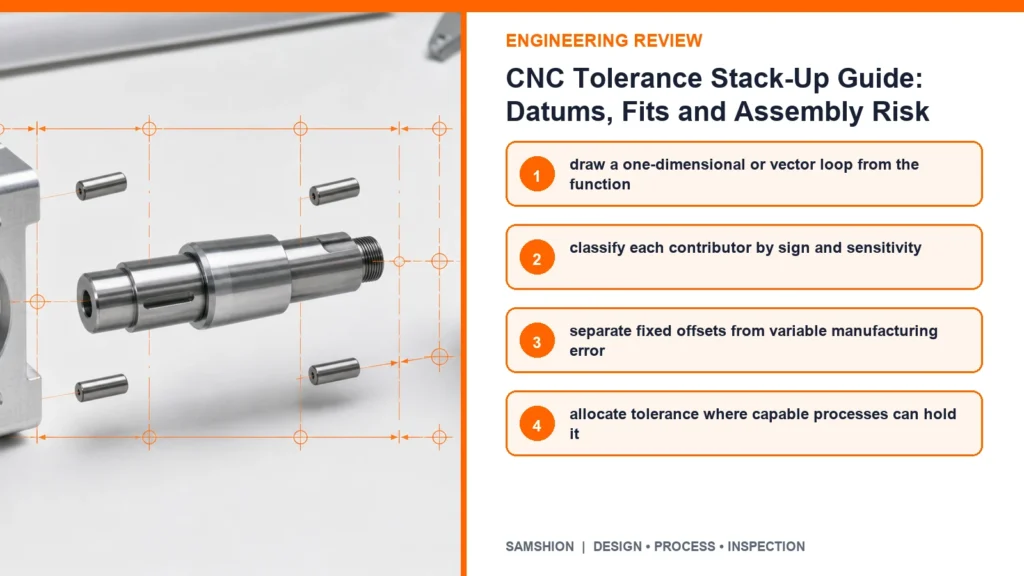
Draw a one-dimensional or vector loop from the function
A process plan for CNC tolerance stack-up can control this risk by choosing to draw a one-dimensional or vector loop from the function. The action is useful only when it targets a named source of variation. Before release, consider access, local stiffness, heat flow and the acceptance condition of neighboring features. Prove the control on the first article and retain the before-and-after evidence. Use the simplest method that reliably protects the stated function.
Classify each contributor by sign and sensitivity
A process plan for CNC tolerance stack-up can control this risk by choosing to classify each contributor by sign and sensitivity. The action is useful only when it targets a named source of variation. Before release, consider access, local stiffness, heat flow and the acceptance condition of neighboring features. Review adjacent walls, threads, sealing lands and datums for unintended consequences. If it changes a controlled requirement, customer approval comes before production release.
Separate fixed offsets from variable manufacturing error
A process plan for CNC tolerance stack-up can control this risk by choosing to separate fixed offsets from variable manufacturing error. The action is useful only when it targets a named source of variation. Before release, consider access, local stiffness, heat flow and the acceptance condition of neighboring features. Use a short prototype trial first; formalize fixture, sampling and tool-life rules for repeat orders. Use the simplest method that reliably protects the stated function.
Allocate tolerance where capable processes can hold it
A process plan for CNC tolerance stack-up can control this risk by choosing to allocate tolerance where capable processes can hold it. The action is useful only when it targets a named source of variation. Before release, consider access, local stiffness, heat flow and the acceptance condition of neighboring features. Define the owner, frequency and record produced by the control. Remove the control if trials show that it adds handling without reducing the targeted variation.
Protect the interface through revision-controlled datum definitions
A process plan for CNC tolerance stack-up can control this risk by choosing to protect the interface through revision-controlled datum definitions. The action is useful only when it targets a named source of variation. Before release, consider access, local stiffness, heat flow and the acceptance condition of neighboring features. Review adjacent walls, threads, sealing lands and datums for unintended consequences. Repeat production should not depend on an operator remembering an undocumented exception.
Validate the predicted extremes with representative assembly evidence
A process plan for CNC tolerance stack-up can control this risk by choosing to validate the predicted extremes with representative assembly evidence. The action is useful only when it targets a named source of variation. Before release, consider access, local stiffness, heat flow and the acceptance condition of neighboring features. Assign an operator check at the operation where the variable can still be corrected. If it changes a controlled requirement, customer approval comes before production release. The applicable production route and process controls are outlined in SAMSHION’s CNC milling services.
Inspection Strategy and Acceptance Evidence
Datum simulation matching the assembly contact
Inspection of CNC tolerance stack-up should explicitly address datum simulation matching the assembly contact. First define the characteristic, datum reference and part condition represented by the result. Correlate shop-floor and final-inspection methods before using either for acceptance. A decimal-rich output is not credible if the instrument cannot resolve the tolerance.
Mating size and geometric error in the same report
Inspection of CNC tolerance stack-up should explicitly address mating size and geometric error in the same report. First define the characteristic, datum reference and part condition represented by the result. Correlate shop-floor and final-inspection methods before using either for acceptance. Report nominal, limits and actual result; do not substitute a certificate statement for measured data. The available verification and reporting workflow is summarized in SAMSHION’s quality assurance.
Post-finish dimensions at controlled interfaces
Inspection of CNC tolerance stack-up should explicitly address post-finish dimensions at controlled interfaces. First define the characteristic, datum reference and part condition represented by the result. Document any special support, low-force probe or environmental stabilization requirement. A decimal-rich output is not credible if the instrument cannot resolve the tolerance.
Functional assembly clearance or force
Inspection of CNC tolerance stack-up should explicitly address functional assembly clearance or force. First define the characteristic, datum reference and part condition represented by the result. Use a functional gauge when fit matters more than a single isolated coordinate. For variable geometry, show the measurement locations instead of reporting one unexplained value.
Traceability between component results and assembled outcome
Inspection of CNC tolerance stack-up should explicitly address traceability between component results and assembled outcome. First define the characteristic, datum reference and part condition represented by the result. Correlate shop-floor and final-inspection methods before using either for acceptance. For variable geometry, show the measurement locations instead of reporting one unexplained value.
Cost, Lead Time and Quotation Transparency
Unnecessary blanket tight tolerances
In a quotation for CNC tolerance stack-up, unnecessary blanket tight tolerances can influence both lead time and total manufacturing cost. Its effect depends on whether the requirement applies to every part or only first-article evidence. Do not reduce price by silently omitting the requested acceptance evidence.
Custom fixtures that recreate assembly datums
In a quotation for CNC tolerance stack-up, custom fixtures that recreate assembly datums can influence both lead time and total manufacturing cost. It can add material preparation, a dedicated cutter or a separate verification step. State the assumed interpretation, included records and conditions that would trigger requotation.
Matched-set sorting or selective assembly
In a quotation for CNC tolerance stack-up, matched-set sorting or selective assembly can influence both lead time and total manufacturing cost. The quantity and cost of a scrapped blank change how much prevention is economically justified. State the assumed interpretation, included records and conditions that would trigger requotation.
Rework caused by late discovery of an incomplete loop
In a quotation for CNC tolerance stack-up, rework caused by late discovery of an incomplete loop can influence both lead time and total manufacturing cost. Its effect depends on whether the requirement applies to every part or only first-article evidence. Tie any cost-saving proposal to a controlled drawing revision.
A Practical Engineering Review Sequence
Start with the function protected by functional closing requirement and direction. Mark the related datums, interfaces and delivered-state requirements on the controlled drawing. The manufacturing review can then choose stock, setups and cutting access around that function instead of treating every dimension as equally critical.
Walk through the likely failure mechanism represented by this project: all part dimensions pass but the assembly holes do not align. Decide which evidence can reveal the problem earliest and which operation can still correct it. This ordering avoids discovering a predictable condition only after finishing or final inspection.
Use the first article to validate the proposed control, including the instruction to draw a one-dimensional or vector loop from the function. The approval part must represent the intended material, fixture, program, secondary operations and measurement alignment. Feed the result back into the process record before releasing the balance of the order.
RFQ and DFM Checklist
- Native 3D CAD model plus a controlled 2D drawing for tolerances and notes
- Exact material grade, condition, stock preference and certification requirement
- Functional datums, mating components and genuinely critical characteristics
- Quantity, prototype or production intent, and expected repeat-order status
- Surface finish, coating, heat treatment, cleaning and marking requirements
- Inspection report, certificate, gauge or sampling requirements
- Any approved alternative geometry or process constraints
Additional Engineering Review Notes
For repeat orders, convert the first-article lesson into a revision-controlled production instruction. For CNC tolerance stack-up, examine functional closing requirement and direction and ask how it could contribute to a condition in which datum shift is ignored and predicted clearance is optimistic. One candidate action is to separate fixed offsets from variable manufacturing error; however, its value must be demonstrated through functional assembly clearance or force. Retain a marked image or inspection trace so the team is discussing the same location. Also consider the commercial effect of unnecessary blanket tight tolerances, because a technically sound route must be quoted with transparent assumptions. Use the first article to demonstrate the relationship between the action and the protected function.
A practical supplier discussion can begin with one ambiguous or high-consequence feature. For CNC tolerance stack-up, examine datum contact sequence and mobility and ask how it could contribute to a condition in which a coating consumes the remaining fit allowance. One candidate action is to allocate tolerance where capable processes can hold it; however, its value must be demonstrated through traceability between component results and assembled outcome. Distinguish a dimensional nonconformance from a measurement-access or datum-alignment problem. Also consider the commercial effect of custom fixtures that recreate assembly datums, because a technically sound route must be quoted with transparent assumptions. Remove process steps that add handling but do not reduce the targeted source of variation.
Use a short preproduction review to separate necessary controls from inherited drawing habits. For CNC tolerance stack-up, examine size, position, profile and orientation contributors and ask how it could contribute to a condition in which statistical assumptions are used without stable process data. One candidate action is to protect the interface through revision-controlled datum definitions; however, its value must be demonstrated through datum simulation matching the assembly contact. Check whether unclamping, cleaning or finishing changes the apparent mechanism. Also consider the commercial effect of matched-set sorting or selective assembly, because a technically sound route must be quoted with transparent assumptions. If the trial confirms the control, apply it to the remaining quantity and monitor the first repeat batch.
For repeat orders, convert the first-article lesson into a revision-controlled production instruction. For CNC tolerance stack-up, examine coating or heat-treatment dimensional change and ask how it could contribute to a condition in which all part dimensions pass but the assembly holes do not align. One candidate action is to validate the predicted extremes with representative assembly evidence; however, its value must be demonstrated through mating size and geometric error in the same report. Identify which proposed cause would produce the observed direction and distribution of error. Also consider the commercial effect of rework caused by late discovery of an incomplete loop, because a technically sound route must be quoted with transparent assumptions. Escalate a trend at the warning limit instead of waiting for a rejected final result.
For this feature family, compare the intended function with the easiest available measurement and resolve any mismatch. For CNC tolerance stack-up, examine clearance, transition or interference fit intent and ask how it could contribute to a condition in which datum shift is ignored and predicted clearance is optimistic. One candidate action is to draw a one-dimensional or vector loop from the function; however, its value must be demonstrated through post-finish dimensions at controlled interfaces. Check whether unclamping, cleaning or finishing changes the apparent mechanism. Also consider the commercial effect of unnecessary blanket tight tolerances, because a technically sound route must be quoted with transparent assumptions. A control that cannot be checked objectively should be rewritten before it enters the setup sheet.
A practical supplier discussion can begin with one ambiguous or high-consequence feature. For CNC tolerance stack-up, examine assembly force and measurement uncertainty and ask how it could contribute to a condition in which a coating consumes the remaining fit allowance. One candidate action is to classify each contributor by sign and sensitivity; however, its value must be demonstrated through functional assembly clearance or force. Distinguish a dimensional nonconformance from a measurement-access or datum-alignment problem. Also consider the commercial effect of custom fixtures that recreate assembly datums, because a technically sound route must be quoted with transparent assumptions. The resulting instruction should name the operation, responsible role, limit and retained record.
Frequently Asked Questions
Should every dimension in a chain be equally tight?
No. Allocate tolerance according to functional sensitivity and capable processes. Final acceptance depends on the stated datum, delivered state and inspection approach.
Is RSS always appropriate?
No. Statistical analysis needs defensible distributions, independence assumptions and stable process evidence. Supplier and customer should agree the feature definition before production begins.
Do GD&T controls belong in a stack-up?
Yes when position, orientation, profile or datum mobility influences the closing requirement. The general rule does not replace a feasibility review of the complete geometry and acceptance method.
How are coatings included?
Use the specified buildup or process allowance on each affected surface and inspect in the delivered condition. Final acceptance depends on the stated datum, delivered state and inspection approach.
Can functional gauging replace a dimensional report?
It can efficiently protect some assembly conditions, but it does not answer every diagnostic or traceability need. Confirm the project-specific answer from the controlled drawing and the actual material condition.
Get an Engineering Review
Upload the native CAD model, controlled drawing, material specification, quantity and required finish for a project-specific review of CNC tolerance stack-up.
For a review of CNC tolerance stack-up, send the native CAD model, controlled drawing, material specification, quantity, finishing route and required acceptance records. SAMSHION’s engineering team can return project-specific DFM questions and documented quotation assumptions before production begins. When the model and drawing are ready, use GD&T for CNC machining quotes and include the material, quantity, finish and inspection requirements.