CNC machining is often the lower-cost starting point for a few straightforward plastic prototypes. Vacuum casting can become more economical when several copies of a complex part are needed. Neither quantity nor geometry alone decides the answer: the specified material, acceptable tolerances, finishing requirements and likelihood of a design change can reverse the comparison.
At SAMSHION, customers sometimes ask us to quote the same plastic component using both routes. For ordinary geometry and conventional wall thickness, our quotation experience generally favors CNC for one to three parts and vacuum casting from roughly five parts upward. Those comparisons include the master pattern, silicone tooling and equivalent finishing requirements. They are a starting point for reviewing a drawing, not a universal price crossover.
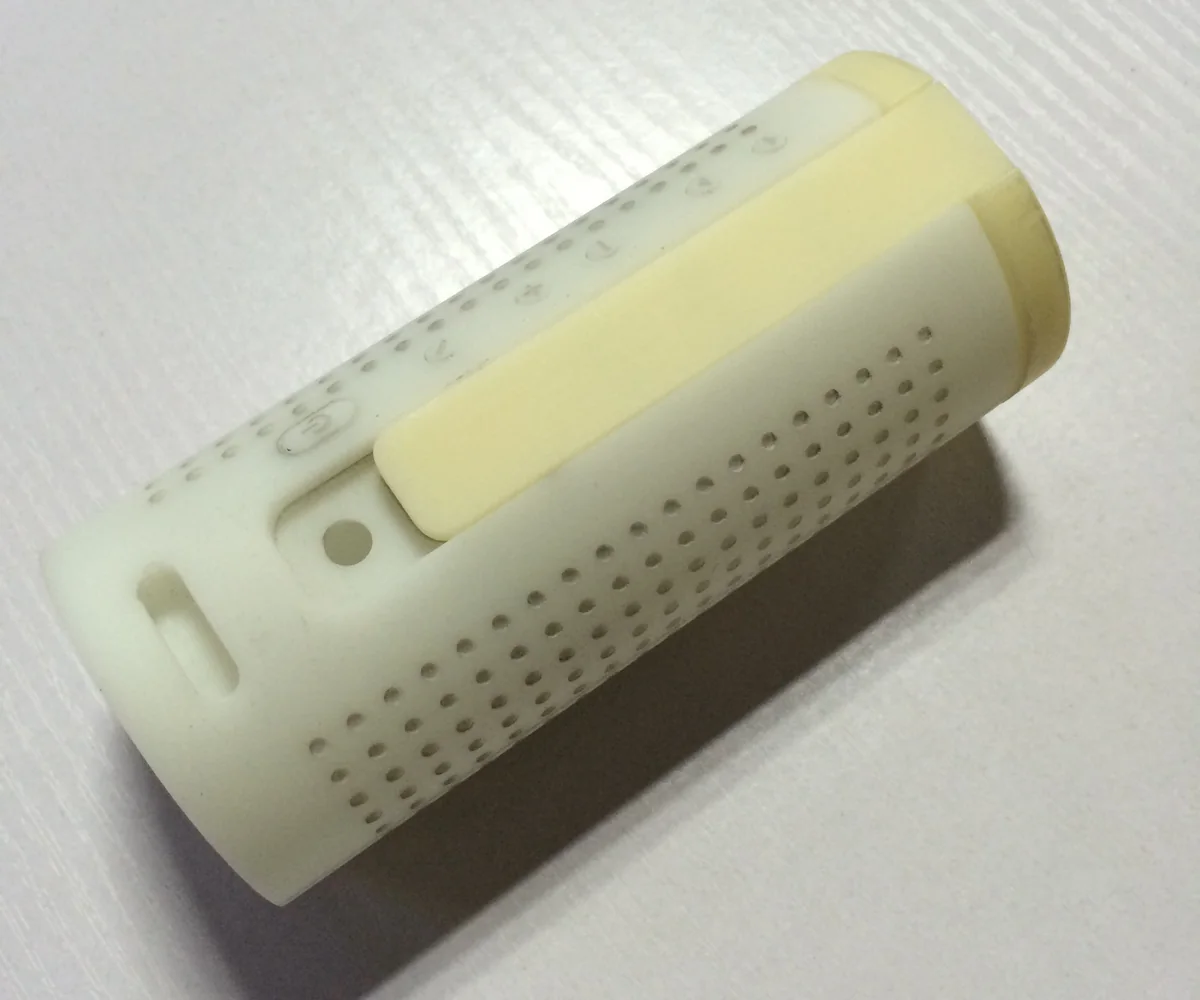
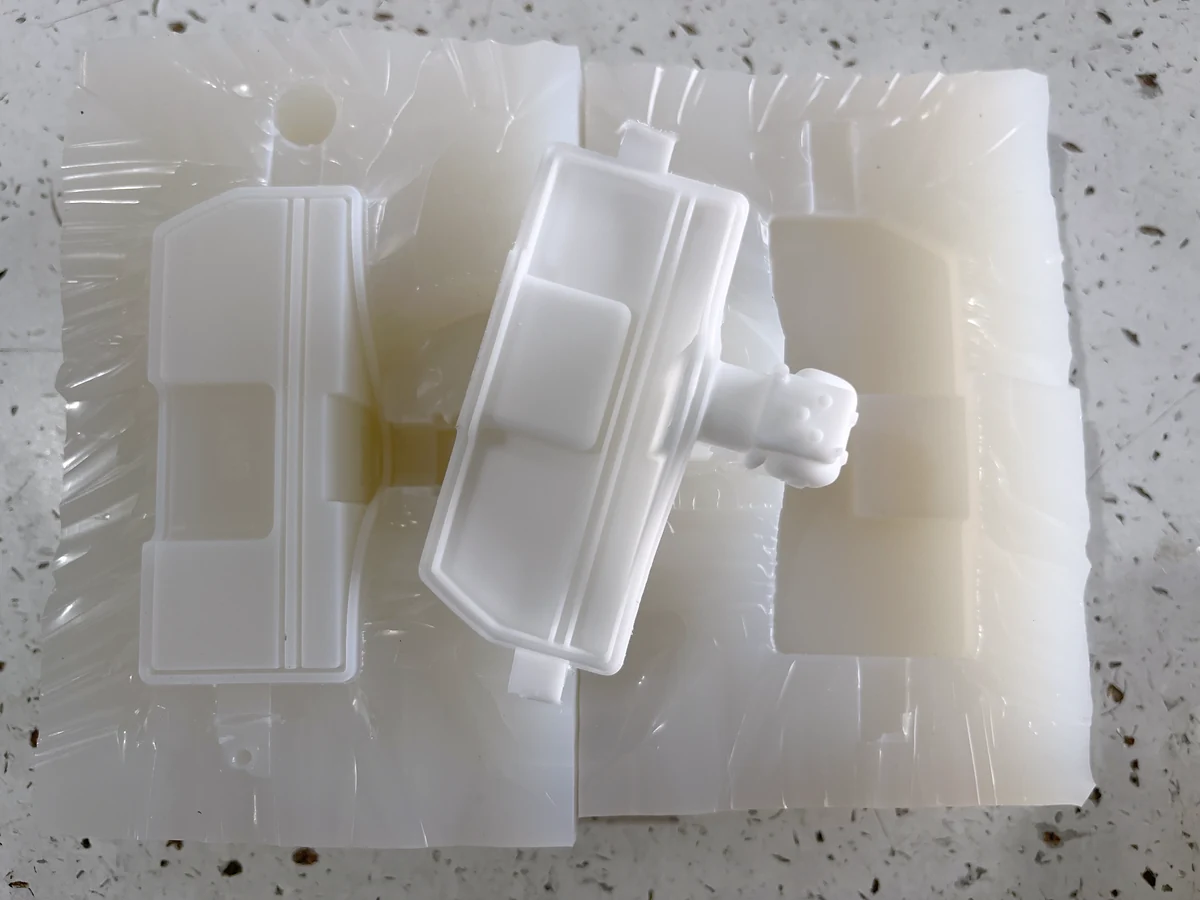
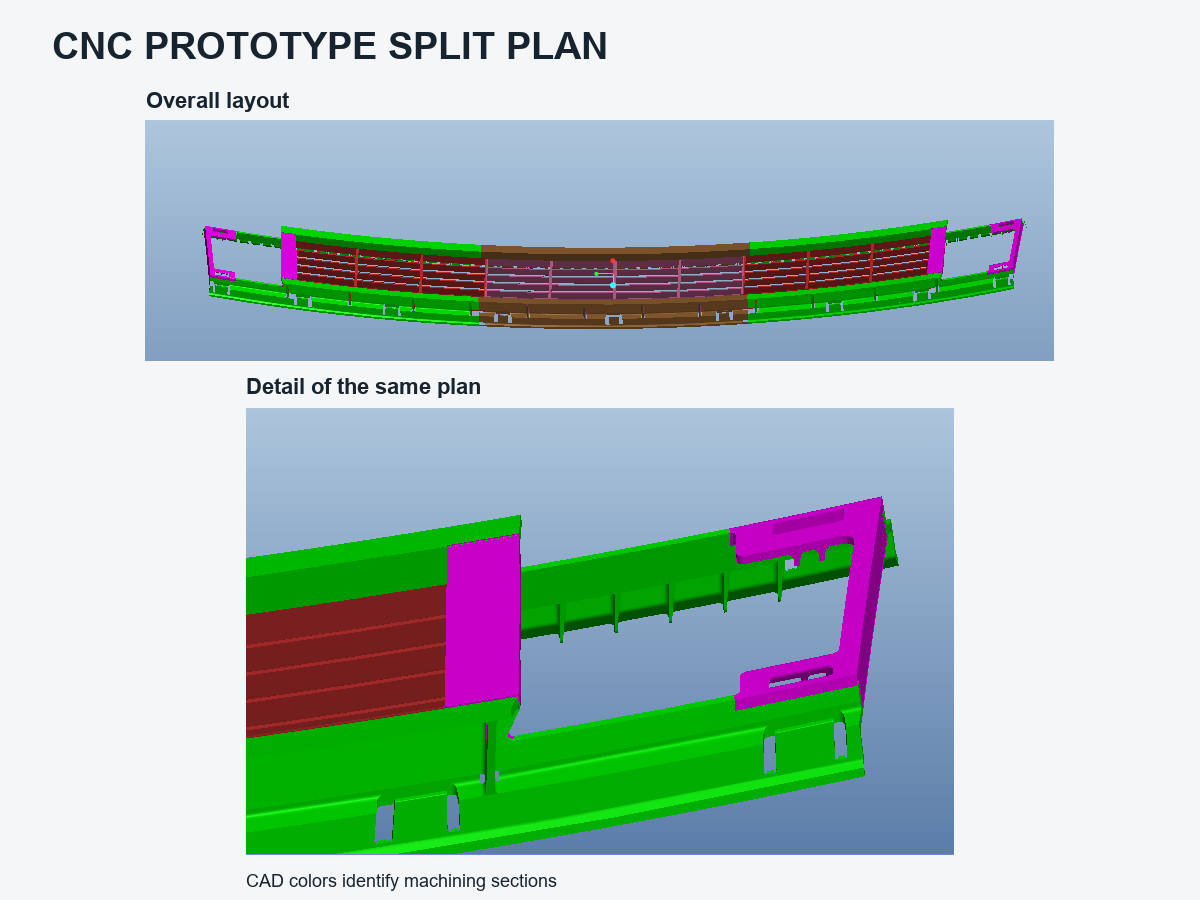
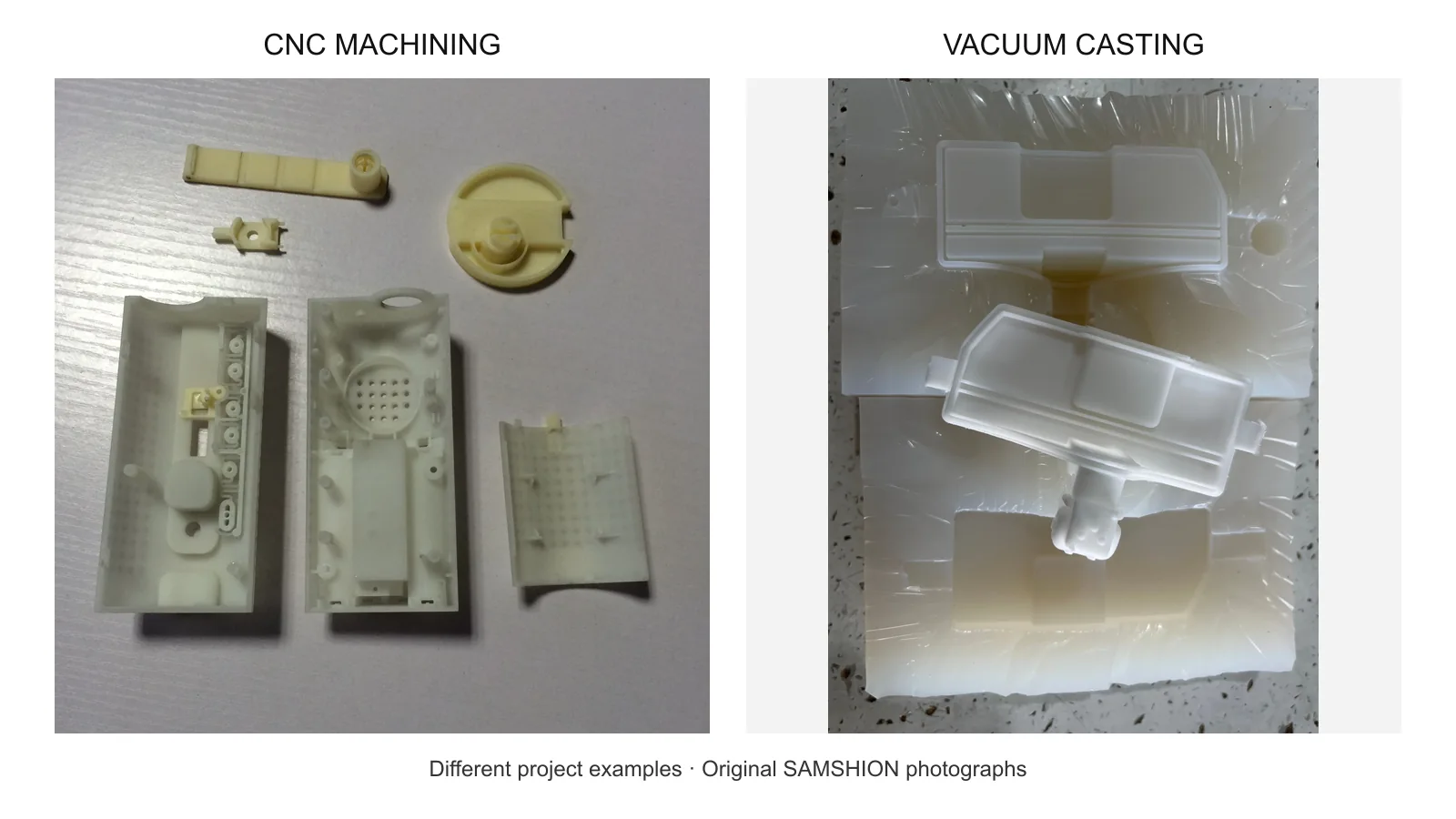
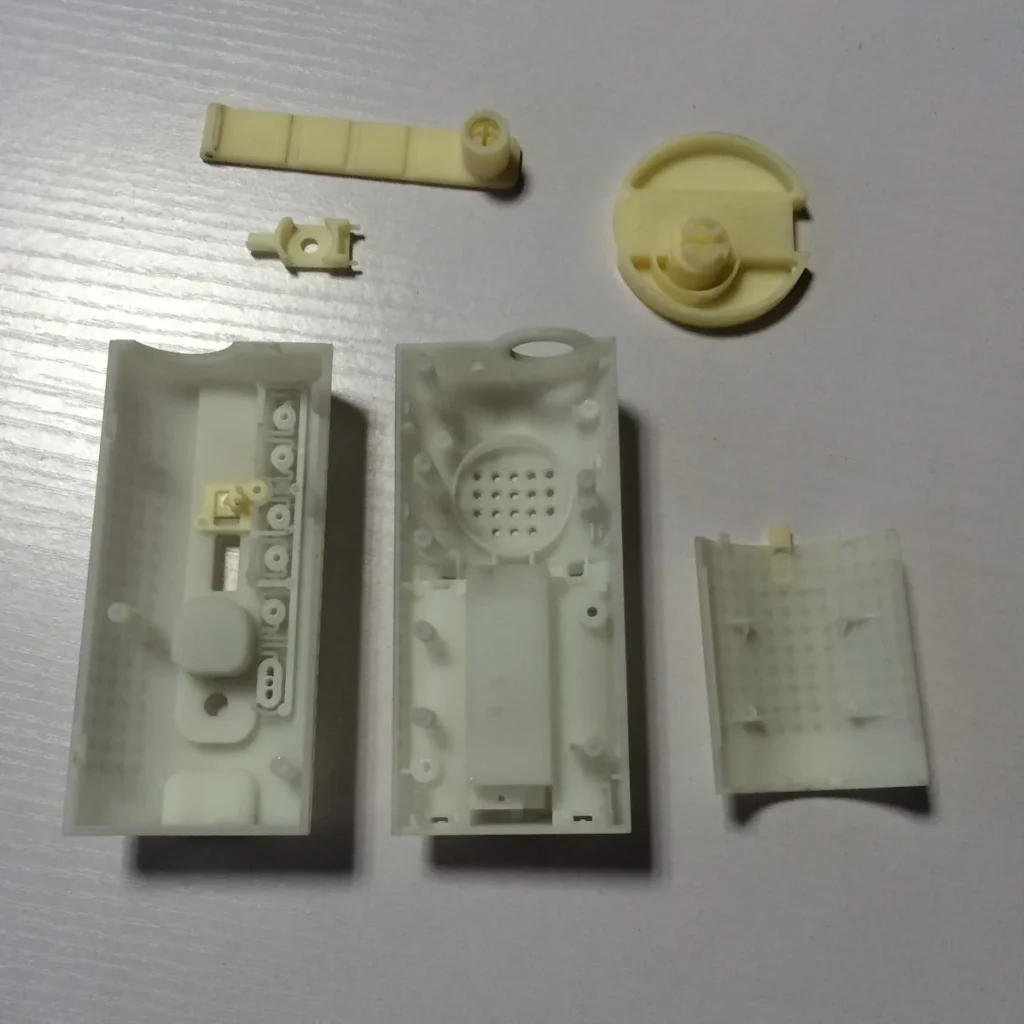
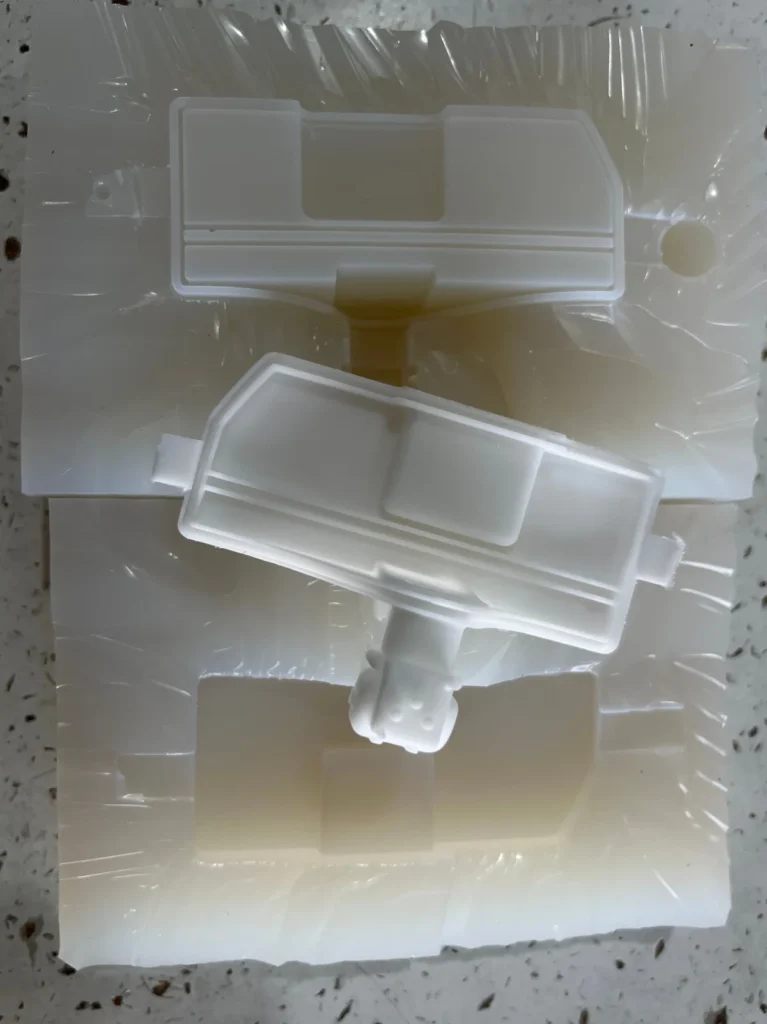
This guide explains how we approach that comparison as a build-to-print supplier. The photographs show separate, previously completed projects; they are not a same-part cost trial or comparative inspection report.
Which process should you consider first
The table is a way to shortlist routes, not permission to change a drawing. A supplier should identify any material or tolerance exception before the customer approves the order.
Start with material acceptance rather than unit price
With CNC machining, the part is cut from solid plastic stock. Vacuum casting uses a master pattern and silicone mold to reproduce the shape in a casting resin. In plastic prototyping, urethane casting and polyurethane casting are also common terms for this resin-casting route. Formlabs’ vacuum casting guide explains the distinction between these casting resins and the thermoplastics they are intended to simulate.
This matters when a drawing specifies ABS. A quote for CNC-machined ABS and a quote for an ABS-like casting resin do not offer identical material. The resin may be suitable for the customer’s intended prototype, but the description “ABS-like” does not establish equivalent strength, temperature resistance or other performance.
When we propose vacuum casting against an ABS drawing, we explain the casting material and obtain the customer’s agreement. We do not substitute it solely because the quote is cheaper. If the specified material must remain unchanged, that requirement takes priority over the apparent saving.
SAMSHION manufactures to the agreed drawings and specifications. Selecting a production route or checking assembly fit is not a substitute for the customer’s product-performance validation, and we do not infer strength approval from an assembled prototype.
Why quantity changes the total cost
For one to three ordinary parts, producing a master and silicone mold may add more cost than it saves. CNC still requires file review, programming and setup, but it avoids creating a separate pattern and casting tool before the deliverable parts can be made.
As the quantity increases, the master and mold costs are spread across more pieces. For conventional geometry and wall thickness, our comparisons often begin to favor casting at around five parts and above. Each additional cast does not require machining the complete geometry from stock again.
That does not mean every five-piece order should be cast. A simple thick-walled part can remain economical to machine. Conversely, a geometry that is difficult to reach with cutters can make the CNC route expensive even at a low quantity. Finishing and tolerance requirements can shift the balance again.
Request both quotes at the quantities you can actually use. Comparing three machined parts with twenty cast parts says little about the best route for a three-part requirement. An anticipated later order should be identified separately, particularly if the design has not been released.
Why simple thick-walled parts can favor CNC
In the thick-walled, straightforward parts we have compared, CNC has often benefited from two things together: short, uncomplicated machining and a lower stock-material cost than the casting-resin cost for that job. The saving is not only the absence of a silicone mold.
An accessible shape with limited machining detail can take relatively little cutting time. In that situation, adding master production, silicone tooling and casting preparation may not improve the total price. “Thick-walled” is not a fixed millimeter limit here; it describes the geometry being assessed against the part size, material and available process route.
There is also a quality consideration. In casting work, we have encountered both local surface sink or depressions and overall dimensional shrinkage that affects fit. A low casting price is not useful if the resulting geometry cannot meet the agreed appearance and assembly requirements.
CNC avoids the resin-curing shrinkage mechanism, but it is not free from dimensional risk. Plastic parts can still move during machining or after release from workholding. The useful question is which route can meet this drawing reliably at the quoted cost, not which process is claimed to produce no defects.
Why complex repeated parts can favor vacuum casting
Complexity affects the two routes differently. With CNC, deep features, restricted access and multiple machining orientations can increase programming, setup and cutting time for the parts being produced. A low material volume does not necessarily mean a short machining cycle.
With casting, the master establishes the geometry and the silicone mold reproduces it. For a batch of complex parts, that can be more economical than machining the same detailed form repeatedly. However, the master must still be made, the mold must be designed for the shape, and the part must be removable without unacceptable damage or distortion.
Undercuts and fine features therefore need review rather than an automatic “casting is easier” assumption. Silicone tooling is flexible, but it has a finite useful life. Our separate guide to silicone mold life and replacement explains how mold condition and acceptable output affect production planning.
The cost comparison should allow for the tooling needed to complete the required quantity of acceptable parts, not assume that one mold will necessarily finish every batch.
Compare quotes for the same finished order
A CNC unit price and a casting unit price can be misleading if their included work differs. Ask for the total price to deliver the same quantity, finish and agreed acceptance requirements, with any process-specific exceptions stated explicitly.
In our quantity comparisons, master and mold costs are included rather than left outside the casting price. Equivalent finishing requirements are included as well. When reviewing another quotation, confirm those points rather than assuming every supplier presents the price in the same way.
For example, an unpainted casting and a painted machined part are not equivalent deliveries. Nor is a casting priced to a supplier’s proposed general tolerance equivalent to a CNC part priced to every tighter requirement on the customer’s drawing. The exceptions need to be resolved before the prices are compared.
Our CNC machining quote comparison checklist provides a broader framework for checking revision, material, finish, inspection and delivery scope across supplier quotations.
When holes and mating surfaces need tighter control
When a plastic part has demanding dimensional requirements, we generally prioritize CNC in the process review. Holes and assembly mating surfaces are common features that influence this decision. The issue is often a particular interface, not a need to assign the same tight tolerance to every surface.
If vacuum casting is being considered, we explain the proposed casting tolerances during quotation. There are then three possible outcomes.
Accept the quoted casting tolerances
If the customer confirms that the proposed tolerances meet the requirement, the quote can remain a casting route without additional machining. This agreement must be explicit; a lower quote does not silently override the drawing.
Add machining for selected features
If the customer cannot accept the casting tolerance for particular holes or mating faces, we assess secondary machining and include the required operations in the quotation. The review needs to establish how the casting will be located and held, whether the tool can reach the feature, and whether suitable material allowance can be provided.
This is not a promise that any casting can be corrected afterward. A thin, inaccessible or insufficiently supported feature may make the combined route impractical. Secondary machining also adds preparation, handling and inspection work, which can reduce or remove the original casting price advantage.
Keep the complete part on the CNC route
When the hybrid route becomes complicated, quote complete CNC machining alongside it. Compare the total cost of the finished part rather than the low initial casting price. A second process is useful only when it produces an acceptable part economically.
In all three cases, provide the mating geometry and identify the dimensions that control assembly. Where fit checking or a report is required, agree its scope during quotation. A product photograph alone does not demonstrate that a hole position, mating clearance or tolerance has passed inspection.
Design changes can outweigh the original saving
Timing matters when a design is still changing. In our normal workflow, a geometry revision received after the master and silicone mold have been completed usually requires a new master and new silicone tooling. The revised batch then carries preparation work that was not part of the original unchanged-design comparison.
This differs from replacing a worn silicone mold for an unchanged part. An intact, available master may be reusable for a replacement mold. A revised geometry must be reviewed against the new drawing; the existence of an old master does not make it suitable automatically.
CNC does not require a silicone mold, but a drawing change can still mean new programming, setup, stock or a complete remake. It is not a free revision route. For both methods, tell the supplier whether the files are released or whether another assembly-driven change is expected.
If only a few parts are needed to confirm the current geometry, quote that requirement separately from the later stable batch. Do not increase the first order merely to spread tooling cost across parts that may become obsolete.
Neither process is always faster
We assess lead time from the structure and quantity rather than claiming that one method is universally faster. A simple CNC part and a complex multi-setup part have different schedules. A casting order must include master and mold preparation, followed by the planned casting and finishing work.
For a larger casting batch, the planned number of masters and silicone molds also matters. Molds can be prepared in parallel when that is part of the production plan; it is misleading to assume every additional mold must wait for the previous one to finish production. Unplanned rework or tooling replacement is a different issue.
Ask for a completion date based on approved files, agreed material, the required quantity and the actual finish. If secondary machining is included, it needs to be in the schedule as well as the price.
What to send for a useful comparison
To compare CNC machining and vacuum casting for low-volume plastic parts, provide the information that can change the manufacturing route:
- Current 3D model and 2D drawing, with a consistent revision and units.
- Required quantity now, plus any realistic later batch identified separately.
- Specified material and whether an identified casting-resin alternative may be proposed for approval.
- Critical holes, mating surfaces, datums and tolerances, including relevant mating-part information.
- Required color, surface finish and visible appearance areas.
- Any restrictions on split construction, bonding, inserts or additional assembly operations.
- Required checks, reports, packaging and delivery date.
- Whether the design is released or likely to change before the next batch.
Ask the supplier to return a complete CNC quote and, where feasible, a casting quote with all exceptions and any secondary machining identified. If only one route meets the requirements, a lower price for the other is not a usable saving.
SAMSHION can review your files for CNC machining and vacuum casting. Our role is to explain the manufacturing options and quote the agreed scope. The final route should follow the customer’s material, fit and delivery requirements, not a quantity rule applied without checking the part.