Choosing between SLA and SLS 3D printing starts with what the prototype needs to demonstrate. A model for a presentation, a housing for an assembly check and a component used under repeated load can require different materials and delivery conditions. A useful comparison therefore connects the printing process to the actual evaluation, rather than selecting from appearance or a single strength value.
SAMSHION prints SLA resin parts and SLS nylon parts in our own factory. Both are common routes in our prototype work. We review the customer’s model, drawing, material requirements, quantity and intended use before confirming the manufacturing and inspection scope. Exact resin grades, nylon grades and achievable tolerances are agreed for the project.
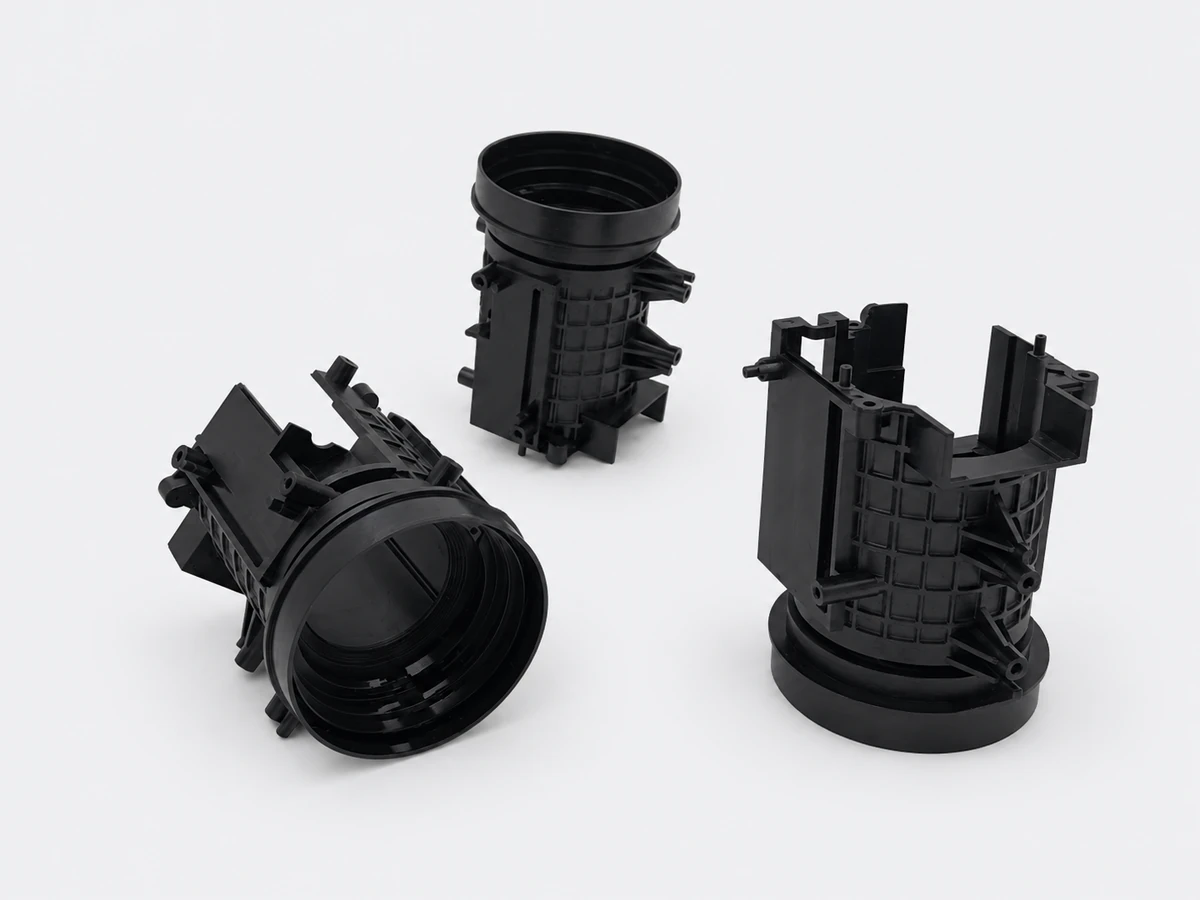
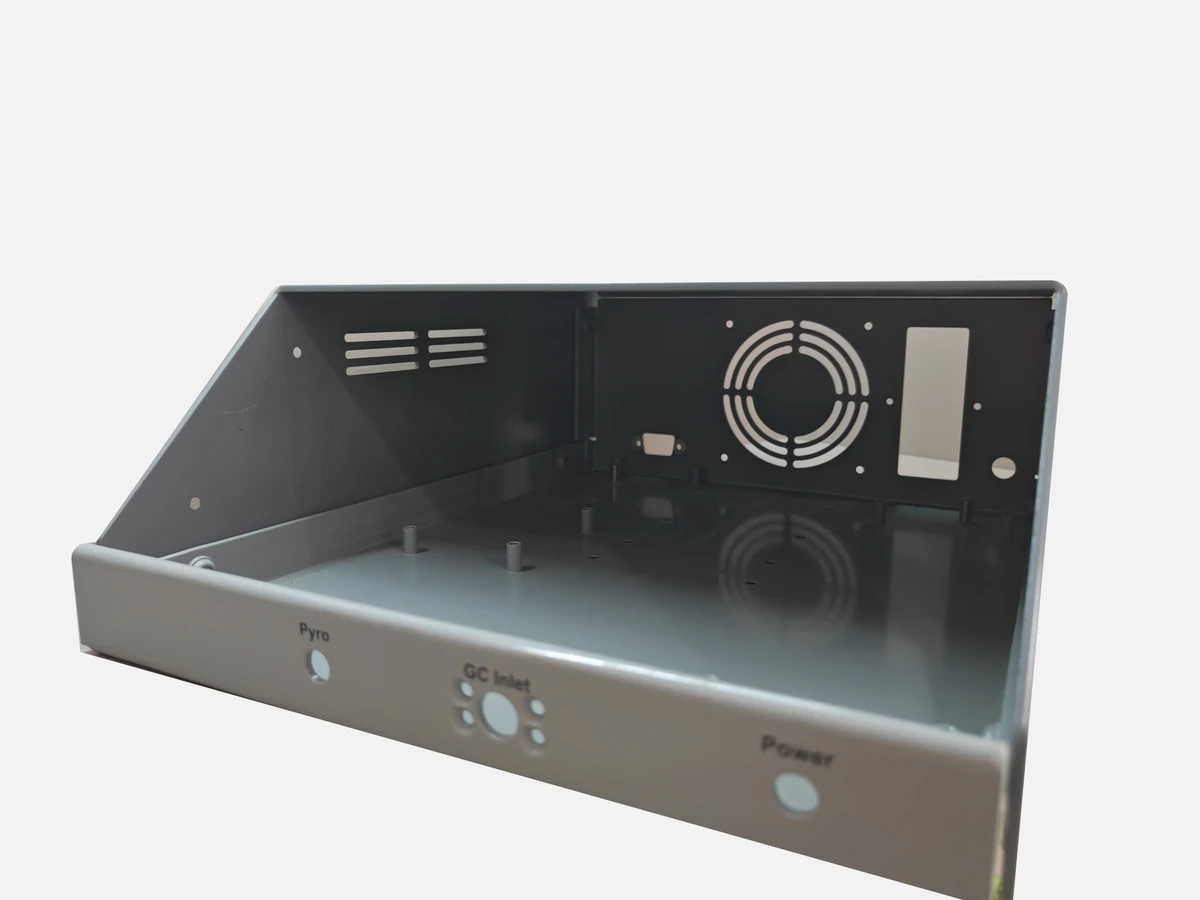
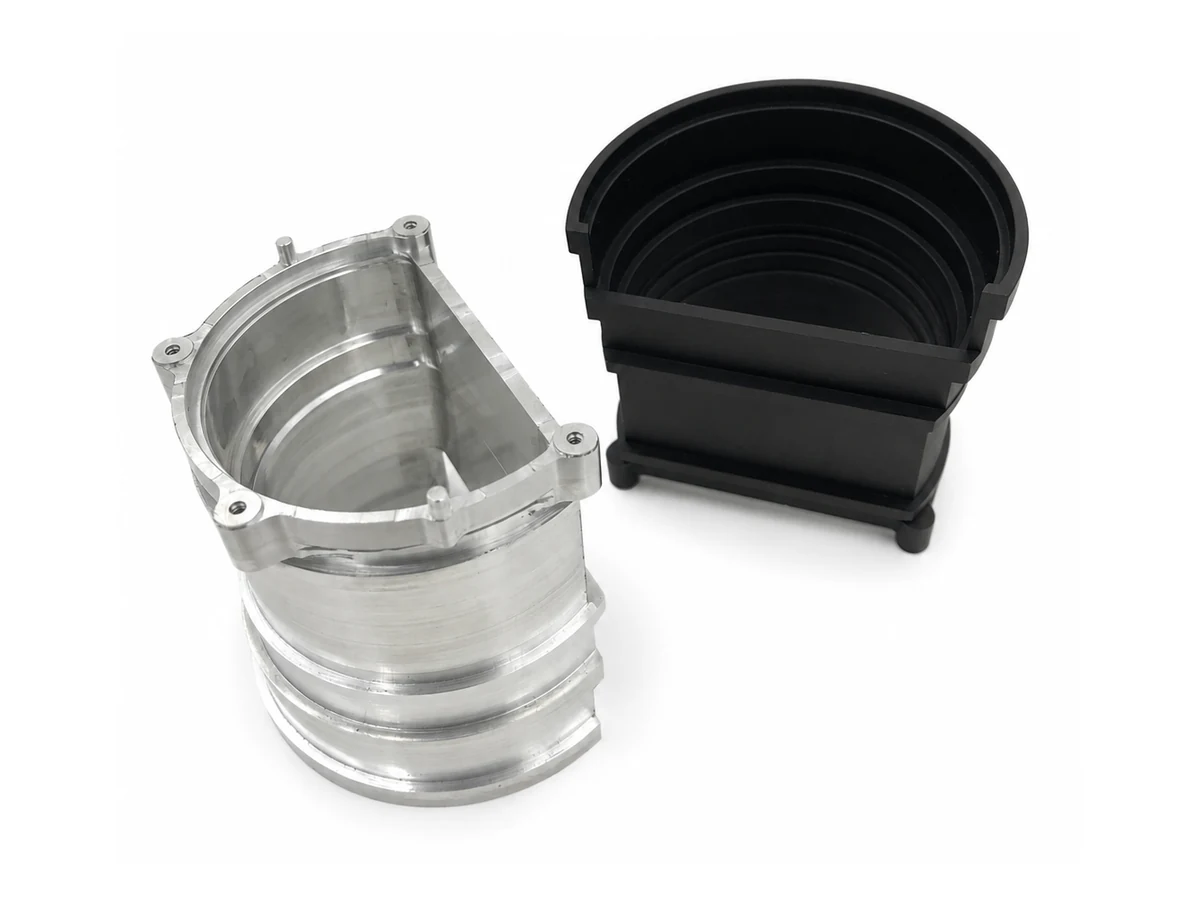
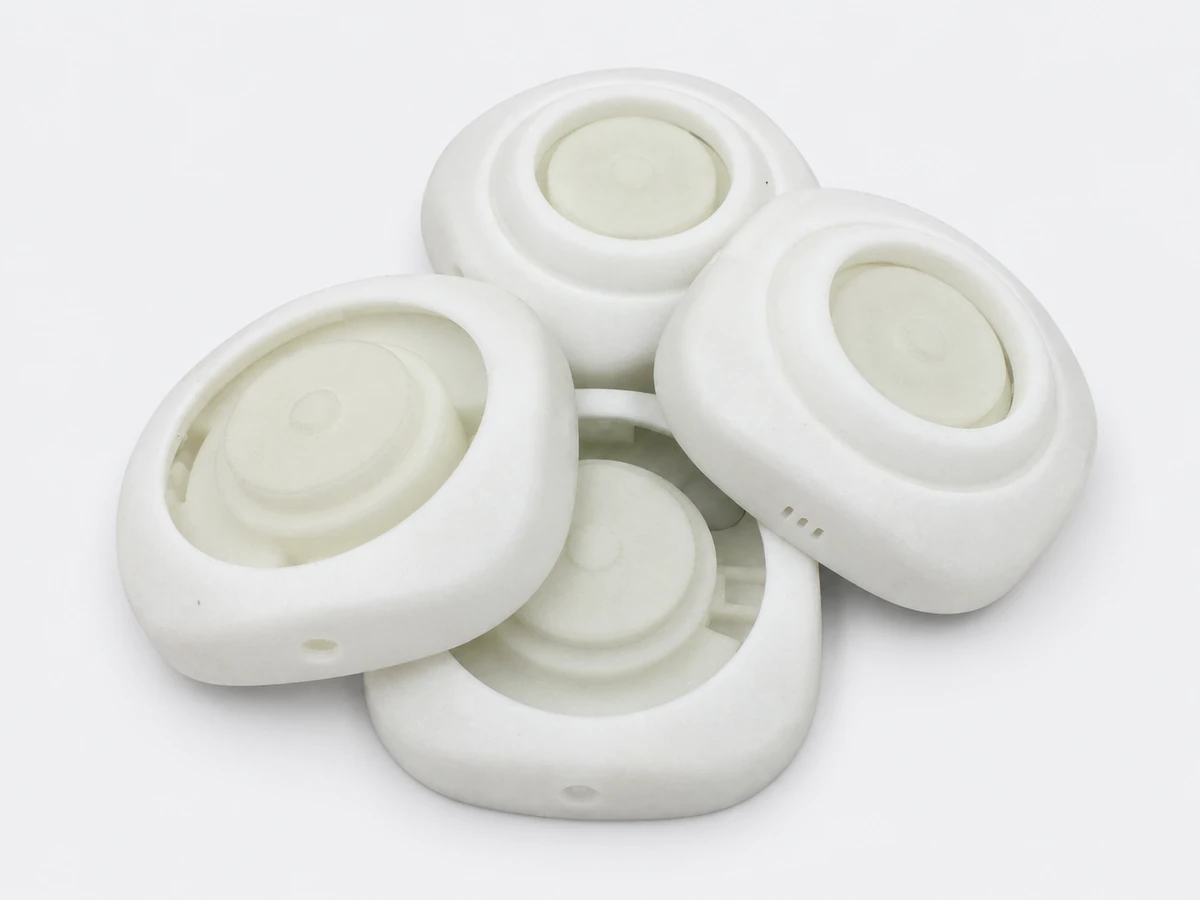
This guide compares SLA resin and SLS nylon prototypes for material selection, surface finish, assembly fit, functional evaluation and complete delivery cost. It focuses on ordering custom parts through our 3D printing services, rather than buying a printer. The product photographs are general prototype illustrations; they are not a controlled test comparing the two processes.
Compare SLA and SLS Around the Prototype Task
SLA uses light to selectively cure a liquid photopolymer resin. SLS uses a laser to fuse polymer powder; the SLS route discussed here uses nylon. Other SLS materials exist, so nylon should not be treated as the definition of every SLS process. Formlabs’ technology comparison provides background on the different material forms and workflows.
The table below identifies questions to discuss during quotation. It is a selection framework, not a universal ranking of accuracy, strength or price.
For an early presentation model, the main requirement may be the visible shape and finish. For an assembly prototype, the main requirement may be whether the cover closes and the mounting holes align. Write down the evaluation objective before choosing a material or requesting the lowest price.
Understand the Work After Printing
SLA Resin Parts
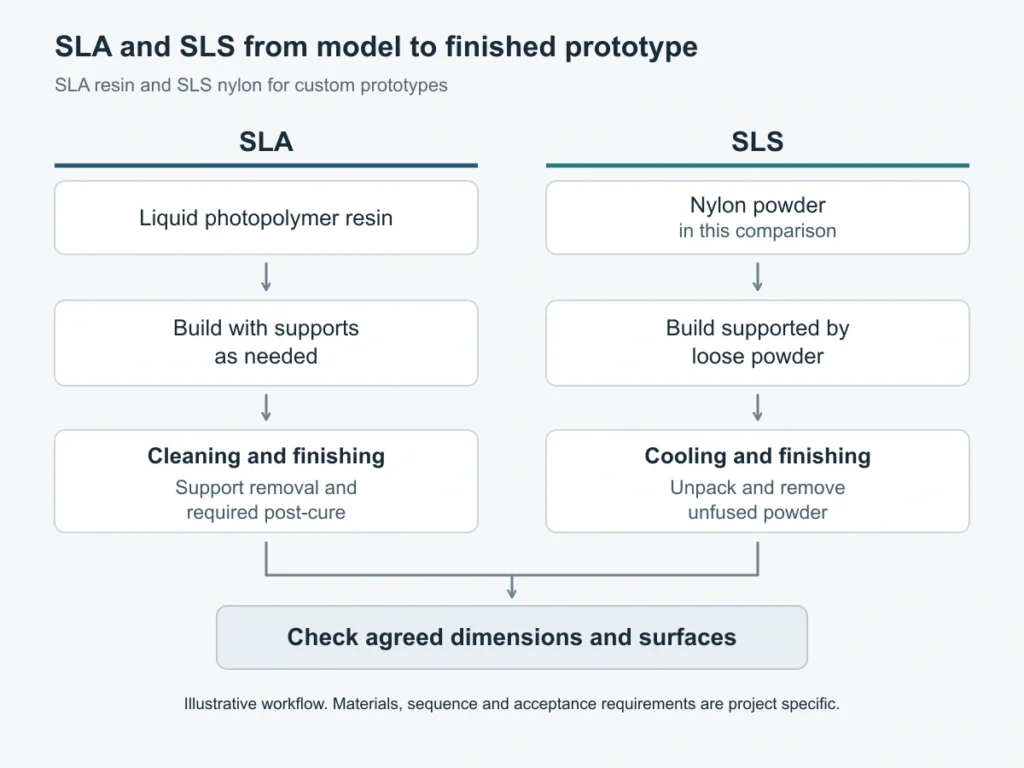
SLA parts generally need removal of residual resin, management of support contacts and any post-cure required by the material. The cleaning method, support removal sequence and curing conditions should follow the actual resin and production route. A specification should describe the condition in which the customer will receive and evaluate the part. Formlabs’ SLA finishing guidance illustrates why material-specific instructions matter.
“As printed” can be an ambiguous order description. It may be intended to mean no cosmetic sanding or painting, while the necessary cleaning and material processing are still expected. State the required delivery condition directly. If a customer will compare a sample with published material data, confirm the processing condition used for those data as well.
SLS Nylon Parts
The surrounding unfused powder supports SLS parts during a build, so separate support structures are usually unnecessary. This advantage does not remove the work after printing. The build needs an appropriate cooling stage, parts need to be recovered, and residual powder needs removal from accessible surfaces and internal features. Formlabs’ SLS guide explains this workflow.
For the purchaser, the important question is whether the proposed geometry can be cleaned to the required condition. A closed cavity that retains powder may be unsuitable even if the outer shape can be built. Discuss access before releasing the model; an added opening or geometry change requires design approval.
Compare Actual Resin and Nylon Grades
“SLA resin” describes a broad material family. Products can be developed for different combinations of stiffness, toughness, clarity, temperature resistance or flexibility. An ABS-like resin remains a photopolymer; its name does not make it ABS or establish equivalence to an injection-molded ABS part. The 3D Systems SLA material selection guide illustrates the importance of selecting a specific product for a specific application.
Likewise, “nylon” is not a complete SLS material specification. PA11, PA12 and filled materials can serve different needs. EOS’ polymer materials information shows the range of available polymer categories. That range is a reason to identify the actual grade, not evidence that every listed product is available for every SAMSHION order.
Ask for the proposed material designation and relevant data sheet when behavior matters. Identify which property controls the decision: stiffness, impact response, repeated flexing, heat exposure, chemical contact or another requirement. Compare the data under compatible test conditions and confirm what the real component must demonstrate.
A material substitution should be identified and approved. Replacing a presentation resin with another resin, or changing a nylon formulation, can alter the interpretation of the prototype even if the geometry is unchanged. Keep material identity linked to the drawing revision and the evaluation record.
Define the Surface Finish You Need
SLA is often considered when fine detail and a relatively smooth surface are important. SLS nylon commonly has a more textured surface after printing and powder removal, before additional cosmetic finishing. These are useful starting observations, but the chosen material, build conditions and subsequent work determine the delivered result. Published surface finish comparisons should be read with their stated machines, materials and finishing conditions. Agree on an appearance requirement or reference sample instead of relying only on the process name.
Mark the faces that will be visible during use or presentation. Support contact locations, layer-related texture and local finishing deserve particular attention around logos, thin edges and mating features. Sanding or coating can change an edge or consume clearance, so appearance requirements and functional dimensions should be reviewed together. Our build orientation guide discusses the broader relationship between direction, supports and surface condition.
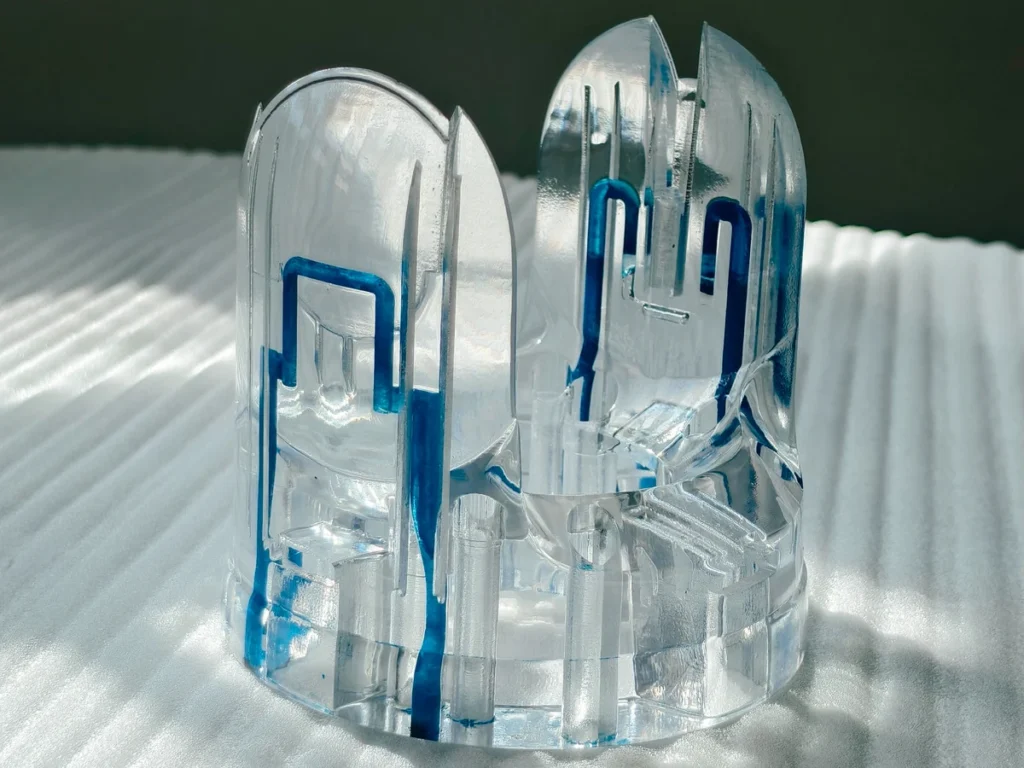
Transparent resin prototypes need an additional definition of acceptable clarity. A part used to see an internal feature has a different task from an optical component with a measured transmission or imaging requirement. Wall geometry and finishing can influence the appearance. State what must be visible and whether the surface is to remain unfinished, be polished or receive an agreed treatment.
Our clear plastic prototype guide covers those appearance decisions in more detail. A photograph of a clear part or an internal channel does not establish optical performance or prove that a flow or leakage test has been carried out.
Specify Accuracy Through Critical Features
SLA vs SLS accuracy cannot be reduced to the smallest layer setting on a machine. Layer thickness describes one part of the build process; it is not a complete tolerance statement for the finished component. Material, geometry, orientation, processing and the measurement method all need review.
Identify the features that control the next decision. These may include a mounting-hole pattern, a cover lip, a shaft clearance, a locating shoulder or the relationship between two assembly faces. A general dimensional expectation for a form model may be insufficient for one tight interface, while a tight tolerance applied everywhere may add unnecessary work.
The drawing should state which dimensions apply in the delivered condition. A printed hole that is subsequently finished is different from an untouched printed hole. If machining, insert installation or coating is proposed, agree on those operations and inspect the relevant features after the operations that affect them.
For an uncertain interface, a small representative test piece can be discussed before committing to a complete build. It should reproduce the geometry, material and condition that matter. A simple coupon with unrelated geometry does not establish the capability of every feature on a larger prototype.
Plan Fit Checks for the Actual Assembly
For SLA or SLS assembly prototypes, identify how the parts meet. Screw-fastened housings, locating tabs, sliding components and snap features place different demands on the material and geometry. Provide the mating-part model or drawing where it is necessary to understand the interface.
A fit check needs defined conditions. Is the purpose to confirm initial location, screw access, closure without interference or repeated disassembly? If the customer supplies mating components and a trial assembly is included in the order, agree on the parts and checks involved. Our prototype assembly checks article explains why the physical assembly and its scope should be clear.
For repeated fastening, discuss the thread or insert arrangement and the expected handling. A successful first assembly does not by itself demonstrate long-term retention or durability. Similarly, a snap that closes once may not represent the intended number of service cycles. Choose the material and test objective together.
Separate Functional Evaluation from Appearance Approval
The question “Which is stronger, SLA or SLS?” needs a defined load and material. A thin clip, a rigid locating fixture and a housing exposed to impact can fail in different ways. Ask what the component must do and for how long, then select a grade and build route that can be evaluated against that requirement.
Specify the relevant temperature, load direction, repeated movement, exposure to liquids or chemicals and duration of use. Where environmental conditioning matters, include the condition in the evaluation plan. A data-sheet result for a standard specimen is useful for screening materials but does not replace testing the actual design.
An appearance prototype can still be useful when its material differs from the final product, provided that its purpose is clear. A prototype used for functional approval needs more careful agreement about what the manufacturing route represents. Do not transfer conclusions about one material or configuration to another without checking the basis.
If the objective is to validate a production thermoplastic or molding-dependent behavior, neither an arbitrary resin nor an unspecified SLS nylon is automatically representative. CNC machining or molding may be worth reviewing. Our CNC plastic machining and injection molding comparison explains that separate process decision.
Compare Complete Cost and Delivery Time
SLA vs SLS cost depends on more than the time spent building layers. Quote the same geometry, quantity, material, delivery condition and inspection requirements before comparing prices. A raw-part quotation and a cosmetically finished, inspected quotation cover different work.
For SLA, the route can include build preparation, printing, cleaning, support work, any required post-cure and the agreed cosmetic finish. For SLS, it can include build preparation, printing, cooling, unpacking, powder removal and finishing. Both also need the agreed inspection, handling and packing. The useful comparison is the cost of the acceptable delivered part.
Quantity and the arrangement of parts within a build can change the economics. A process that is attractive for one geometry and order may not remain preferable after a design or quantity change. Ask for comparable quantity options where that helps the purchasing decision; avoid assuming a fixed break-even number between SLA and SLS.
For urgent orders, include the required finishing and inspection in the schedule discussion. An estimate of printing time alone is not a shipment date. Clarify whether the deadline applies to a first sample, the complete batch or arrival at the customer’s location, and confirm the current drawing revision before production.
Use a Clear Inspection and Approval Plan
Identify the characteristics that must be checked against the drawing, including the interfaces that influence assembly. Specify whether the customer needs a dimensional report, a representative sample, photographs or another agreed record. Sampling, methods and documentation should be settled for the project rather than assumed from the word “prototype.”
Visual review, dimensional inspection and functional testing answer different questions. A photograph can show surface condition and visible geometry; measurements can establish the features that were actually checked. Neither alone establishes load capability, pressure tightness, service life or compliance with an application standard.
Use the sample approval to record the agreed material, finish and revision. If the customer changes the wall, fastening arrangement or evaluation objective after seeing the first parts, review the next build on that new basis. Keep the comparison useful by identifying what changed between iterations.
Three Practical Selection Situations
A Presentation Housing
Start with the visible faces, fine detail, color and whether internal features must be seen. SLA may be a candidate when a suitable resin and finishing route can meet those goals. Include support contact locations and the final surface requirement. A presentation approval should record appearance without implying that the model has passed functional tests.
A Nylon Assembly Prototype
SLS can be a candidate when a suitable nylon grade fits the planned assembly evaluation. Review holes, mating features and access for powder removal. Confirm any finishing or conditioning needed before the customer checks the part. Specify the required performance instead of assuming that “nylon” automatically covers every load or environment.
A Revision That Needs Several Different Checks
One development program can use different builds for different decisions. A detailed resin model might support appearance review, while another material or route supports a defined functional evaluation. Label the purpose of each version and retain the approved drawing, material and processing information. The samples do not need to be treated as interchangeable to be useful.
What to Send for an SLA or SLS Prototype Quote
Send a controlled 3D model and a drawing for critical dimensions or notes. Add the information that lets us evaluate the part as a prototype rather than only as printable geometry.
- Quantity, drawing revision, units and required delivery date.
- Preferred resin or nylon grade, or the properties needed for selection.
- The purpose of the build, including appearance, assembly or a defined functional evaluation.
- Critical holes, slots, mating faces, threads and insert requirements.
- Visible surfaces, finish, color, clarity and acceptable support-contact areas.
- Hollow geometry and access needed for cleaning or powder removal.
- Required inspection records, supplied mating components and any agreed tests.
Common Questions About SLA and SLS Prototypes
Does SAMSHION Print SLA and SLS Parts In House
Yes. SAMSHION carries out SLA resin printing and SLS nylon printing in our own factory. The specific material, build requirements, finishing and inspection scope are confirmed for each order.
Is SLS Always Stronger Than SLA
The answer depends on the actual resin and nylon grades, component geometry and loading. Compare relevant material data and evaluate the intended use. A process label alone is insufficient for approving a structural or repeatedly loaded part.
Which Process Produces the Better Surface
SLA is often considered for relatively smooth, detailed surfaces, while SLS nylon typically has a textured appearance before additional cosmetic work. Define the finished appearance and compare representative samples where it matters. Neither process name specifies an exact roughness value for every part.
Does SLS Need No Finishing Because It Has No Separate Supports
SLS parts still require recovery from the build and removal of unfused powder. Additional surface work depends on the order. Accessible powder-removal paths are an important design consideration, especially in hollow or enclosed features.
Can an ABS Like SLA Resin Replace Production ABS
An ABS-like label does not identify the material as ABS or guarantee equivalent behavior. Confirm the exact photopolymer and the purpose of the prototype. If production-resin behavior is the objective, review a route and material that can provide relevant evidence.
For an SLA vs SLS review, send your model, drawing, quantity and prototype objective through our manufacturing quotation form. We can review the two factory printing routes against the requirements of the part and clarify the proposed material and delivery scope before production.