Hot dip galvanizing gives steel parts a zinc coating for corrosion protection. For a stamped or formed component, the coating must be considered alongside its holes, mounting faces, clearances and finished shape. A finish selected after the part has been designed can create avoidable fit or acceptance problems.
SAMSHION has supplied stamped and formed steel parts with hot dip galvanizing and subsequent color treatment performed by an external supplier. We manufacture and inspect according to customer drawings and coordinate the specified finishing requirements. This guide explains how to define the coating route, review sensitive features and agree on the condition of the delivered part.
What Hot Dip Galvanizing Means
Batch hot dip galvanizing involves preparing a steel article and immersing it in molten zinc. The zinc reacts with the steel to form a coating. The American Galvanizers Association explains this sequence in its overview of the galvanizing process.
For a buyer, the important distinction is when and how the coating is applied. A finished formed component galvanized after fabrication follows a different manufacturing route from a component made out of continuously galvanized sheet. Cutting, forming, joining and coating occur in different sequences, which changes what must be reviewed on the drawing.
Specify the intended route before production. If a drawing calls for galvanizing after fabrication, a proposal to use pre-coated sheet needs approval against the part requirements. The condition of cut edges, formed features and any subsequent operations should be considered together.
The coating also becomes part of the delivered geometry. A drawing should establish which dimensions apply before finishing and which must be satisfied after the full finishing sequence.
Hot Dip Galvanizing Versus Zinc Plating
The words “zinc coated” do not identify one process. Hot dipping, electroplating and other zinc coating methods have different application methods and coating characteristics. The AGA’s comparison of zinc coating processes provides a useful starting point for distinguishing them.
A supplier should not select between these routes using color alone. An iridescent appearance may relate to a later treatment, while the underlying zinc application process still needs its own specification. Terms such as clear zinc, yellow zinc and galvanized steel should be clarified in the purchase documents when the manufacturing route matters.
For this reason, an RFQ should identify the required coating process rather than simply requesting a photograph match. Our surface finishing services provide a broader overview of how coating requirements are coordinated with the base material and manufacturing route.
Color Treatment and Appearance Requirements
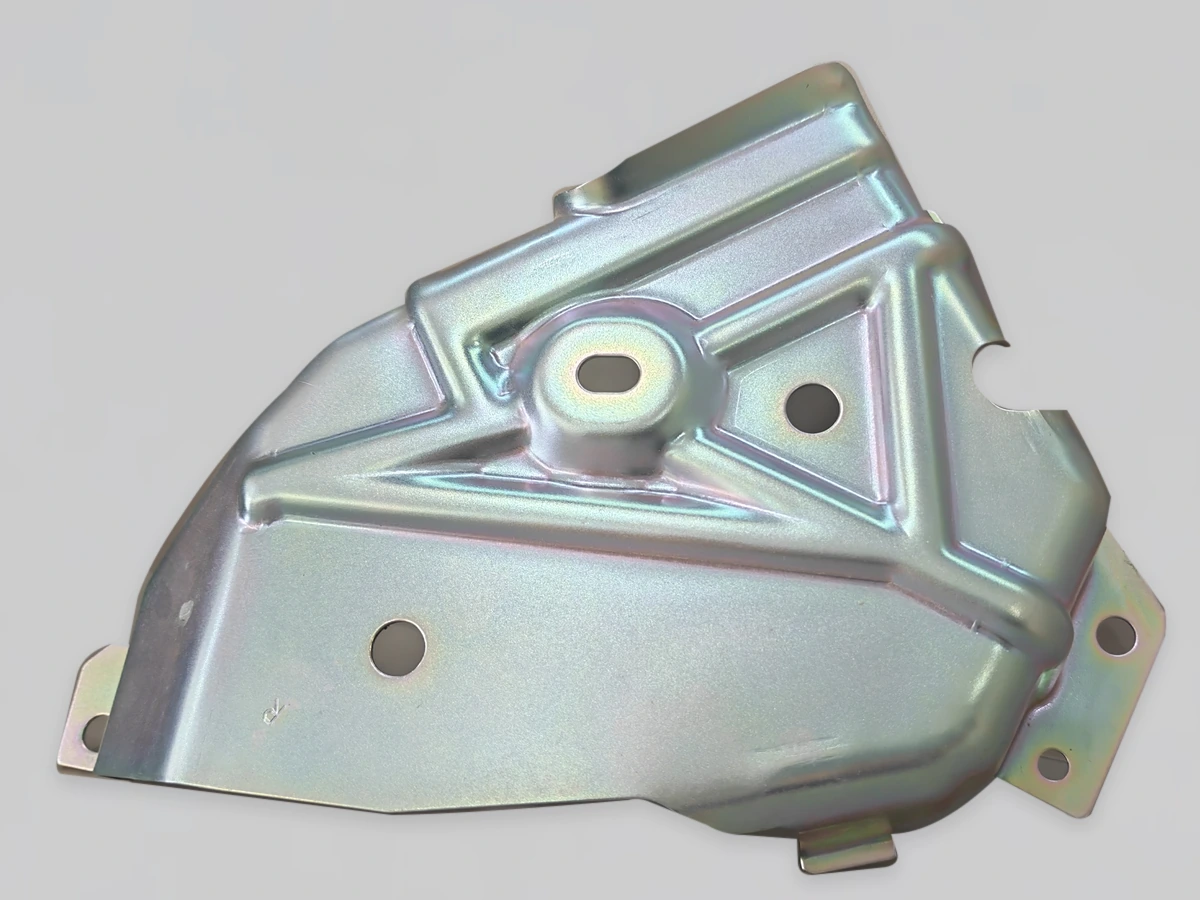
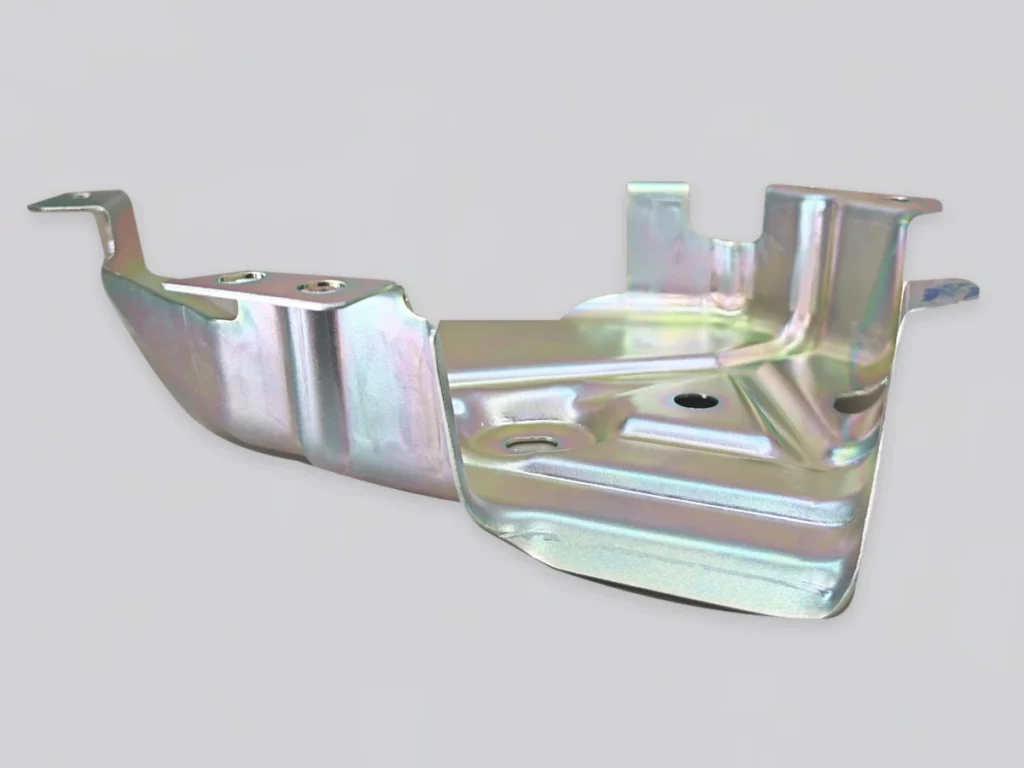
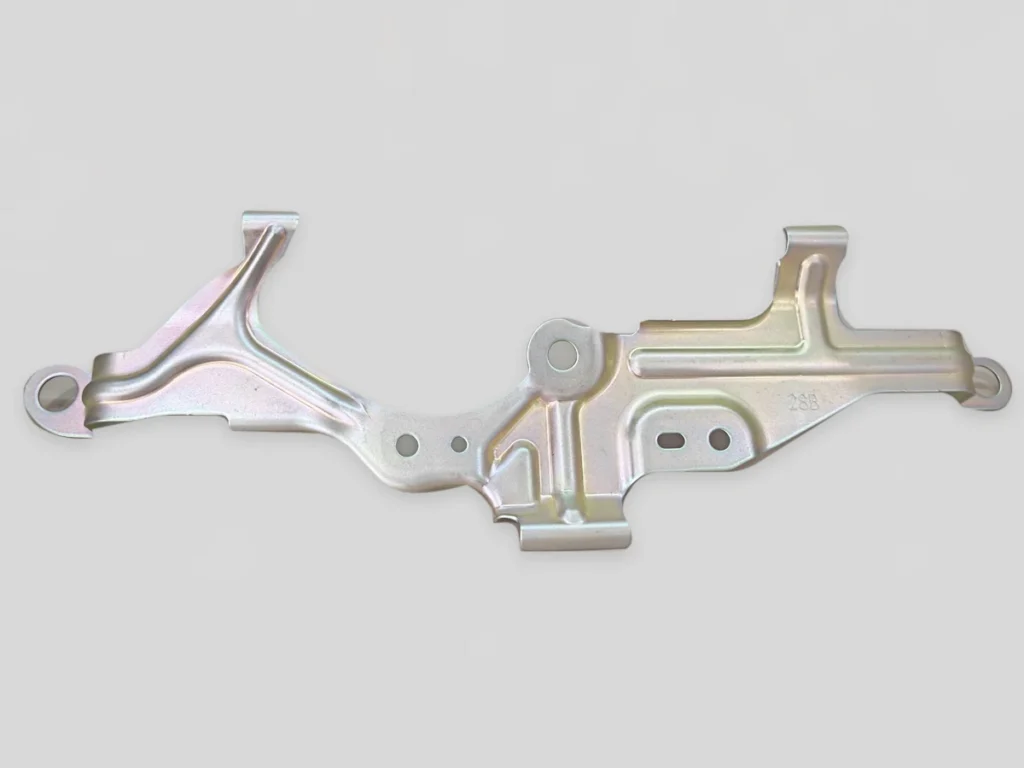
The product photographs in this guide show stamped or formed steel parts with an iridescent surface. These parts received supplier-applied hot dip galvanizing followed by color treatment. Their appearance is useful for discussing visible features and cosmetic expectations.
Post-treatment can influence the appearance of galvanized steel. The AGA describes one example in its discussion of quench discoloration.
For a new order, define the required post-treatment separately from the zinc coating. If color matters, agree on an appearance sample or acceptance range and the viewing conditions. Identify the faces visible in the assembly and distinguish them from concealed faces where protection and fit may be the main concerns.
Photographs taken under different lights can show different colors on the same reflective surface. An approved physical sample and a written appearance requirement give the buyer and supplier a more consistent reference than an unqualified request for the same rainbow color.
Define the Steel and Coating Specification Before Forming
Provide the complete steel designation, sheet thickness and any required material condition. The AGA explains how steel chemistry can affect the response to galvanizing. The finishing supplier needs the material specification when reviewing the coating route.
The drawing should also identify the required finished coating and any additional treatment. Avoid assigning a universal thickness to every stamped steel part. The applicable requirement depends on the specified standard, product category, material thickness and agreed acceptance conditions.
It is useful to separate the base part requirements from the finish requirements on the same controlled drawing. For example, the sheet thickness describes the starting material, while the final clearance between two coated faces describes the delivered assembly condition. Both can matter, but they answer different manufacturing questions.
If the design changes during prototyping, review the coating requirement again. A revised hole, deeper return or narrower gap may change the finishing review even when the base material stays the same. The latest model, drawing and order should describe the same revision.
How Zinc Coating Affects Holes and Mating Features
Coating occupies space on the surfaces it covers, as the AGA’s guidance on hole sizes explains. On an external feature it increases the finished envelope; inside an opening it reduces available clearance. Actual coating distribution and local features need to be considered before setting a fit allowance.
Start with the function of each opening. A clearance hole for a bolt presents a different problem from a locating hole, a sliding interface or a surface that must sit against another component. The drawing should identify which features control location and which only need sufficient assembly clearance.
Do not apply one assumed allowance to every hole. A small opening, an elongated slot and the gap between formed walls can have different acceptance needs. Discuss the relevant surfaces with the finishing supplier and identify the dimensions that must be checked after galvanizing and post-treatment.
Threads deserve a separate review when they are present. Define the finished thread requirement and any permitted treatment of the thread after coating. A proposal to clean, chase or machine a coated feature can affect the protective layer and must be consistent with the specified finishing route.
Mounting faces also need an explicit condition. Coating irregularities at a seating point can affect how a thin component rests or is clamped. Identify the actual contact areas and agree on allowable surface features there, instead of applying a vague smoothness requirement to the whole part.
Review Thin Sections and Formed Geometry
Stamped steel parts may include broad thin faces, flanges, return bends and ribs. Their shape is influenced by the forming history and by the later finishing cycle. The galvanizing supplier should review the formed component before production, particularly where assembly depends on flatness or the relationship between several mounting points.
The AGA’s guidance on warpage and distortion discusses design and fabrication factors that influence dimensional stability during galvanizing. A thin formed part should therefore be reviewed as a complete geometry, rather than judged solely by its sheet thickness.
For a part with several mounting tabs, identify how it is located during inspection. Checking each tab in an arbitrary resting position can give a different result from checking the component on the datums used in assembly. A drawing that identifies functional locating points makes the result easier to interpret.
Identify the formed relationships that control assembly. For example, mounting tabs intended to seat against the same panel need an agreed relationship to the locating datums. Returns that pass around another component need sufficient clearance in the coated condition.
Where a close tolerance appears difficult to preserve through finishing, resolve the route before making the batch. The discussion may involve a design adjustment, a permitted finishing allowance or a different agreed process. Manufacturing to one condition and discovering a conflicting final requirement at delivery adds unnecessary rework.
Review Access for Zinc Flow and Drainage
Immersion coating requires suitable access for the processing liquids and zinc to enter and leave the article. Formed returns, pockets and assemblies need review in their handling orientation. A feature that drains easily in one position may retain liquid in another.
The AGA’s venting and drainage guidance explains why these provisions should be considered during design. Closed or enclosed spaces require particular attention from the galvanizer. Review the actual component and any planned assembly; open formed parts and enclosed fabrications present different flow conditions.
Any added drain or vent feature must be approved against the component’s design. Agree on its location and size with the relevant engineering and finishing parties rather than allowing an undocumented hole to be added after the drawing has been released.
Inspect the Part in Its Delivered Condition
An inspection plan should connect the drawing to the condition in which the customer receives the part. For coated stamped steel components, this normally involves separate consideration of geometry, visible condition and any specified coating evidence.
Dimensions and Assembly Interfaces
Identify hole sizes and locations, slot widths, mounting relationships, overall dimensions and any controlled flatness or profile. Select measurement methods from the feature and tolerance. The same instrument or setup does not automatically suit every formed surface.
Where a part is flexible, the drawing or agreed inspection method should establish how it is supported. A measurement taken while the component is restrained should not be compared with an unrestricted measurement unless the acceptance requirement accounts for that difference.
Our CNC machining inspection guide explains the general principle of choosing checks from the drawing. For a stamped component, apply that principle to its formed geometry and agreed support condition.
Visible Surface Condition
Specify the important faces and examine accessible areas for the required appearance and surface condition. Holes, slots, seating points and handling areas may need particular attention. A cosmetic comparison should use consistent lighting and the agreed reference.
The acceptance discussion should distinguish a permitted finish variation from a condition that obstructs assembly or fails the coating requirement. Define how concerns will be evaluated and what repair, if any, is permitted. Ad hoc grinding or polishing can remove protection from an otherwise coated surface.
Coating Records and Specified Tests
Coating verification has its own requirements. If the order needs thickness measurements, an inspection certificate or a particular test report, include that scope at quotation and agree on responsibility with the finishing supplier.
A dimensional report establishes the features it records. It does not supply a corrosion test result or confirm a particular post-treatment chemistry. Similarly, an appearance photograph cannot establish the coating thickness on every relevant surface. Match each acceptance requirement to the record or inspection that addresses it.
Select Standards by Product and Process
Specify the applicable standard and edition when the order requires one. ISO 1461 covers hot dip galvanized coatings on fabricated iron and steel articles. Its public scope excludes after-treatment and additional coatings, so any subsequent color treatment needs its own agreed definition.
ASTM A123/A123M and ASTM A153/A153M address different product and processing scopes. Do not choose a standard from the word galvanized alone. Check the actual article, material thickness, handling method and specification with the finishing supplier.
The purchase requirement should identify the relevant coating designation and acceptance documents. A standard number on a quotation is not a substitute for reviewing whether its scope fits the product. A special customer requirement or controlled drawing edition should be resolved explicitly before production.
Prevent Moisture Problems During Storage and Shipping
Fresh galvanized surfaces can develop wet storage stain when moisture is trapped during storage. The AGA’s storage and handling guidance explains the importance of moisture and exposure conditions.
Packaging needs to protect the surface from both handling damage and retained moisture. Parts placed tightly together can rub, while damp wrapping or trapped condensation presents a different problem. Select separation and packing materials for the part and its transport conditions, and avoid sealing wet components into a package.
If the customer specifies special storage, cleanliness or packaging requirements, include them in the order. Record the acceptable delivery condition so a receiving inspection can assess the part consistently. Where unexpected staining occurs, review its cause and assess the surface against the applicable coating and acceptance requirements.
Information to Include in a Galvanized Parts RFQ
Send the current model and drawing with the material, quantity and delivery requirement. For the finish review, identify:
- The required zinc coating route and applicable specification.
- Sheet thickness and material condition.
- Subsequent color treatment and any appearance reference.
- Hole, slot, mounting and other dimensions controlled after finishing.
- Faces that must contact, locate or move against another component.
- Required coating records, tests and dimensional documentation.
- Packing requirements and any assembly or service constraints relevant to finishing.
Quantity, forming complexity, tooling and the inspection scope also affect the quotation. Our sheet metal prototype cost guide explains these production considerations. Finishing requirements should be included in that review while the route can still be planned.
Frequently Asked Questions
Is Hot Dip Galvanizing the Same as Zinc Plating
Both apply zinc for protection, but the application processes differ. Batch hot dip galvanizing uses immersion in molten zinc; zinc electroplating uses electrical deposition. State the required process and finished condition in the drawing or purchase specification.
Can Stamped Steel Parts Be Hot Dip Galvanized
They can be considered for the process when the material, thickness and formed geometry are suitable. Review distortion sensitivity, access, drainage and final fit requirements with the galvanizing supplier before production.
Does a Rainbow Finish Identify the Zinc Coating Process
Color alone does not establish the original zinc application method or the later treatment chemistry. In the photographed SAMSHION example, the route was hot dip galvanizing followed by color treatment through a supplier. A new order needs its own finish specification.
Will Galvanizing Change Hole Sizes
Coating on the inside of a hole reduces available clearance. Review the finished requirement and actual coating distribution before choosing an allowance. Check critical openings in the specified delivery condition.
Should Coating Thickness and Color Treatment Be Specified Together
Yes. The zinc layer and the subsequent treatment are related parts of the finishing route, but they have separate requirements. Identify the coating specification, post-treatment, appearance reference and acceptance evidence needed for the application.
Can Galvanized Parts Develop White Staining
Moisture retained during storage can cause wet storage stain. Review drying, separation and packaging conditions with the supplier. The cause and significance of a visible mark should be evaluated against the actual coating and acceptance requirement.
Coordinate Forming and Galvanizing Before Production
SAMSHION provides sheet metal fabrication services and coordinates project-specific finishing through suppliers. For stamped steel parts requiring hot dip galvanizing and color treatment, send the latest drawing, material requirements and finished acceptance conditions through our project quotation page. Identifying the critical mounting points, holes and visible faces allows the forming, finishing and inspection requirements to be reviewed together.