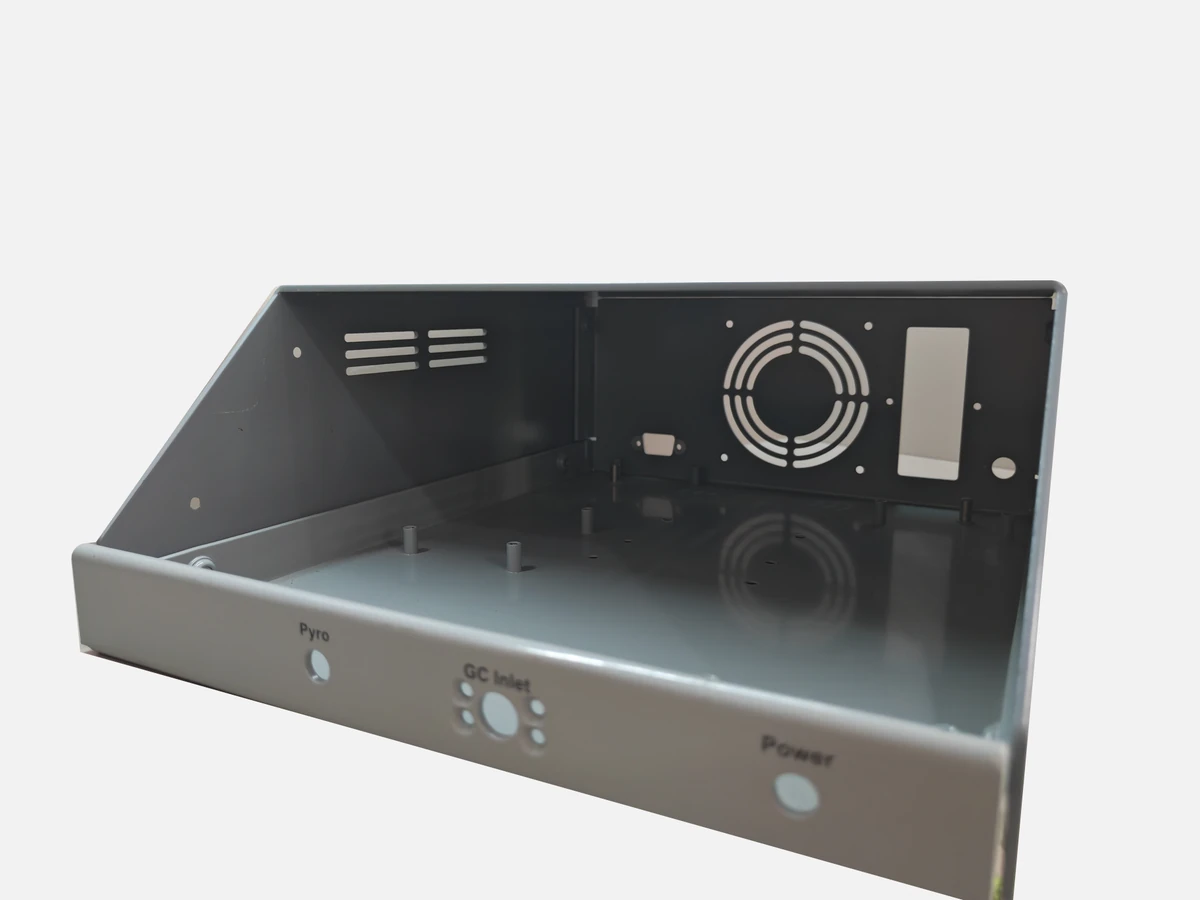
A small sheet metal enclosure may contain little metal, yet its quotation can be much higher than the material value suggests. Sheet metal prototype cost includes the work needed to turn a drawing into an approved physical part, not simply the weight of the sheet or the minutes spent cutting it.
The main reason one part often costs more per unit than a batch is that preparation and minimum process charges are spread over fewer pieces. Making additional identical parts can spread some of those costs, but it does not eliminate the material, processing, inspection and handling required for each part.
In SAMSHION’s experience with welded and finished sheet metal projects, welding positioning and surface finishing are particularly time-consuming. Our finishing suppliers also apply minimum charges to small orders using conventional colors and processes. These practical details explain why a low material weight does not automatically mean a low prototype price.
What You Are Paying for in a Sheet Metal Prototype
A useful way to read a quotation is to separate preparation, repeat work and batch-dependent charges. The following breakdown is a costing framework, not a price list or a promise that every supplier invoices these items separately.
For the same design and scope, think of average unit cost as the total cost of the order divided by the number of accepted parts. Doubling the quantity does not necessarily halve the unit cost. Some preparation can be shared, while other costs grow with the order or require another processing batch.
Why Preparation Still Matters When You Need Only One Part
Before fabrication, the team needs to understand the intended geometry, identify the current drawing revision and check the dimensions that control assembly. A bent component then needs a workable flat pattern and bending sequence. Cutting programs and press brake settings must be prepared for the actual job, even if the order contains only one component.
A supplied DXF can be useful, but it does not automatically remove all preparation. The flat pattern must agree with the formed model, material thickness and intended bending method. Similarly, an old program is not automatically suitable after a change to thickness, bend geometry or hole position.
This is why sending a consistent folded STEP model and PDF drawing can reduce avoidable clarification. Mark the revision and units, identify critical dimensions and include an approved flat profile when available. Our sheet metal fabrication services cover the complete route rather than treating the cut blank as the finished product.
How Design Features Add Processing Work
Cutting and Bending
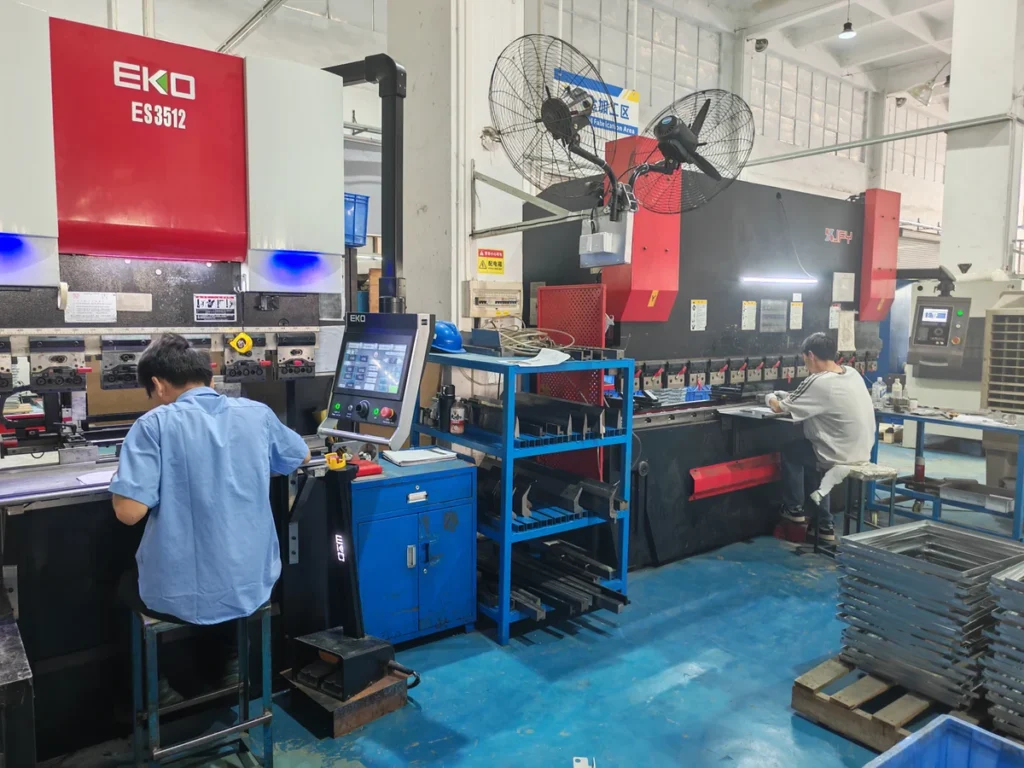
Two parts with similar outside dimensions can require different amounts of work. Many cutouts, additional bends, difficult part handling or restricted tool access can make one design more involved than the other. For a prototype, the important question is not only whether a feature can be made, but what extra setup or operations it introduces.
Short flanges and features close to bends deserve early review because tooling access and local deformation can affect manufacturability. Moving a noncritical feature or simplifying a bend may help, but the revised part must still fit its mating components. The general design considerations are also explained in Protolabs’ sheet metal DFM guide; the applicable dimensions must be agreed for the actual project.
Hardware and Assembly
Nuts, studs, standoffs and rivets introduce more than the purchase price of the fastener. Their locations, installation access and relationship to mating parts need to be checked, and the hardware must be installed correctly. Identify which items the fabricator supplies and installs, and which the customer will fit later, so quotations cover the same scope.
Why Welding Positioning Can Take Longer Than Expected
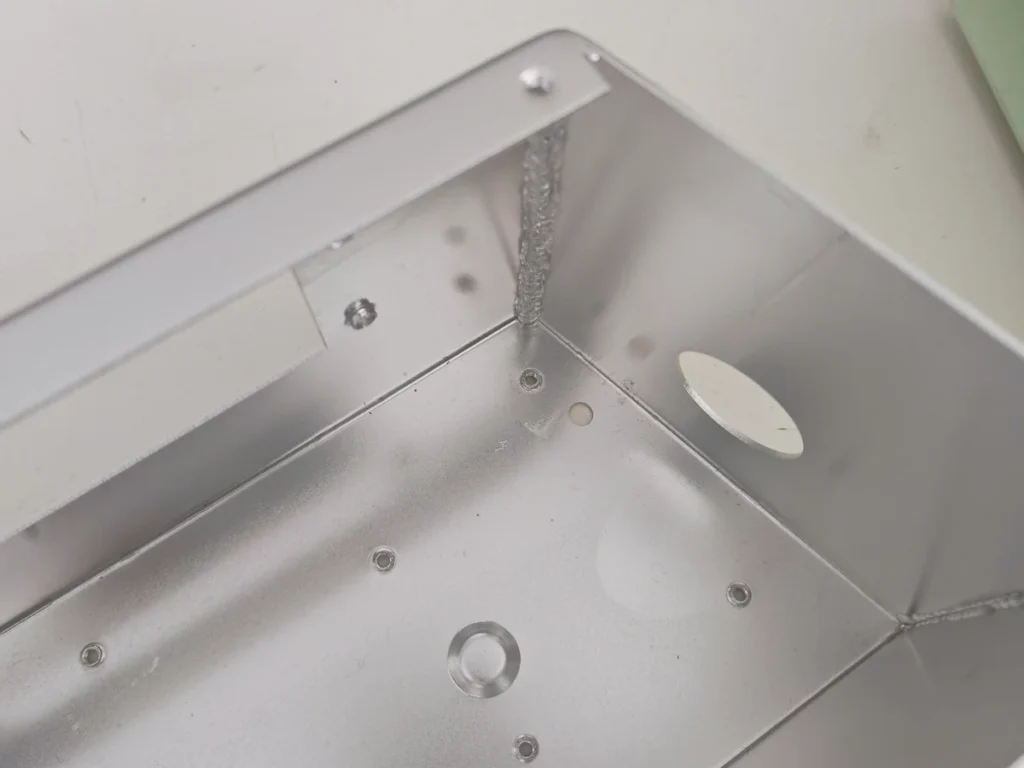
The visible weld is only one part of the job. Before welding begins, components need to be aligned and held in the required relationship. Access, the sequence of joining and the dimensions that must be retained after welding all influence the preparation. Depending on the assembly, this may involve simple locating arrangements or dedicated fixtures.
For SAMSHION’s relevant projects, this positioning work is one of the most time-consuming activities. It should not be confused with arc-on time alone. An enclosure that must fit a cover, align with a mounting frame and present a clean external seam can require work beyond joining the edges together.
State where welds are required, the applicable weld requirements, whether a joint must seal and which surfaces need cosmetic finishing. Do not specify a fully dressed external appearance for hidden welds unless there is a reason. Conversely, reducing weld coverage or changing the joint method is not acceptable without approval where it affects strength, fatigue, sealing or the intended function.
For a deeper discussion of locating and sequence, see our guide to sheet metal weld distortion and fixturing. A photograph of a welded component illustrates its construction; it does not establish a weld acceptance level or prove a measured tolerance.
Surface Finishing Minimum Charges Can Dominate a Small Order
SAMSHION coordinates surface finishing through external suppliers. In our experience, conventional colors and processes still carry minimum charges for small orders. Other colors or special process requirements may involve additional preparation fees, including bath setup where that process requires it. The exact charging basis comes from the finishing supplier’s quotation.
A powder coating color change and preparation of an electroplating bath are not the same operation. Avoid assuming that every special finish carries the same type of charge. Ask whether the quote includes the selected finish, its minimum batch charge and any additional preparation required for that specification.
The practical consequence is that finishing one part may not cost one-tenth as much as finishing ten identical parts together. At the same time, a larger order may require extra batches or handling, so the finishing total is not necessarily fixed. For low-volume sheet metal fabrication, request quantity options with exactly the same finish specification to make the comparison meaningful.
SAMSHION has no minimum order quantity requirement. This does not mean every subcontracted process has no minimum charge. A single part can be ordered, while the necessary finishing minimum remains part of its manufacturing cost. See our surface finishing options when defining the required finish.
Five Practical Ways to Reduce Sheet Metal Fabrication Cost
The following options reflect the discussions SAMSHION has with customers. They are proposals to evaluate, not changes we make to an approved design without permission. Compare the revised scope and its effect on the prototype’s purpose before accepting a lower price.
Choose a Conventional Color or Finishing Process
Ask whether an available conventional color and process can meet the project’s requirements. This may avoid special preparation charges, but a standard finish can still have a minimum charge. Confirm color, gloss, texture, corrosion requirements and any masking areas; “black” alone is not a complete specification. For an appearance approval sample, changing the finish may defeat the purpose of the sample.
Review Welding Requirements
Separate functional weld requirements from cosmetic preferences. Identify hidden joints, visible seams and any sealing requirement. Ask whether the specified weld extent and dressing are necessary, or whether an approved alternative joint could meet the need. Do not reduce weld size, continuity or quality requirements simply because a seam is hidden; hidden joints may still carry loads or provide sealing.
Simplify the Structure
Review unnecessary bends, small decorative features, difficult access and separate pieces that create avoidable joining work. A simpler structure may reduce setup, handling or assembly. However, fewer pieces do not automatically mean lower cost: combining several parts into one can introduce difficult bends or limit tool access. Ask for a manufacturability review of the complete revised assembly, including cover fit and service access.
Evaluate an Alternative Material
An alternative grade or material may reduce purchasing or processing cost, but it is not a like-for-like substitution by default. Review stiffness, weight, corrosion protection, forming behavior, joining and finishing compatibility. A cheaper sheet that requires extra protection or redesign may not reduce the finished-part cost. Use our manufacturing materials guide as a starting point, then approve the exact material and thickness for the revised design.
Increase the Quantity in the Same Batch
When the revision is stable, ordering identical parts together can spread some preparation and finishing minimums over more pieces. Request quotations for the quantities you can realistically use, with the same material, finish and delivery scope. Separate orders placed weeks apart may require new setup and another finishing minimum, even when the design is unchanged.
Do not buy unnecessary stock solely to obtain a lower unit price. If fit or function is still uncertain, an unsuccessful first design can leave an entire batch unusable. Compare the total order value, the risk of revision and the cost of a staged approval approach, rather than just the price per piece.
Match the Prototype Specification to What You Need to Validate
A fit-check prototype, an appearance sample and a functional test assembly do not answer the same questions. For an early geometry review, the customer may approve a simpler finish or omit operations not needed for that test. For a final fit check, however, coating, hardware and the actual joining method may be essential. Do not use an unfinished sample to conclude that finished assembly clearances are correct.
Agree in writing what an interim sample will and will not validate. This makes a reduced prototype scope transparent and prevents a cheaper development sample from being mistaken for a production-equivalent qualification part.
Compare Quotations on the Same Basis
Before comparing the total, check that both quotations include the same drawing revision, material and thickness, hardware, welding, finish, quantity and delivery scope. Also confirm whether tooling, inspection records, packaging, freight and applicable taxes are included or separate. A lower quotation for cut-and-bent blanks is not directly comparable with one for welded, coated and assembled parts.
If a quote is above budget, request alternatives rather than an unexplained discount. Ask which preparation is shared, whether a finishing minimum applies and which design change would remove an actual operation. Suppliers may group costs commercially, so an operation-by-operation invoice is not always available; a clear scope and a reasoned alternative are more useful than assuming every cost line is negotiable.
What to Send for a Sheet Metal Fabrication Quote
- A folded 3D model and PDF drawing with matching revision and units; an approved DXF flat profile if available.
- Material grade, thickness, required quantity and the alternative quantities you want compared.
- The prototype’s purpose, mating interfaces and the dimensions that must be checked after forming, welding or finishing.
- Hardware specifications, installation locations, welding requirements and any sealing or load-related requirements.
- Finish, color reference, gloss or texture, cosmetic surfaces, masking needs and required inspection records.
- Required delivery date and destination, plus the changes you are willing to consider for cost reduction.
Frequently Asked Questions
Why is a single sheet metal prototype relatively expensive
Drawing review, programming and applicable setup still have to be completed. If welding or finishing is required, positioning work and minimum finishing charges can add cost even for one part. The cost of sheet metal prototypes therefore depends on the complete route, not only on material usage.
Does no minimum order quantity mean there is no minimum charge
No. SAMSHION accepts single-part orders, but external finishing suppliers can apply minimum charges. These are different concepts: one concerns how many parts you can order; the other concerns the cost of carrying out a required process.
Will a conventional powder coating color remove the minimum charge
Not necessarily. In our supplier arrangements, conventional colors and processes still have minimum charges. A conventional option may avoid some special preparation, but the applicable charge must be confirmed in the quote.
Is a repeat order always cheaper than the first order
Not always. Reusable drawings, programs or fixtures may reduce preparation, but a separate run can still require setup, supplier minimums and updated purchasing costs. A design revision may also remove some of the benefit of previous preparation.
Can I reduce cost by changing material or removing welds
These are options for engineering review, not automatic substitutions. Any change must retain the required assembly, strength, sealing, corrosion and appearance performance, as applicable, and receive customer approval before manufacture.
Should I order more parts before the first sample is approved
Only when the expected savings justify the risk. A stable design and a known need for additional parts support batch purchasing. If major fit or functional questions remain, a smaller approval stage may prevent a larger loss from obsolete parts.
Start with the Required Function Then Review the Cost
A useful sheet metal quotation makes clear what will be delivered and which work is necessary. The best reduction is not an omitted requirement; it is an approved change that reduces real preparation or processing while preserving the purpose of the part.
Send your drawings, quantities and prototype goals through our manufacturing quotation form. If cost is the priority, identify which colors, finishes, welding details, structural features or materials you are willing to review, and ask for a same-batch quantity comparison.