The Indispensable Role of CMM in Precision Manufacturing
In today’s competitive manufacturing landscape, precision is not an option—it is a necessity. Coordinate Measuring Machines (CMM) have emerged as the gold standard for dimensional verification, acting as the “eyes of industry” that bridge digital design intent and physical part reality. Unlike traditional tools such as calipers or micrometers, CMMs deliver micron-level accuracy, repeatable results, and comprehensive geometric analysis—capabilities that directly impact product performance, safety, and market competitiveness. For manufacturers like Samshion, investing in CMM technology is not just about meeting standards; it is about redefining what quality means in custom precision manufacturing.
Why CMM Inspection Is Non-Negotiable for Workpieces
Unmatched Precision and Repeatability
Traditional inspection methods rely on manual operation, which introduces human error and inconsistency. CMMs, by contrast, use computer-controlled probes to collect millions of 3D coordinate points on a part’s surface, achieving accuracy as high as ±1–5 microns—far beyond the reach of conventional tools. This level of precision ensures that every measurement is objective, traceable, and repeatable, eliminating variability between operators and shifts.
Comprehensive Geometric Dimensioning and Tolerancing (GD&T) Analysis
Many critical parts require strict control of form, profile, and positional tolerances—parameters that manual tools cannot quantify. CMMs excel at measuring complex GD&T features, including:
Shape tolerances
Straightness, flatness, roundness, and cylindricity
Position tolerances
Perpendicularity, parallelism, concentricity, and true position
Complex freeform surfaces
curved profiles, turbine blades, and organic geometries
This capability is essential for ensuring parts assemble correctly and function as designed.
Data-Driven Quality Control and Process Improvement
CMM inspections generate digital measurement records that support statistical process control (SPC), trend analysis, and root-cause identification. By analyzing CMM data, manufacturers can:
- Detect deviations early to reduce scrap and rework costs
- Optimize machining parameters for consistent quality
- Validate compliance with industry standards (e.g., ISO 9001, FDA, CE)
- Provide customers with full inspection reports for traceability
Critical Components That Require Mandatory CMM Inspection
Not all parts demand CMM verification, but high-precision, safety-critical, or complex geometric components rely entirely on CMMs for validation.
Aerospace and Defense Components
Aerospace parts operate in extreme conditions where micron-level errors can cause catastrophic failures. CMM inspection is mandatory for:
- Turbine blades and engine components (complex freeform surfaces, tight profile tolerances)
- Structural brackets and landing gear parts (strict positional and perpendicularity requirements)
- Avionics housings (precision assembly features and sealing surfaces)
Medical Device Implants and Instruments
Medical components demand sub-micron accuracy to ensure patient safety and biocompatibility. CMMs are required for:
- Orthopedic implants (e.g., hip cups, knee components—precision fit with bone structures)
- Surgical instruments (tight tolerances for cutting edges and assembly joints)Samshion
- Dental components (custom abutments and crowns requiring perfect occlusion
Automotive Powertrain and Safety Parts
Automotive manufacturers rely on CMMs to meet strict quality standards for:
- Engine cylinder blocks and heads (complex bore patterns, flatness, and alignment)
- Transmission gears and shafts (concentricity, runout, and tooth profile accuracy)
- Brake system components (safety-critical dimensional stability)
Precision Mold and Tooling
Molds and dies define the quality of mass-produced parts, making CMM inspection essential for:
- Injection mold cavities and cores (complex 3D surfaces, precise draft angles)
- Blow molds and roto-molding tools (large hollow geometries, uniform wall thickness)
- Fixtures and jigs (positional accuracy for consistent part clamping)
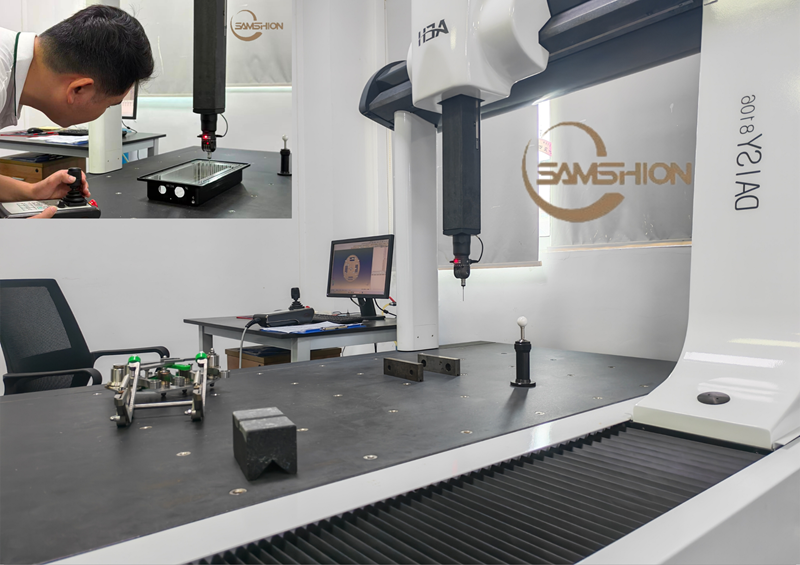
Samshion’s Relentless Commitment to Elevating Quality Inspection Standards
Quality as a Core Corporate Value
At Samshion, quality is embedded in every process, from initial design review to final shipment. As an ISO 9001:2015 certified manufacturer, the company adheres to rigorous quality management systems that prioritize precision, consistency, and customer satisfaction. Samshion’s mission “to empower engineers with uncompromising precision” is reflected in its continuous investment in advanced inspection technologies, including state-of-the-art CMM equipment operated by highly trained metrology experts.
Advanced Inspection Infrastructure and Expertise
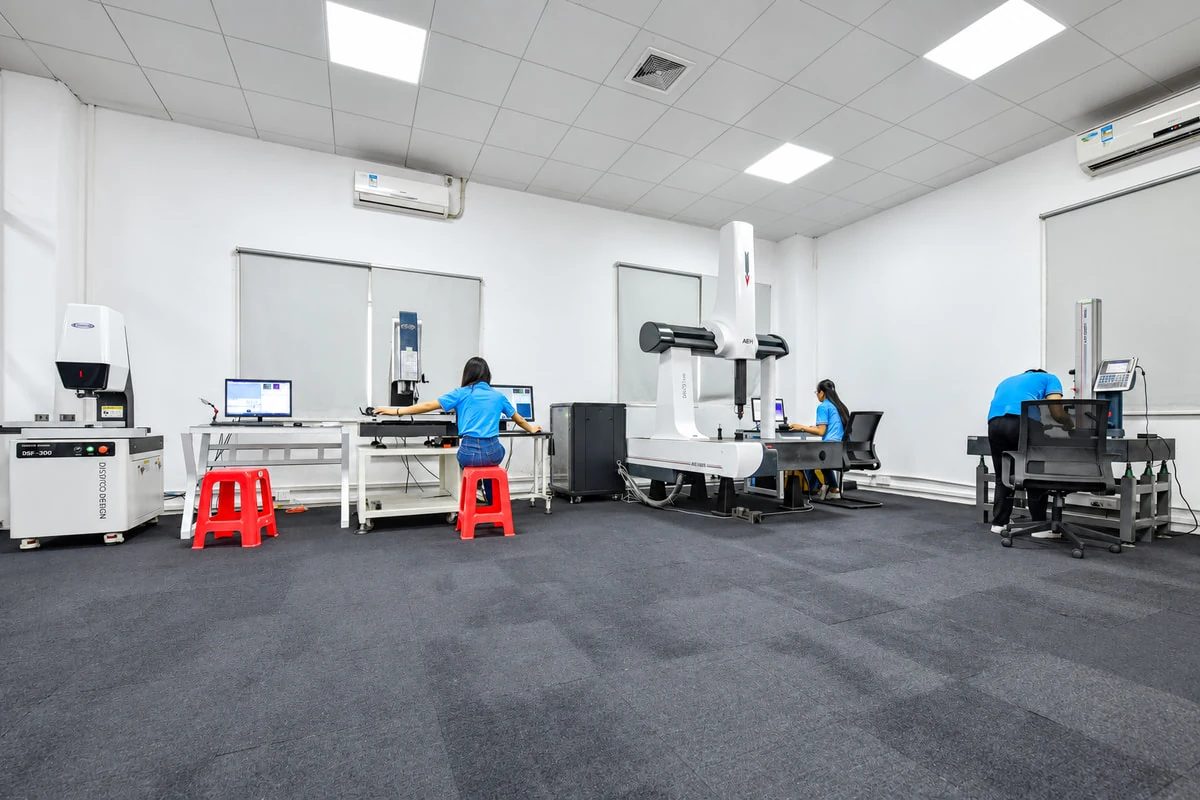
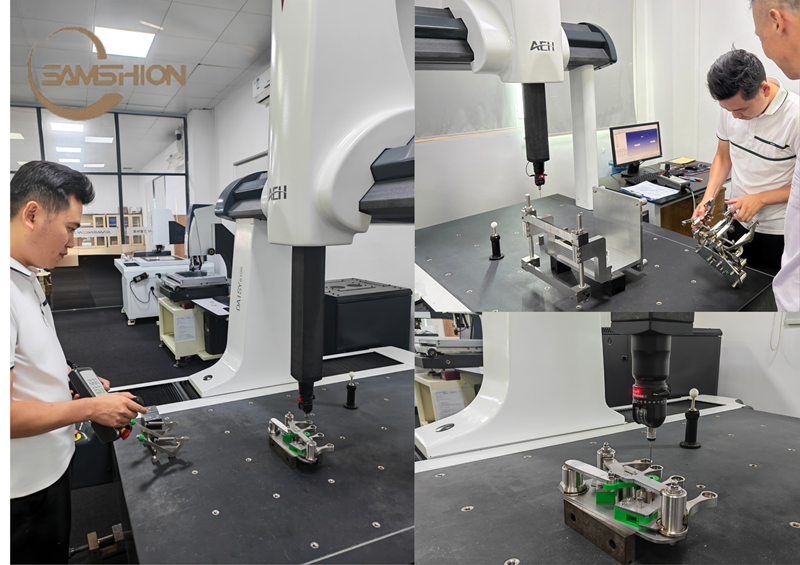
Samshion’s in-house metrology lab features high-precision CMMs capable of handling complex parts across industries, complemented by spectrometers, optical measuring devices, and calibrated gauges. The company’s quality engineers are trained in GD&T, statistical analysis, and industry-specific standards, ensuring every inspection is accurate, thorough, and compliant. This expertise enables Samshion to deliver certified inspection reports that meet the strictest customer and regulatory requirements.
Continuous Improvement: Beyond Inspection to Excellence
Samshion views quality inspection not as a final checkpoint but as a catalyst for continuous improvement. By analyzing CMM data, the company identifies process inefficiencies, optimizes machining parameters, and enhances production workflows—reducing defects, improving efficiency, and lowering costs over time. This proactive approach aligns with Samshion’s commitment to innovation, ensuring the company remains at the forefront of precision manufacturing quality standards.
Customer Trust and Global Competitiveness
In a global market where customers demand zero-defect parts and full traceability, Samshion’s investment in CMM inspection differentiates it from competitors. By consistently delivering precise, reliable components validated by CMM data, Samshion builds long-term partnerships with clients across 58+ countries, spanning aerospace, medical, automotive, and industrial equipment sectors. For Samshion, quality inspection is not just about meeting expectations—it is about exceeding them, every time.
CMM Inspection—The Foundation of Precision Quality
In an era where precision defines success, CMM inspection is no longer a luxury but a fundamental requirement for manufacturing excellence. From aerospace turbines to medical implants, critical components depend on CMMs to deliver the accuracy, consistency, and reliability that modern industries demand. For Samshion, prioritizing and elevating quality inspection standards—centered on CMM technology—is not just a business strategy; it is a promise to deliver precision beyond measure, every single day.
Multi-instrument Combined Inspection Builds the Backbone of Precise Quality
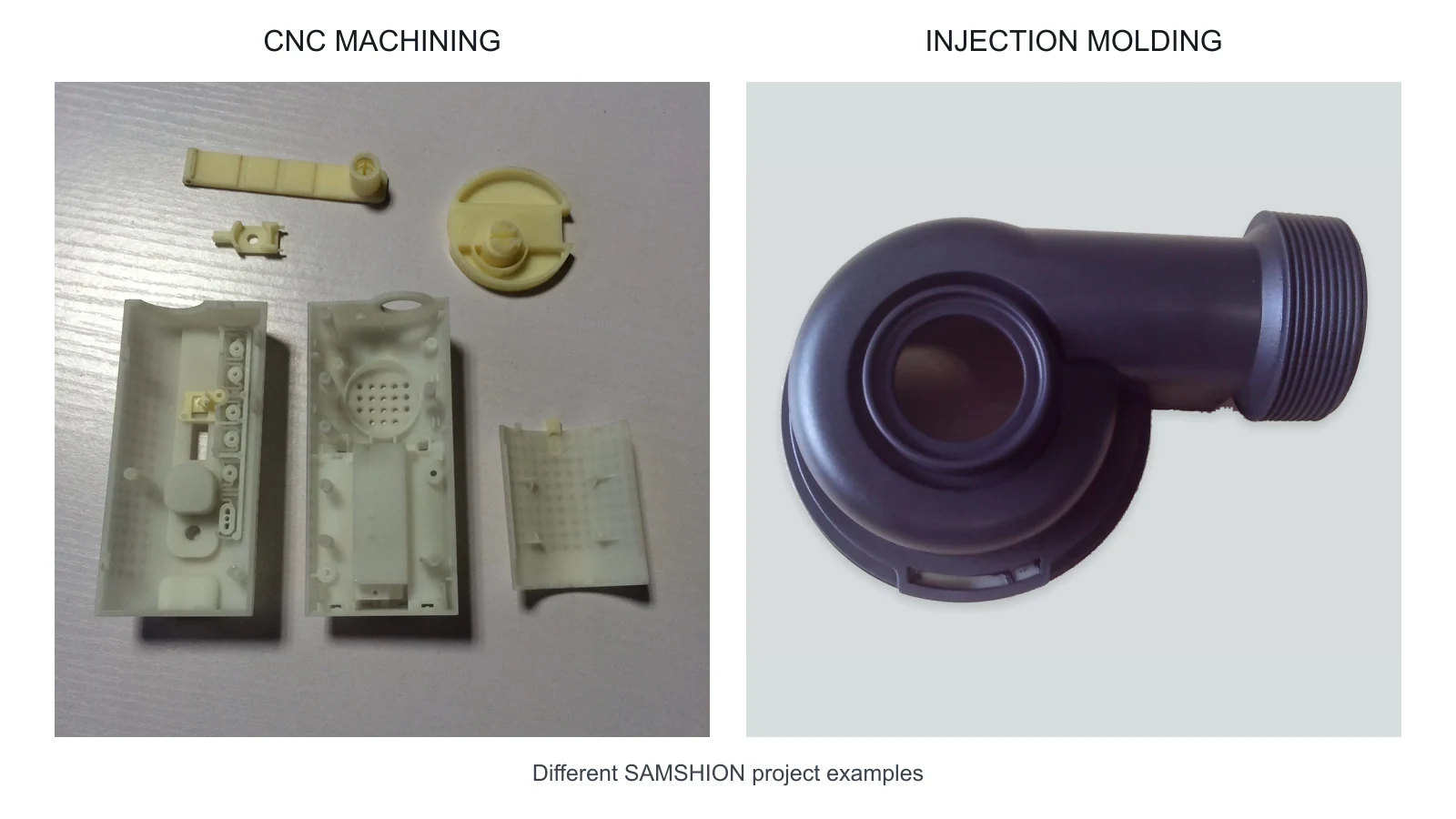
Many manufacturing practitioners regard the Coordinate Measuring Machine (CMM) as the sole benchmark for high-precision quality inspection, assuming it can fully guarantee workpiece dimensional accuracy and compliance. However, modern precision manufacturing encompasses complex processes including CNC machining, injection molding, and roto-molding, featuring diverse product structures and stringent mass production stability requirements. Reliance on CMM alone creates obvious quality loopholes. As an offline sampling device, CMM only verifies finished workpieces, failing to monitor real-time production deviations or intercept potential risks during processing. Therefore, a diversified, full-process integrated inspection system is essential to achieve zero-defect production and stable, consistent product quality.
Core Value and Inherent Shortcomings of CMM Inspection
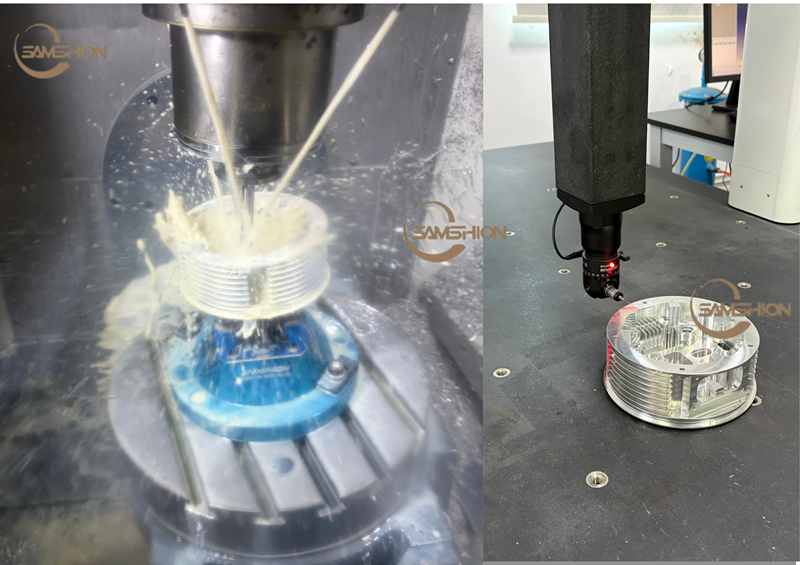
Undeniably, CMM serves as the core precision testing equipment in the quality control system. It delivers micron-level 3D dimensional verification and professional GD&T tolerance detection, covering critical indicators such as true position, flatness, concentricity, and free-form surface profiles, providing authoritative final qualification standards for precision workpieces. Despite its high precision, CMM has irreplaceable limitations. Its low testing efficiency and offline sampling mode cannot support real-time process monitoring. It can only identify defective parts after production completion, unable to correct ongoing machining deviations, which may lead to batch scrap, repeated rework, and increased production costs. This makes single CMM inspection insufficient to meet modern manufacturing’s comprehensive quality demands.
Complementary Inspection Devices for Full-Cycle Quality Control
CNC On-machine Probing: Source Process Quality Control
CNC on-machine probing acts as the first line of on-site quality defense, making up for CMM’s lack of in-process monitoring capability. Installed on CNC machine tool spindles, the probe conducts real-time dimensional measurement without disassembling workpieces. It dynamically compensates for common processing deviations including tool wear, clamping offset, and unstable machining allowance. By correcting abnormal machining parameters in real time, it blocks dimensional errors at the source, effectively reduces semi-finished product defects, and avoids batch waste caused by unmonitored processing problems that CMM sampling cannot detect timely.
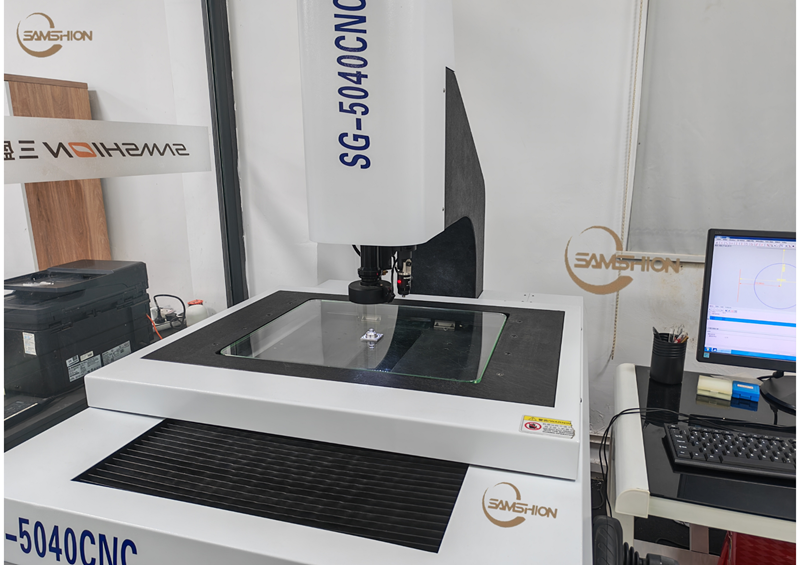
SG-5040 CNC Vision Measuring Machine: Efficient Batch Dimensional Screening
The SG-5040 CNC vision measuring machine solves CMM’s low-efficiency bottleneck in batch 2D dimension inspection. Specialized in rapid detection of hole spacing, outline dimensions, groove depth, and edge contours, this device supports fully automatic high-speed batch inspection. Compared with CMM’s time-consuming full 3D scanning, it completes rapid full inspection for mass-produced workpieces, screens out obviously out-of-tolerance products in advance, and only delivers qualified samples to CMM for high-precision 3D verification. This hierarchical inspection mode optimizes inspection workflows, improves overall detection efficiency, and reduces unnecessary quality control costs.
CNN AI Visual Inspection: Comprehensive Surface Defect Detection
Dimensional inspection devices like CMM and vision machines cannot identify subtle surface flaws, creating a key quality blind spot filled by CNN AI visual inspection equipment. Relying on mature deep learning algorithms, the system achieves 100% full-coverage surface screening for workpieces, automatically identifying and classifying tiny defects including fine scratches, micro burrs, color differences, shrinkage marks, and pinholes. It complements numerical dimensional inspection with appearance quality control, ensuring workpieces meet both dimensional tolerance and surface aesthetic standards.
Auxiliary Precision Measuring Tools: Flexible On-site Verification
Basic precision tools such as micrometers, vernier calipers, and height gauges serve as essential auxiliary equipment for daily quality control. They support flexible random sampling and rapid on-site dimensional verification, allowing inspectors and engineers to quickly judge product qualification status during production, realizing real-time auxiliary supervision of processing quality.
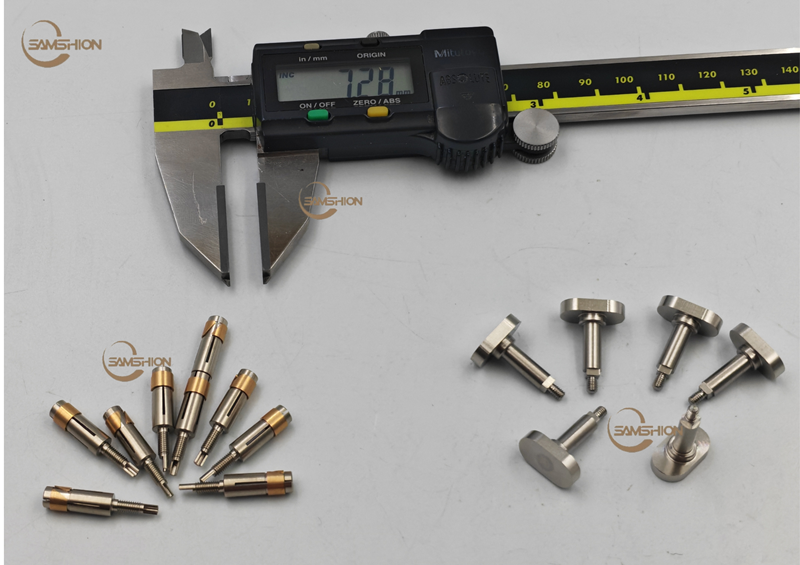
Integrated Inspection Ensures Sustainable Quality Excellence
To sum up, CMM undertakes the core final high-precision verification, while CNC on-machine probing, SG-5040 vision inspection, CNN AI detection, and conventional precision tools cover process monitoring, batch screening, surface defect detection, and on-site auxiliary verification respectively. The coordinated operation of this multi-device system builds a complete closed-loop quality control mechanism spanning the entire production process. For manufacturers like Samshion, this integrated inspection system eliminates the limitations of single-device detection, stabilizes product quality consistency, reduces defect rates and production costs, and lays a solid foundation for delivering reliable high-precision products to global customers.