Why Prototype Machining Costs Exceed Mass Production Prices
Many customers question why the unit price for single-piece or small-batch prototype machining is much higher than that of mass production, which stems from fundamental differences in production mode, cost allocation and process setup.
Price gap between prototype and mass production
Mass production adopts standardized assembly-line operation. Manufacturers can prefabricate dedicated tooling fixtures, lock machining parameters and optimize cutting paths. After one-time setup, hundreds or thousands of parts can be processed consecutively, spreading expenses on equipment, labor and trial setup across all finished items and drastically lowering per-unit cost.
Extra setup cost for customized prototype processing
In contrast, prototype machining focuses on customized trial production in small or single quantity. Each part differs in structure, dimension and fabrication requirement, making standardized production infeasible. Technicians must conduct independent programming, machine setup and precision calibration separately for every prototype. Although the full preparatory workload equals that for mass orders, only one finished piece is obtained. All setup labor, machine wear and preparation costs are fully borne by the single workpiece, pushing up prototype unit pricing.
Scrap risk further increases prototype cost
Besides, no mold is required for prototyping yet there is almost no allowance for processing errors. Any defective fabrication cannot be replenished, with raw material waste and scrap loss fully loaded onto the prototype cost and further widening the price gap against mass-produced parts.
Impacts of Raw Material Selection on Component Machining Cost
Material selection serves as a fundamental determinant of prototype machining cost. Divergences in procurement expense, machining difficulty and scrap rate among various materials lead to notable gaps in final quotation. Conventional materials such as common plastics and mild carbon steel feature affordable purchase prices, moderate hardness, favorable cutting performance, low tool adhesion and low reject rate, resulting in relatively economical processing costs.
High-grade metals and special plastics drive up basic processing cost.
By contrast, premium metallic materials including titanium alloy, stainless steel, aluminum alloy and copper alloy, as well as high-temperature resistant and wear-resistant specialty engineering plastics, come with much higher raw material prices and directly push up base costs. Taking TC4 titanium alloy as an example, poor thermal conductivity and severe tool adhesion cause rapid cutter abrasion, requiring high-end specialized cutting tools whose consumption cost is several times that for ordinary steel. Hard materials also entail slower cutting speed and longer machine occupancy time, raising equipment depreciation and labor costs accordingly.
Extra customized processes finalize material-based pricing.
Certain specialty materials demand exclusive cutting and heat treatment procedures, further inflating overall expenses. In conclusion, the grade of selected raw material stands as the primary fixed factor governing prototype pricing.
Key Impacts of Dimensional Tolerance Requirements on Component Pricing
Higher precision requirements translate into greater processing difficulty, longer working hours and higher scrap costs, which inevitably drive-up product prices. Ordinary-precision prototypes with a typical tolerance of ±0.1 mm can be produced on standard general-purpose machine tools. Such parts feature simple programming, fast machining cycles and high error tolerance, resulting in rare scrappage and low overall processing expenses.
Hidden Overhead Costs Brought by Precision Tolerance Standards
In daily prototype cooperation, many clients only focus on the final quotation figure and ignore the hidden cost brought by different tolerance standards. When the drawing tolerance is relaxed to conventional ±0.1mm standard, factories can arrange common CNC equipment for production without extra investment on high-end inspection instruments. Program compiling becomes straightforward, operators can adopt efficient high-speed cutting parameters to shorten processing cycles.
Cost-Effective Advantages of Conventional Tolerance Machining
The whole production flow owns relatively abundant fault tolerance. Even if minor dimensional deviation appears during machining, it can be corrected through simple finishing without directly scrapping the whole workpiece. All these favorable production conditions effectively control labor loss, tool consumption and raw material waste, so the comprehensive processing cost stays at a relatively economical level, forming the benchmark price of conventional protype products in the industry.
Extra comprehensive cost caused by ultra-high precision manufacturing standard
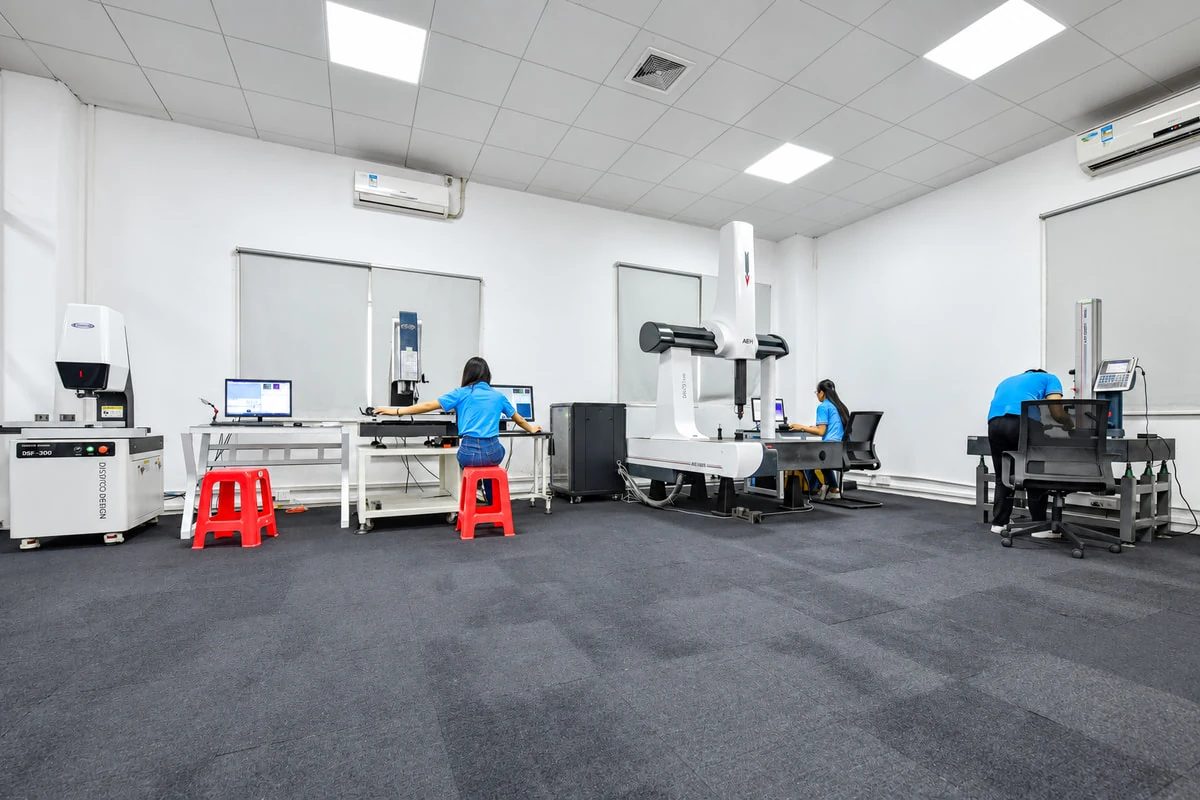
High-end precision prototypes, however, demand tight tolerances down to ±0.01 mm or even micron-level accuracy and necessitate high-precision CNC machine tools and professional measuring equipment. Precision machinery involves expensive procurement and maintenance costs; moreover, low-speed delicate cutting extends processing duration to two to three times that of standard machining. Skilled operators are required to monitor parameters throughout production, pushing up labor expenditure. Compared with ordinary machine tools, high-precision machining centers and three-coordinate measuring instruments need regular precision calibration, periodic replacement of precision spare parts and constant constant-temperature workshop environment maintenance, all of which bring long-term fixed operation costs for processing manufacturers.
Low-Efficiency Machining Rhythm Occupies Production Capacity
To guarantee ultra-small dimensional tolerance, technicians must abandon efficient high-speed cutting modes and adopt slow feed and shallow cutting methods to reduce cutting vibration. This processing method greatly occupies machine’s available production time and squeezes the production capacity of other orders. The prolonged machining cycle further increases the unit equipment depreciation cost for high-precision workpieces.
High Labor Cost for Professional Precision Operation
High-precision production requires skilled operators to monitor parameters throughout the whole process, pushing up labor expenditure. Only experienced senior operators with mature precision machining skills can take charge of the processing progress, and the salary cost of professional technicians is far higher than ordinary processing staff. All extra expenses from equipment investment, slow machining rhythm and professional manpower are factored into the pricing of high-precision prototypes.
Scrap risk is another hidden cost source of high-precision prototype pricing
Ultra-Low Error Tolerance Causes High Scrap Risk
Precision components allow minimal margin for error. Tiny machine vibration or parameter deviation easily leads to scrapped parts, and associated material and labor losses are factored into total manufacturing cost. This explains the substantial price gap between high-precision prototypes and standard prototypes. Different from common parts with large error allowance, ultra-precision finished products cannot make up for dimensional out-of-tolerance via secondary modification in most cases. Once unexpected machine shake, tool abrasion fluctuation or improper parameter setting occurs in the middle of processing, the whole workpiece will turn into scrap directly.
Unamortized Scrap Losses Increase Quotation Risk Costs
The consumed raw material cost, the already spent processing working hour cost and the corresponding tool loss cost cannot be transferred to other finished products for amortization. All these invalid costs must be shared by qualified finished prototypes separately. In actual production practice, the scrap rate of micron-level precision prototype is obviously higher than conventional products, and the controllable cost fluctuation brought by uncertain scrap risk forces manufacturers to reserve reasonable risk cost during quotation. This invisible scrap cost is an important reason why high-precision prototype prices are significantly higher than ordinary prototype prices.
Value-added Influence of Surface Treatment on Finished Product Cost
Apart from raw material and machining precision, surface finishing specification is another critical factor affecting the final quotation of prototypes. More abundant and sophisticated surface treatments bring higher overall production costs. Ordinary prototypes without customized surface requirements only undergo basic deburring and cleaning after machining; no extra procedures are needed, so their cost merely covers fundamental CNC processing fees.
Additional Costs Brought by Custom Professional Surface Treatments
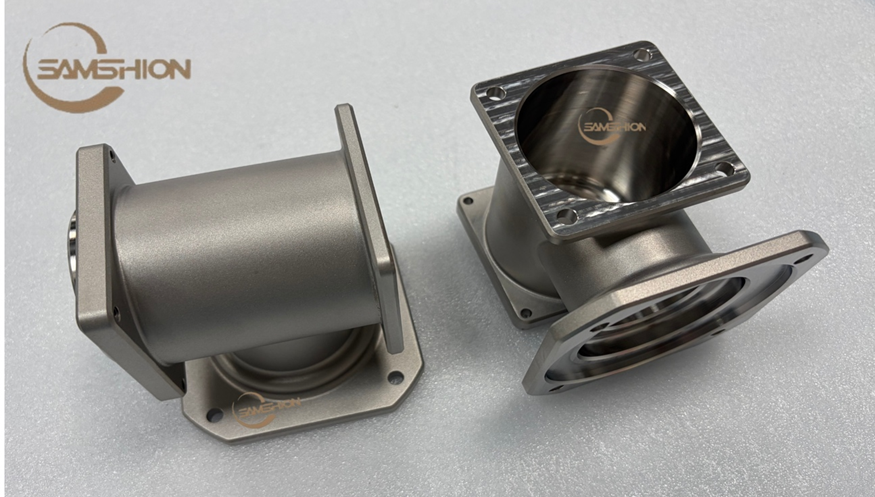
If clients specify processes such as sandblasting, anodizing, polishing, wire drawing, electroplating, black oxide finish or anti-corrosion coating, multiple independent post-processing steps must be arranged after machining. Every surface finishing technique relies on dedicated equipment, special consumables and skilled operators. Certain high-end treatments must be outsourced externally, generating extra subcontract fees and logistics expenses.
Indirect Machining Cost and Higher Scrap Risk for High-Grade Surface Finishing
In addition, high-standard surface finish demands flawless base workpiece surfaces. Machining must strictly control surface texture and defects, requiring finer cutting and longer processing hours. Complicated surface procedures raise both direct process cost and reject risk. With all expenses accumulated, the unit price of finished prototypes rises noticeably.
Comprehensive Impacts of Other Hidden Factors on Machining Pricing
Part Structural Complexity impact on Machining Costs
Beyond core factors including material grade, machining precision and surface finishing, hidden variables such as part structural complexity, delivery lead time and order quantity exert prominent influences on prototype quotation. Regular parts with simple geometries allow straightforward programming and smooth machining without sophisticated custom tooling, delivering high productivity at low costs. In contrast, complex prototypes featuring hollow cutouts, irregular contours, thin walls and multi-curved surfaces involve cumbersome programming and bespoke fixtures. These workpieces are prone to deformation and chatter during cutting, requiring layered machining and repeated dimensional inspections that greatly extend production hours and raise overall costs.
Influence of Delivery Lead Time and Order Quantity on Unit Pricing
Delivery schedule constitutes another vital pricing variable. Orders with standard lead times can be scheduled reasonably for steady production with well-controlled expenses. Rush orders demand prioritized production and overtime shifts, which occupy production capacity reserved for other orders and incur urgent surcharges. Furthermore, sporadic one-off or tiny-batch customization fails to spread setup and tooling expenses across multiple units, leading to higher unit prices compared with small bulk orders. Collectively, these concealed costs account for a considerable portion of the seemingly high prototype processing price.
Why Do Professional Prototypes Come with Relatively High Prices?
When customers complain about excessive part pricing, Samshion normally communicates with clients from three perspectives: transparent cost breakdown, process value and quality assurance to help customers recognize reasonable pricing.
First, need to clearly distinguish prototyping from mass production
Prototypes are custom trial pieces manufactured individually. Each item requires independent programming, machine setup and customized tooling. Unlike mass production, all preliminary preparation expenses cannot be amortized over numerous finished goods, resulting in far higher setup and hourly labor cost per unit rather than arbitrary overpricing.
Second, need to break down the cost structure based on the client’s specific part
Which explaining expenses stemming from selected raw material, precision tolerance, surface finishing and structural complexity. Premium raw materials, tight dimensional accuracy and specialized surface treatments all generate extra processing and scrap costs corresponding to actual production investment.
Lastly, quality and after-sales benefits.
Samshion rigorously controls machining precision to minimize defective scrap and adopts premium cutting tools and mature processes to guarantee stable part performance. This prevents extra expenses from rework and project delay caused by faulty components. Superior quality, high yield rate and reliable delivery embody real cost performance, enabling customers to understand higher pricing originates from refined workmanship and consistent quality instead of unreasonable markup.