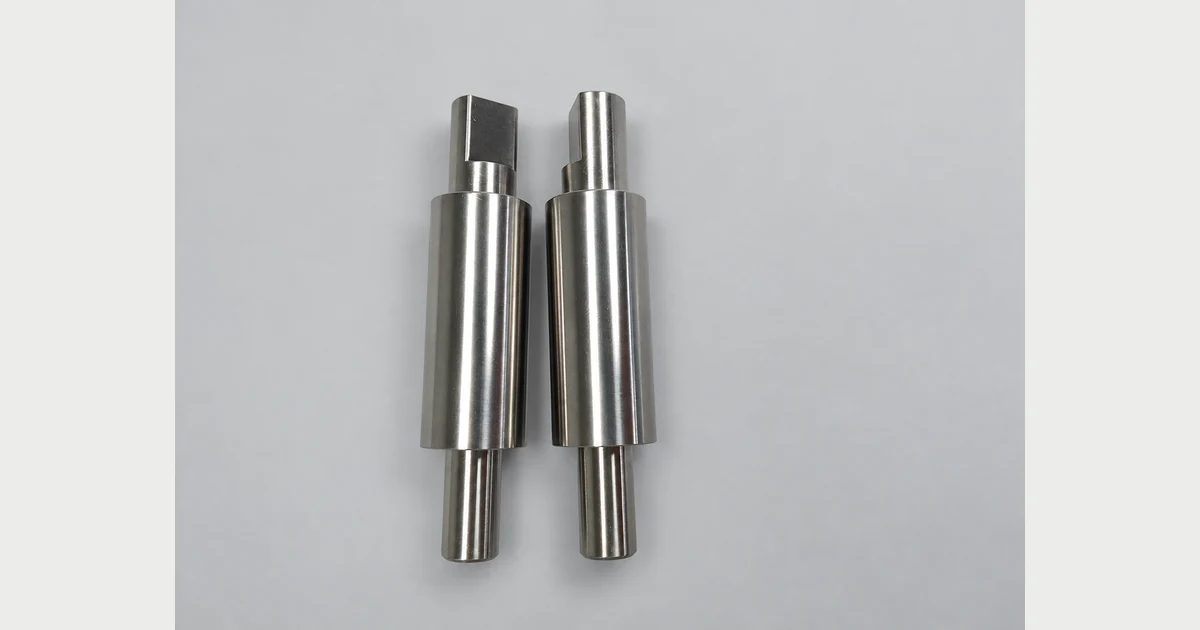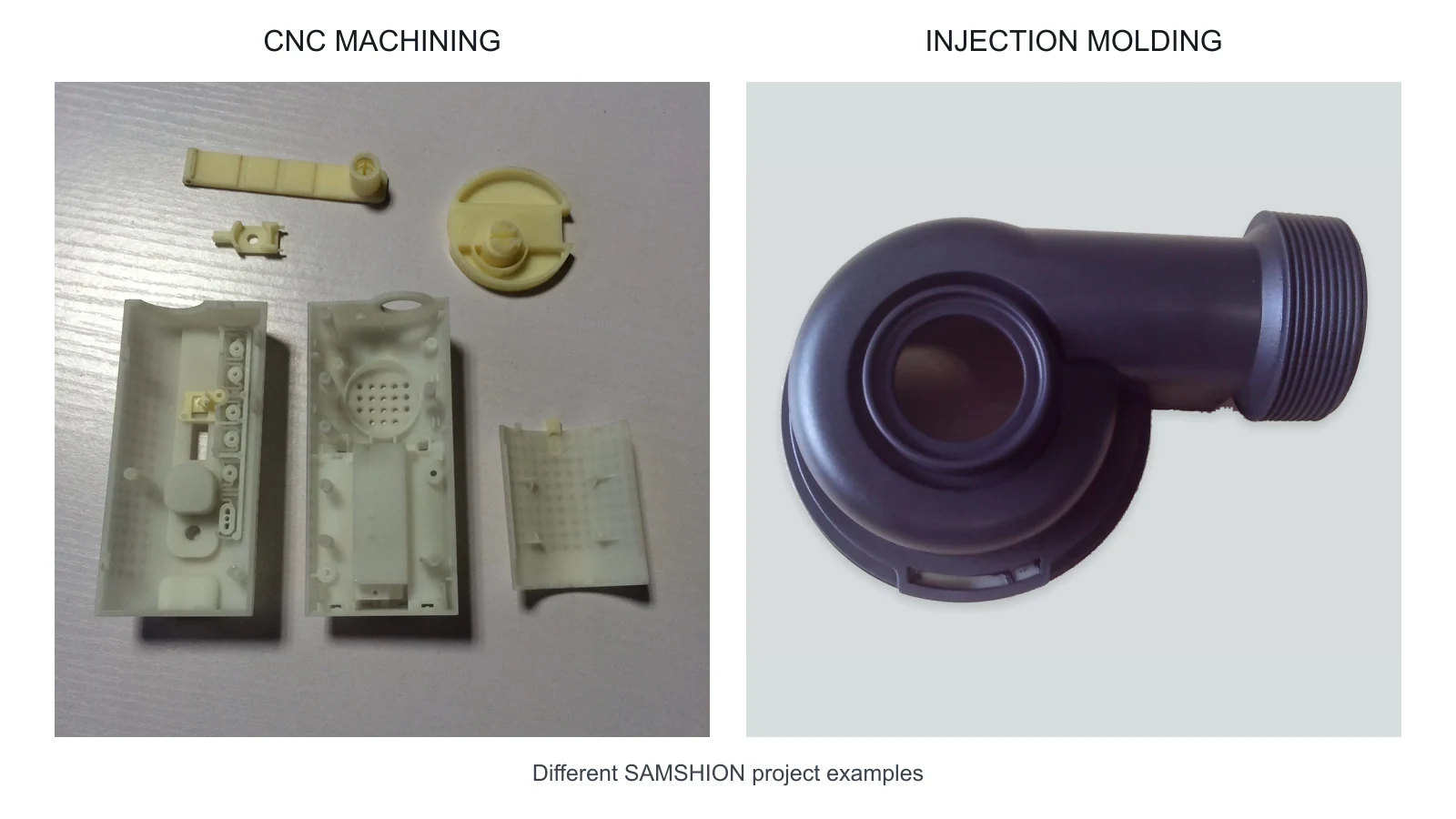
Polyoxymethylene (POM), also known as acetal, polyacetal, and polyoxymethylene, is one of the most widely used engineering plastics in CNC machining components. Due to its excellent mechanical strength, dimensional stability, low friction, and chemical resistance, POM has gained a good reputation in the automotive, electronics, medical, and consumer goods industries. Over the past twenty years, Samshion Rapid has been milling this type of material for a long time. In this article, we have integrated all key information about POM processing based on our past processing experience, including material properties, processing techniques, advantages, challenges, deformation causes, troubleshooting, and typical applications, to help more engineers, product developers, and manufacturers fully understand how to effectively process POM.
What is POM Material?
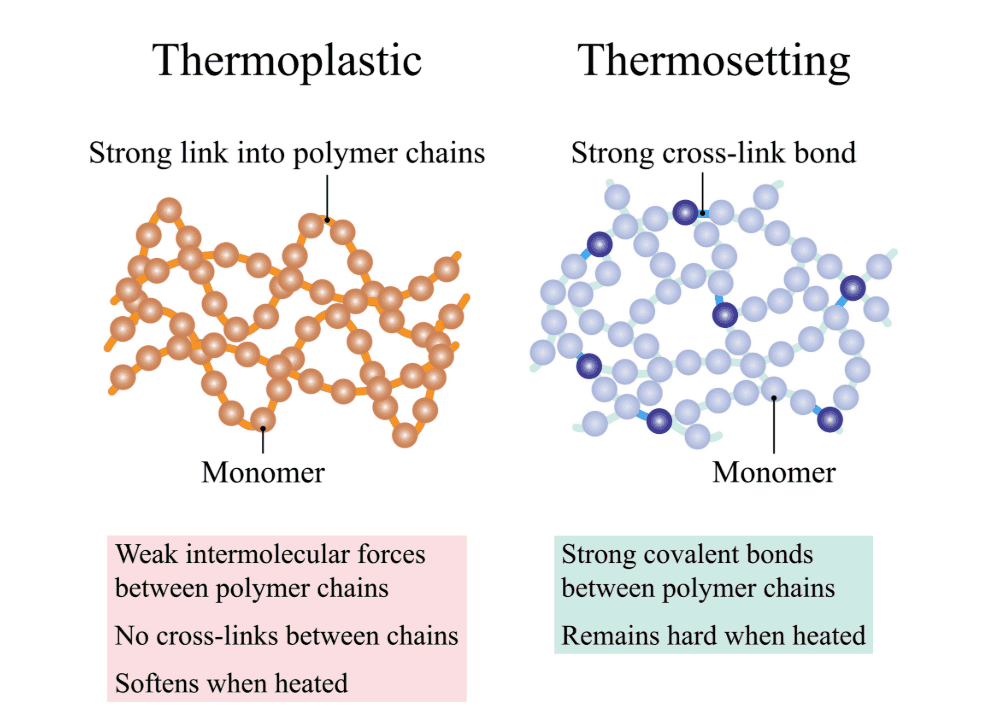
POM is a high-performance engineering thermoplastic with a density of 1.41–1.42 g/cm³. Despite being available in various colors, its natural state is an opaque white due to its high crystallinity. It is commonly sold under brand names such as Delrin, Celcon, Duracon, and Tenac.
It naturally appears opaque white, but can be custom-colored. Its molecular structure is characterized by repeating −O−CH₂− units, which create a strong, stiff polymer backbone. In the homopolymer form (POM-H), these repeating units are more regular, resulting in slightly higher stiffness and mechanical strength but also reduced thermal stability. In the copolymer form (POM-C), comonomer units interrupt the chain periodically, improving its chemical stability, resistance to thermal degradation, and processing safety. Both POM-H and POM-C share the following core characteristics:
High strength and rigidity suitable for mechanical load-bearing parts. High hardness and dimensional accuracy ideal for gears and precision linkages. Naturally low coefficient of friction enabling smooth sliding and rotation. Low moisture absorption preventing swelling, warping, or dimensional drift. Resistance to fuels, oils, greases, and solvents, enabling use in automotive and chemical systems. Excellent fatigue resistance suitable for parts that undergo repeated mechanical cycling. These properties make POM an ideal candidate for critical CNC-machined plastic components where both precision and durability are required.
What are the advantages of POM plastic?
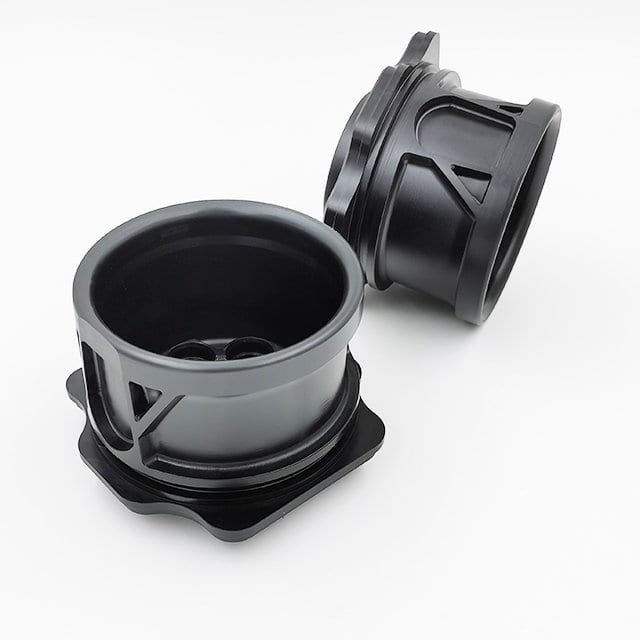
Low Friction, Wear Resistance, and Tribological Behavior
POM’s friction coefficient commonly ranges between 0.2–0.35, significantly lower than most metals and many plastics. This allows for quiet, smooth-running mechanical systems without additional lubrication. Its excellent tribological behavior extends to resistance against abrasive wear, meaning gears, rollers, and sliding components maintain performance over long service periods. POM’s wear mechanisms generally include mild abrasive wear, adhesive wear, and fatigue-induced micro-cracking when under continuous load. Through proper processing and surface smoothness, Samshion Rapid discovered that POM parts can achieve performance comparable to bronze or aluminum alloy parts, while providing lower weight and better chemical resistance.
Broad Chemical Compatibility
POM is resistant to:
Hydrocarbons such as gasoline and diesel
Alcohols including ethanol and methanol
Oils, lubricants, greases
Detergents
Many organic solvents
It is not suitable for prolonged exposure to strong acids, strong alkalis, or oxidizing agents. Because it does not readily absorb water (less than 0.5% by weight), POM maintains consistent mechanical and dimensional properties even in humid or submerged environments.
Dimensional Stability and Creep Performance
Due to its high crystallinity, POM exhibits:
Low thermal expansion
Resistance to deformation under long-term load
Stable geometry in fluctuating temperature environments
This makes it one of the most dimensionally stable plastics for CNC machining. Its creep resistance is superior to materials such as nylon (PA6/PA66), making POM suitable for gears, cams, and bearings that must retain geometry under stress.
Dimensional Stability and Creep Performance
Due to its high crystallinity, POM exhibits:
Low thermal expansion
Resistance to deformation under long-term load
Stable geometry in fluctuating temperature environments
This makes it one of the most dimensionally stable plastics for CNC machining. Its creep resistance is superior to materials such as nylon (PA6/PA66), making POM suitable for gears, cams, and bearings that must retain geometry under stress.
Thermal Properties and Operational Temperature Range
POM is typically suitable for continuous service up to 80–105°C depending on grade, and short-term exposure up to 150°C. Above its glass transition temperature (~−60°C), it maintains flexibility even in cold environments, offering reliable performance across wide temperature ranges.
How Do You Successfully CNC Machine POM to Achieve Final Cuts and Tight Tolerances?
When machining POM, Samshion Rapid follows the standard sequence of CAD → CAM → G-code generation → fixturing → cutting → inspection. While POM machines more easily than metal, its thermal sensitivity, elasticity, and tendency to chip-melt under inadequate cooling make it essential to follow optimized practices.
CAD and CAM Considerations
When designing POM parts, engineers must consider:
• Avoiding overly thin walls that may deform
• Using fillets to reduce stress concentration
• Maintaining uniform wall thickness where possible
• Allowing sufficient draft on non-precision faces
• Selecting tolerant features that suit plastic instead of metal
During CAM programming:
• Lower cutting forces
• Higher spindle speeds
• Moderate feed rates
• Aggressive chip evacuation
• Sharp carbide or diamond-polished tools
are recommended to prevent melting and improve surface finish.
Fixturing and Material Preparation
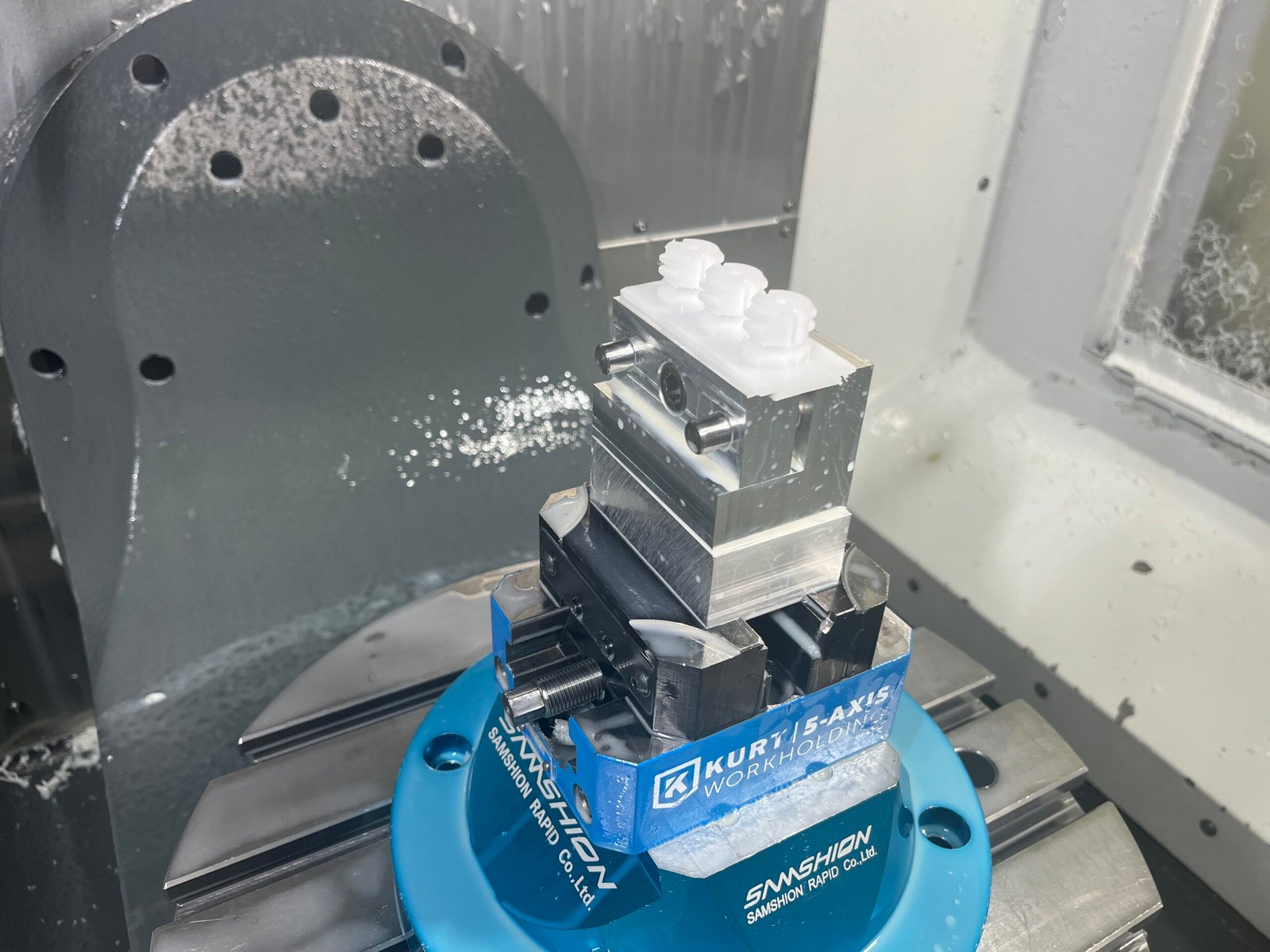
Because POM has good elasticity, fixturing must be stable yet non-distorting. Best practices include:
• Increasing clamping contact area
• Avoiding over-tight clamping forces that can permanently deform parts
• Using rubber pads or soft jaws
• Applying vacuum fixturing for plates or large surfaces
• Using double-sided adhesive fixtures for thin or flexible parts
Cutting raw blocks slightly oversized helps prevent warpage and allows for stress-relief machining.
Machining Operation Techniques
Choosing the correct cutting tools is fundamental to successful POM machining. In general, POM plastic is less abrasive than many other engineering plastics, but it can still cause rapid wear if improper tools are used.
POM responds well to:
• High-speed milling with sharp cutters
• Multi-flute tools designed for plastics
• Shallow depth-of-cut passes
• Air blast or mist coolant systemsa
Using universal flat-end mills is common; however, polished flute tools for plastics deliver improved surface finish. For drilling:
• Peck cycles reduce melting
• High helix-angle drills clear chips
• Slow retraction prevents stringing
For turning:
• Use sharp carbide inserts with proper rake angles
• Maintain continuous chip flow
• Use live tooling for complex geometries
Chip removal is critical because melted chips can weld to tool edges, degrading finish.
Why Choose CNC Machining for POM? Understanding the Benefits from Prototyping to High-Volume Runs.
High Uniformity and Repeatability
CNC machining produces high-precision POM parts with consistent tolerances as tight as ±0.01 mm depending on geometry. This precision is particularly important for aerospace mechanisms, automotive fuel assemblies, and medical components.
Rapid Prototyping Without Tooling Costs
Although Samshion Rapid has also manufactured many rapid molds for producing this material, in comparison, CNC machining allows rapid design iterations without mold fabrication, dramatically reducing development cost and lead time.
Complex Geometries and Tight Tolerances
POM’s machinability supports features such as:
Deep pockets
Undercuts
Fine threads
Thin ribs
Precision fit assemblies
Interlocking mechanisms
Surface Quality and Low Finishing Requirements
POM often leaves the machine with smooth surfaces requiring minimal polishing. This makes it ideal for functional prototypes and end-use parts alike.
Key Challenges in Machining POM—and Why They Occur
Despite being machinable, POM presents unique challenges:
Cracking from internal stresses
Dimensional deformation during machining
Elastic recovery (“spring-back”) after cutting
Heat-induced melting or warping
Poor surface finish due to chip adhesion
Understanding these issues requires looking at polymer physics.
Why Does My POM Part Keep Warping? Identifying the Root Causes of Deformation and How to Stop It.
Samshion Rapid is well aware from years of processing experience that the warpage rate of plastic is much higher than that of metal. POM is no exception, of course. Here are some reasons and solutions for warping that we have summarized.
Heat Buildup from Cutting
POM softens easily under heat. Excessive temperature causes melting on cut surfaces, warping, or dimensional inaccuracy.
Solutions:
High spindle speed with sharp cutters
Reduced step-down depth
Multiple lighter passes
Ample chip evacuation
Air cooling or mist coolant
Avoiding tool dwell
Result: cooler chips, cleaner surfaces, and minimal warping.
Internal Material Stresses
Residual stresses form during extrusion, molding, or stock material production. When machining removes material unevenly, the internal forces release asymmetrically.
Solutions:
Use stress-relieved or annealed POM
Machine both sides symmetrically
Leave uniform machining allowance
Avoid removing too much material from one side
Pre-machining conditioning for larger blocks
These significantly reduce post-machining deformation.
Clamping-Induced Distortion
Excessive clamping pressure temporarily compresses POM; once unclamped, the material springs back, causing dimensional drift.
Solutions:
Distribute clamping force over large areas
Use padded jaws
Employ vacuum or adhesive fixtures
Inspect dimensions while clamped (when needed)
Elasticity and Spring-Back
Because POM is elastic, cutting forces bend the material slightly. It then returns to shape after the tool passes, producing undercut or inconsistent dimensions.
Solutions:
Light finishing cuts
Toolpath compensation Perfectly sharp tools
Slow and stable finishing feed rates
Multiple spring passes
Where is POM CNC Machining Essential?
Electronics and Electrical Assemblies
POM is used for:
High-precision connectors
Cable management components
Switch modules
PCB mechanical supports
Housing components requiring tight tolerances
Its excellent insulation and dimensional stability contribute to reliable electronic assembly performance.
Medical and Laboratory Equipment
POM’s biocompatibility and chemical resistance make it suitable for:
Inhaler components
Surgical handles
Diagnostic mechanisms
Pump housings
Sterilizable laboratory instruments
Its smoothness and cleanliness are major advantages.
Automotive Engineering
POM is widely used in:
Fuel system valves and connectors
Interior motion mechanisms
Seat adjustment gears
Door lock modules
Engine accessory components
The material’s resistance to fuels makes it reliable in harsh environments.
Consumer and Industrial Products
Examples include:
Zippers and fastening mechanisms
Appliance gears and cams
Outdoor tool components
Sporting goods mechanisms
Wear-resistant household components
Its lightweight and durability appeal to consumer product manufacturers.
POM-C vs. POM-H: What’s the Difference?
| Property | POM-H (Homopolymer) | POM-C (Copolymer) |
| Toughness | Good | Higher |
| Impact resistance | Good | Better |
| Chemical resistance | Standard | Superior |
| Machinability | Slightly harder | Smoother cutting |
| Thermal stability | Slightly lower | More stable |
POM-C is generally the preferred choice for CNC machining.
Long-Term Durability and Mechanical Performance
POM exhibits:
• Excellent fatigue life exceeding millions of cycles
• High impact resistance even at low temperatures
• Good creep resistance under load
• Stable performance comparable to lightweight metals
In many cases, POM replaces metal in load-bearing applications due to its favorable strength-to-weight ratio.
Professional CNC Machining of POM: What Manufacturers Provide
Experienced machining partners offer:
• One-off prototypes
• Custom low-volume production
• Complex assemblies
• Precision fitting
• High-tolerance machining
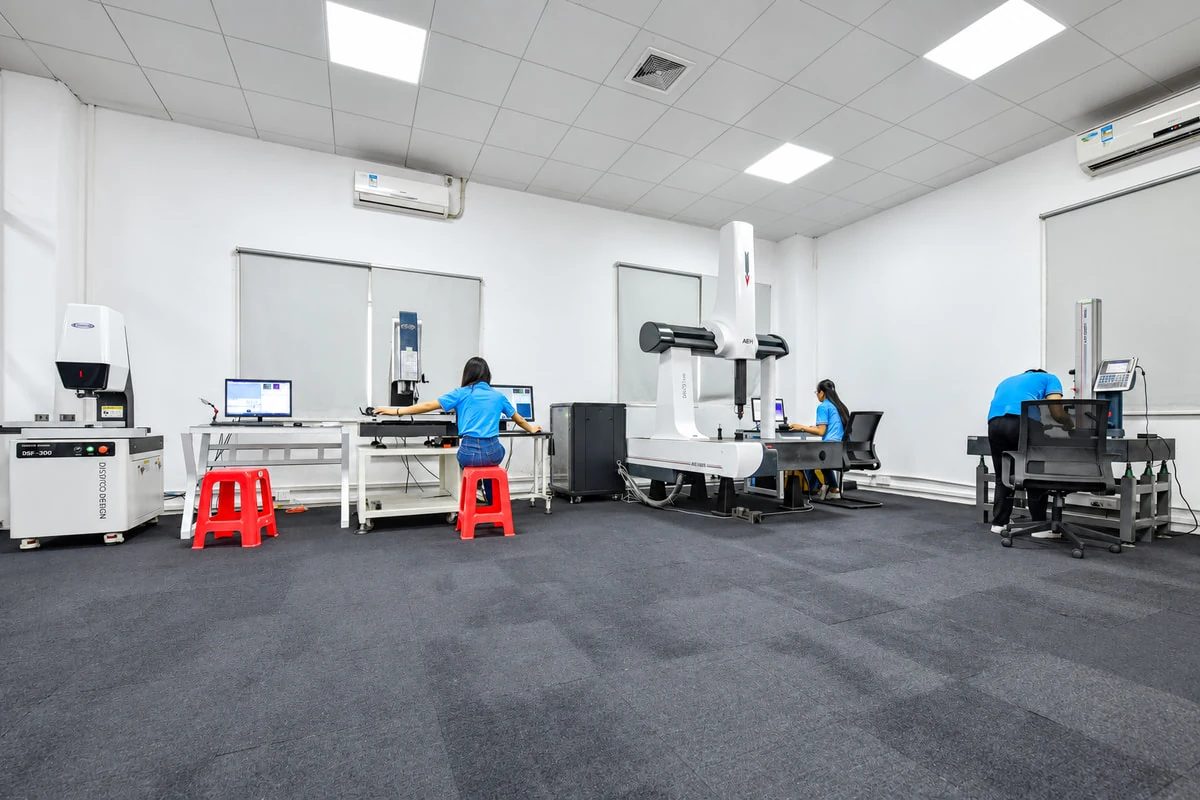
• Automated inspection
• Surface finishing
Professional-grade CNC machining ensures stable production quality across industries such as automotive, electronics, and medical engineering.
Conclusion
CNC machining of POM is undeniably one of the most efficient and reliable ways to produce precision plastic components. Its unique combination of low friction, exceptional dimensional stability, superior machinability, and durability makes it the go-to material for demanding applications across medical, automotive, and industrial sectors.
While specific challenges such as managing internal stress, preventing thermal deformation, and handling its elasticity must be expertly navigated, the Samshion Rapid team possesses the necessary expertise. Our specialized engineers utilize advanced CNC strategies and state-of-the-art equipment to meticulously control parameters, ensuring these limitations are effectively mitigated.
Overall, the advantages of machining POM—from rapid prototyping to high-volume production—far outweigh its limitations. Choosing Samshion Rapid means partnering with a team that guarantees exceptional results, consistently delivering the high-performance POM parts required by engineers and designers globally.