Machining hardened tool steel starts with deciding which features to finish before heat treatment and which to leave for afterward. At SAMSHION, our usual route is to CNC machine the softer material, leave stock on features that need subsequent finishing, send the part for heat treatment, and then complete precision surfaces by grinding and EDM.
Our experience includes tool steel parts with heat-treated hardness around 58 HRC. That is an example of work we have handled, not a default hardness for every steel grade or application. The drawing and material specification determine the required condition.
For an engineer buying a hardened component, the important questions are practical. Will the mating faces still meet the drawing after heat treatment? Can the slot be finished without losing its relationship to those faces? What evidence will confirm both hardness and geometry? This guide explains how those decisions fit together.
Plan CNC machining before and after heat treatment
The route below describes our established approach. Grinding and EDM are selected by feature; they are not necessarily two operations performed in the same order on every component.
Starting with soft material lets us establish the overall shape through CNC machining before the hardened-state finishing work. A precision mating surface may be roughed during this stage but deliberately left unfinished. The remaining stock gives the later operation material to remove.
This distinction should be visible in the manufacturing plan. A dimension on the finished drawing is not automatically the target for the pre-heat-treatment operation. Equally, leaving every feature unfinished can create unnecessary work. Classify the features according to their final requirements and the operations that can reach them.
Leave machining allowance where finishing is required
We reserve machining allowance for locations that will be ground or EDM finished after heat treatment. Features with demanding accuracy requirements are generally completed at that later stage.
Heat treatment can change both size and shape. Uddeholm’s heat treatment guidance for tool steel explains why allowance is left before hardening so dimensions can be corrected afterward. A supplier’s grade-specific recommendation is a starting point, not a universal stock value for every geometry.
In planning an allowance, identify the surface and the direction in which material will be removed. An external diameter intended for grinding is normally left oversize. A bore intended for internal finishing is normally left undersize. A face needs stock in its normal direction. Specify whether a quoted allowance is per side or on the diameter; those descriptions are not interchangeable.
The useful question is whether sufficient stock remains across the entire finishing area after heat treatment. An average thickness or one diameter reading does not establish that every surface will clean up. Too little stock can leave a distorted area uncorrected. Excess stock adds finishing work and can complicate access to a narrow feature.
For quoting, provide the final drawing and identify critical fits. The manufacturer can then review allowances against the steel grade, geometry, heat treatment and proposed finishing route. We do not apply one published allowance to every tool steel part.
Use grinding for mating faces and precision diameters
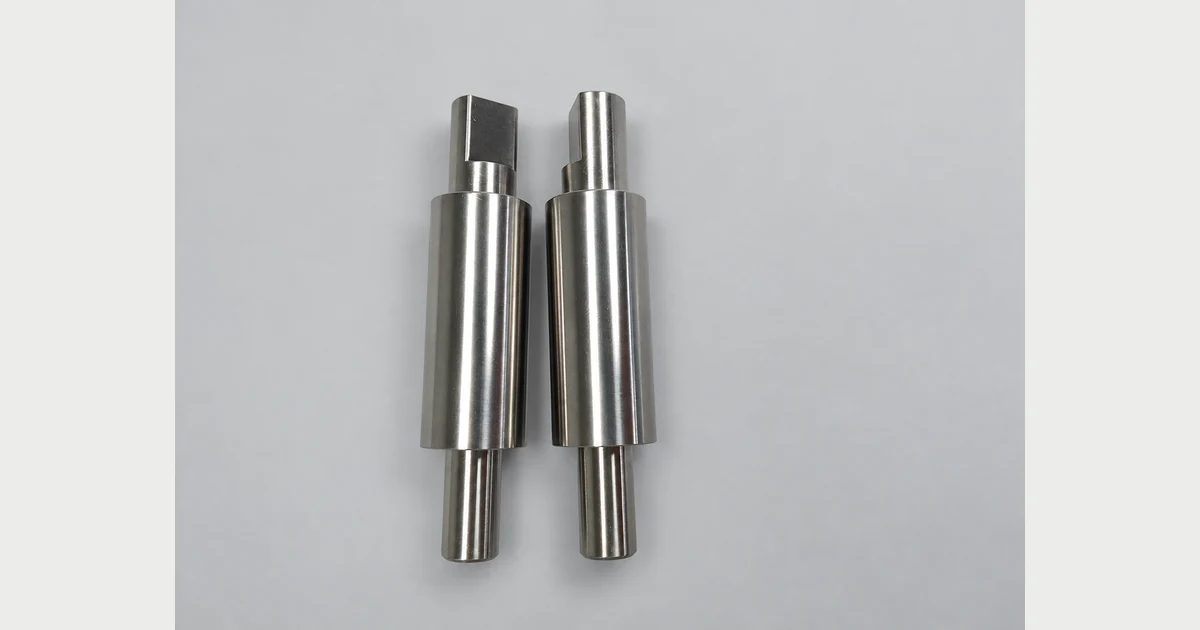
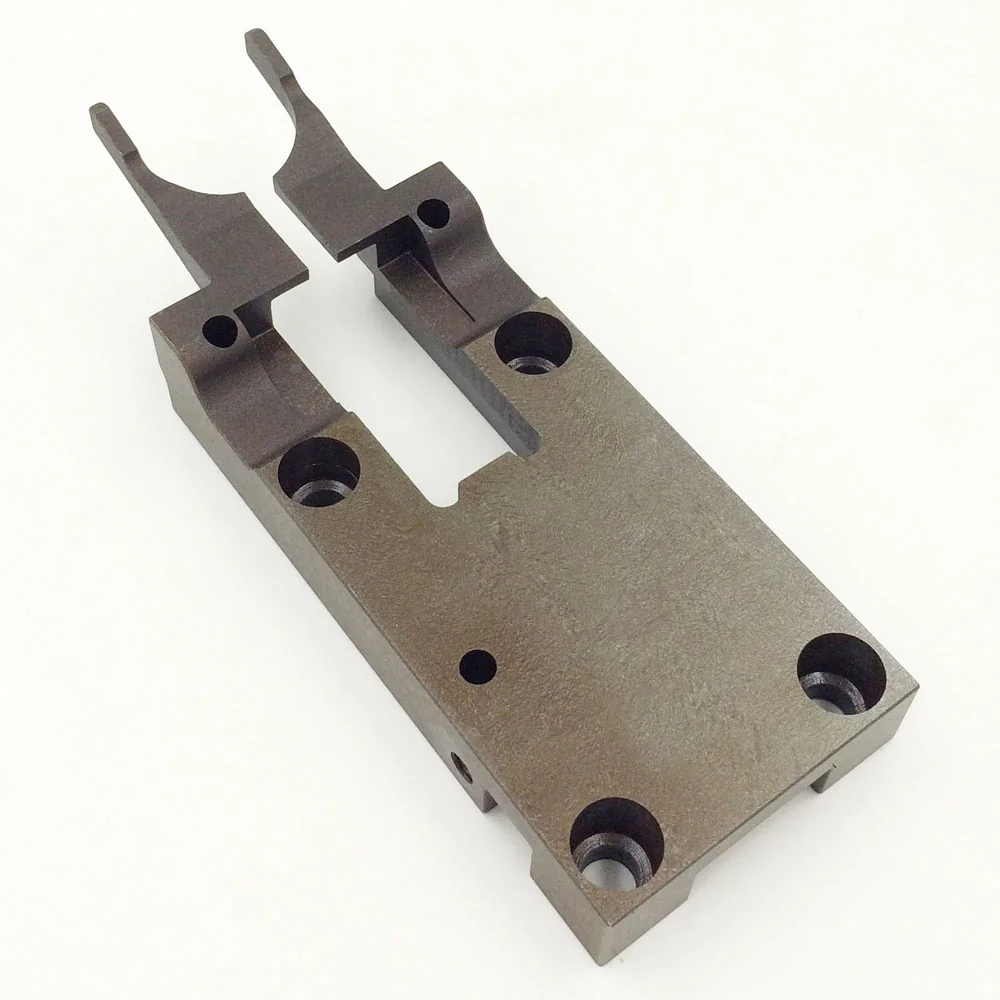
At SAMSHION, grinding is mainly used for fitting faces and for the internal and external diameters of cylindrical components. On the fork-shaped component illustrated here, the front and back faces are ground, while slots are machined by EDM.
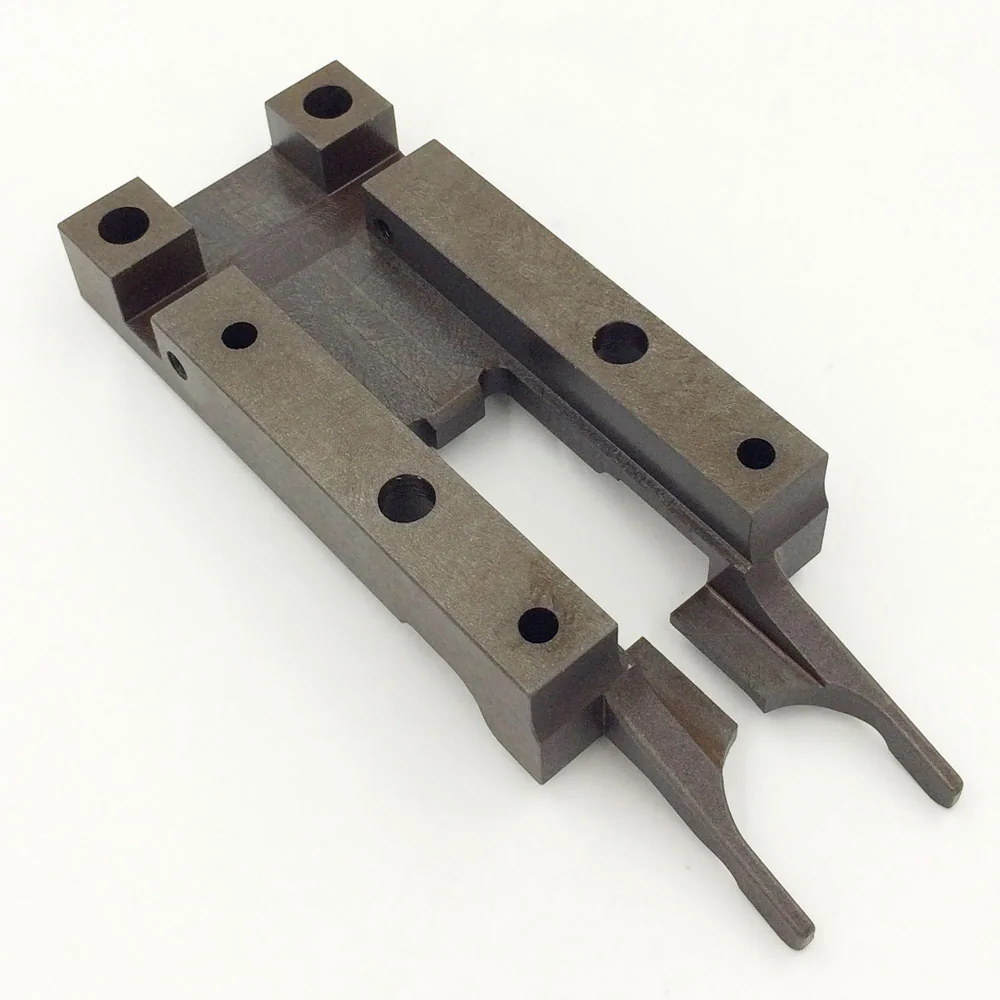
A ground face must be evaluated against its function. If two faces establish a finished thickness, measure the thickness. If the drawing also controls flatness or parallelism, those requirements need their own checks. A visually smooth surface or a satisfactory thickness reading alone cannot demonstrate the complete geometry.
The relationship between grinding and EDM matters when a slot is dimensioned from a ground face. The setup needs to locate the slot from the appropriate datum, and inspection needs to use the drawing’s datum reference system. Finishing a face after locating another feature from it can change the relationship being controlled. Establish the operation order before the individual dimensions are treated as complete.
For cylindrical work, separate diameter size from requirements such as roundness, coaxial relationships or runout when these appear on the drawing. A micrometer reading answers a size question at the measured location; it does not by itself answer every geometric question about the part.
Choose wire or sinker EDM by the feature
We use both wire EDM and sinker EDM for appropriate slots and cavities. The choice depends on access and geometry as well as the material condition. Calling a feature a slot is not enough to specify the process.
Wire EDM cuts with a travelling wire, while sinker EDM transfers a shaped electrode’s geometry into the workpiece through controlled electrical discharges. These are distinct tools for different access conditions, as illustrated in Sodick’s EDM technology overview. Neither process should be described as producing a mathematically sharp internal corner without qualification; the achievable radius belongs in the feature review.
For sinker work, electrode manufacture is part of the production route. Electrode geometry, wear and the discharge gap must be considered rather than assuming the electrode is an exact full-size copy of the finished cavity. Our EDM electrode manufacturing guide covers that separate topic in more detail.
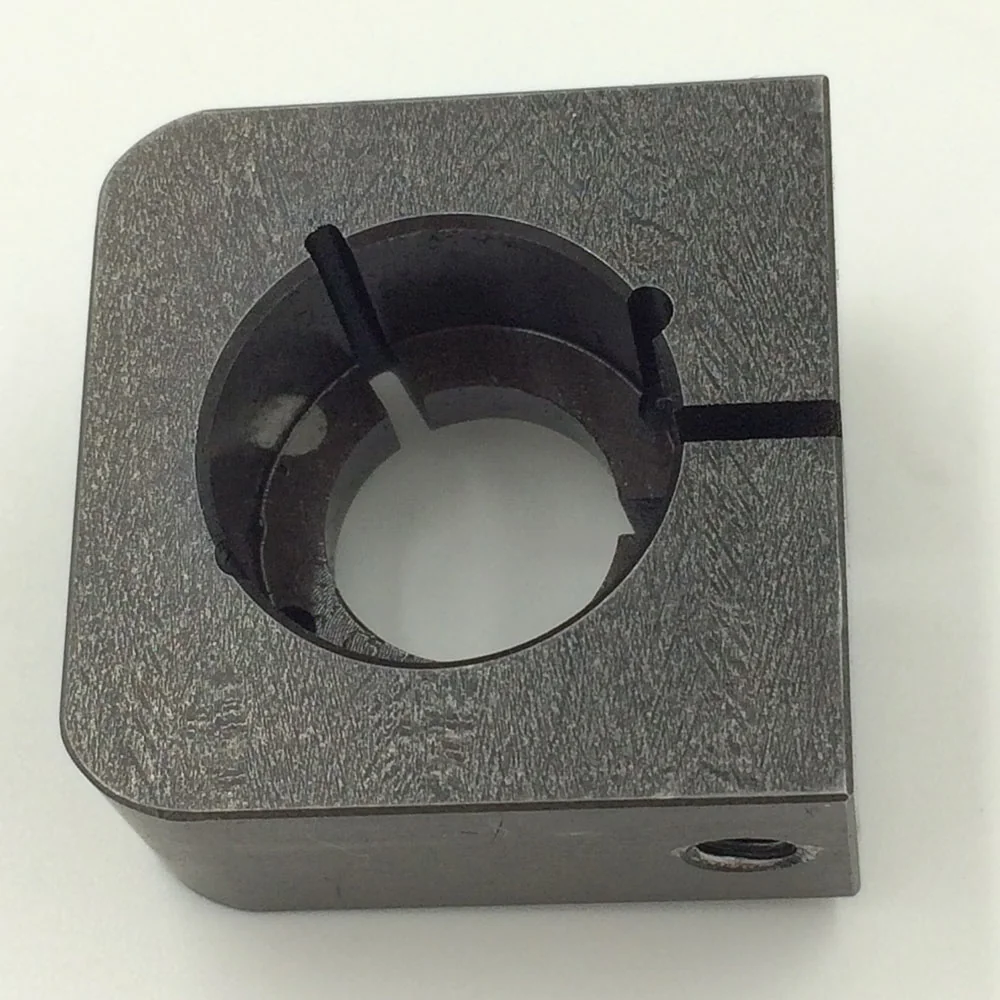
EDM also requires attention to the finished surface. Uddeholm’s EDM guidance for tool steel discusses thermally affected layers and the importance of appropriate finishing. For a highly loaded working edge or critical surface, clarify any additional surface treatment or verification requirement before production. Do not assume a part passes every service requirement merely because its dimensions pass.
Removing material from hardened steel can also change the balance of residual stresses. Low mechanical cutting force does not guarantee freedom from distortion. Where wire-cut marks, corner behaviour or movement need investigation, see our wire EDM troubleshooting guide.
Verify hardness and finished geometry separately
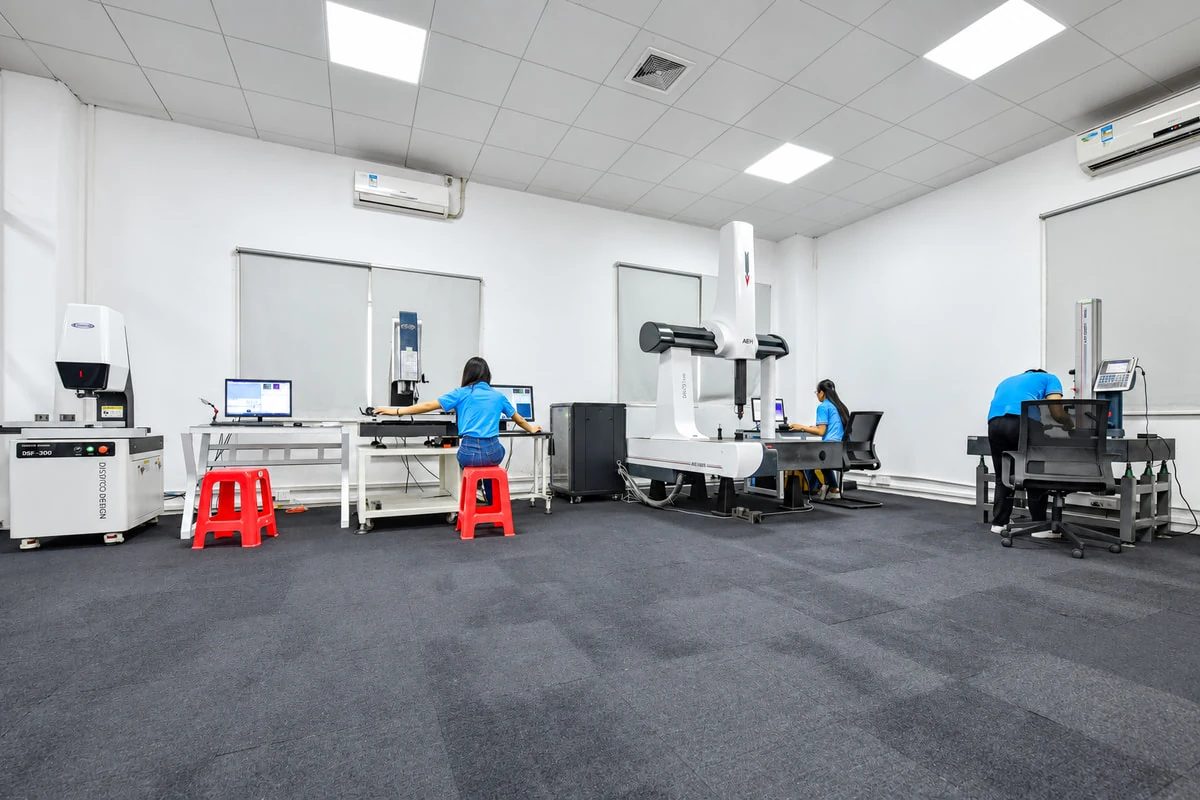
Our heat treatment supplier provides a report, and we also measure hardness ourselves. After precision finishing, we select dimensional inspection methods according to the features being checked. CMM measurement, pin gauges and micrometers are among the methods we commonly use.
The heat treatment report and the dimensional results answer different questions. A satisfactory hardness result does not prove that a slot is correctly located. A part that fits a gauge is not, on that evidence alone, confirmed to have the required hardness.
Match each check to the drawing
Use the following distinctions when agreeing the inspection plan:
- CMM measurements can evaluate accessible features and their geometric relationships to the specified datums. Probe access and the measurement strategy must suit the requirement.
- Pin gauges can check appropriate bore sizes using the selected gauge limits. They do not establish the bore’s position relative to a mounting face.
- Micrometers can measure suitable external sizes or thicknesses. Additional checks are needed when the drawing also controls form or orientation.
- Hardness testing addresses material condition. The test method, location and acceptance requirement should be agreed for the part rather than inferred from a photograph.
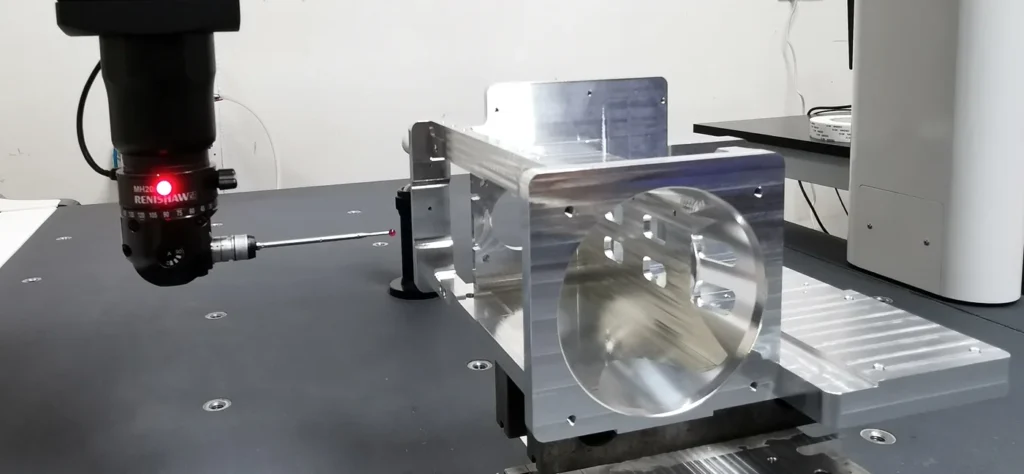
For an assembly with multiple fits, identify which relationships matter before inspection begins. Checking each size independently may miss a location or orientation requirement that prevents assembly. Our CNC machining inspection guide explains the broader role of CMM checks and inspection records.
Agree acceptance requirements before production
Inspection documentation should refer to the correct drawing revision and make the acceptance limits clear. If a customer requires particular records, additional tests or a defined sampling plan, include those requirements in the request for quotation. Do not assume that every possible test or a particular inspection frequency is included by default.
For the component photographs in this article, the confirmed process information is face grinding and EDM machining of slots. The images are not hardness certificates, dimensional reports or evidence of a particular tolerance value.
What drives cost in hardened tool steel machining
The amount of post-heat-treatment work is an important part of the quotation. A part with accessible mating faces presents a different finishing task from one with several narrow blind cavities and tightly related features.
Review the following with the drawing:
- Identify the surfaces that actually require tight fits or geometric controls. Explain the assembly function where the drawing alone is ambiguous.
- Distinguish through features from blind features. This can change the EDM route and whether dedicated electrodes are needed.
- State the permitted internal radii and edge conditions. Unspecified corners create uncertainty about both manufacturing and inspection.
- Identify surface requirements separately from dimensional tolerances. A cosmetic finish, mating surface and working edge can require different treatment.
- Supply the quantity and required inspection documentation. These affect setup planning and the scope of the quotation.
Design changes must still preserve the part’s function and receive customer approval. A feature should not be widened, simplified or given a larger corner radius merely because it is easier to machine.
Common questions about machining hardened tool steel
Can hardened tool steel be CNC machined directly
Yes, machining in the hardened state is possible with a suitable process. However, direct hard milling is not the same route as machining softer stock before heat treatment. This guide describes SAMSHION’s usual soft-state CNC route followed by grinding and EDM. A direct hard-machining proposal requires a separate review of the grade, hardness, geometry and finish requirements.
Does a hardness of around 58 HRC determine the whole process
No. Our experience includes parts around that hardness, but HRC alone does not describe the geometry, access, required fit or final surface condition. The specified steel grade and the complete drawing remain necessary for selecting the route.
Should every dimension be finished before heat treatment
No. In our usual route, stock is left where subsequent grinding or EDM is required, and precision requirements are generally completed after heat treatment. Finishing those locations beforehand would remove the planned opportunity for correction.
Is EDM a replacement for every grinding operation
No. We use grinding for suitable mating faces and cylindrical diameters, and EDM for selected slots and cavities. The same component can need both. Feature access, surface requirements and datum relationships determine how they are combined.
Request a tool steel machining review
Send the 3D model and a dimensioned drawing with the steel grade, required heat-treated hardness, critical fits, geometric tolerances, surface requirements and order quantity. Also state whether you are supplying soft material or an already hardened component.
Include the heat treatment and inspection documents you need with delivery. With that information, we can review which features to CNC machine first, where to leave allowance, and which locations need grinding or EDM after heat treatment. Upload your files for a manufacturing quote.