At Samshion Rapid, our engineers and machinists rely daily on both vertical and horizontal milling systems to produce high-precision metal parts for industries ranging from automation to tooling and custom product development.
Through years of CNC production experience, our team has gained a deep understanding of how the structure and motion of each milling type — vertical and horizontal — directly impact efficiency, cutting performance, and product quality.
To help our clients and partners better understand these distinctions, our engineers summarized the following key differences and insights based on actual machining practice.
How Does Milling Work in Modern CNC Fabrication?
In today’s manufacturing environment, understanding the fundamentals of milling operation is key. Samshion engineers emphasize proper spindle selection, feed rate optimization, and precision fixturing as the foundation of consistent product quality.
Manual and CNC milling in today’s metal fabrication is crucial in shaping workpieces into high-precision components. Skilled machinists use these processes to cut and shape materials, employing a vertical or horizontal milling machine.
End mills or other cutters secured in the milling head meticulously remove material from the workpiece. Unlike a metal lathe machine, where the part spins and the cutting tool remains fixed, a rotating spindle carries the cutting tool in milling machines. Concurrently, clamps or vises secure the workpiece on the worktable.
The spindle on the vertical milling machine maneuvers vertically along one or two axes, often offering variable, high-speed settings. Depending on the mill type, the worktable may incorporate a power feed, typically for longitudinal movement, and can be fitted with a digital readout (DRO) to avoid relying on dials and to ensure precise dimensioning. A work light for optimal vision and safety and a coolant system are also standard features on many milling machines. Sometimes machine shops will add a rotary table for a 4th axis on milling machines without CNC controls.
While both vertical and horizontal milling machines perform similar operations, these categories differ in production processes. Nevertheless, the vertical milling machine proves to be more versatile in handling various tasks.
Here are ten fundamental differences between horizontal milling machines and vertical milling machines and a brief explanation of each.
1.Orientation of the Spindle
As the name of each suggests, horizontal machining centers have a horizontal spindle running parallel to the worktable’s surface. The machine’s cutting tool removes material from the workpiece while rotating about this horizontal axis.
On vertical machining centers, a vertical head runs perpendicular to the worktable’s surface, and the cutting tool rotates in a vertical spindle to remove material from the workpiece. Although durability and precision are the hallmarks of both milling styles, most agree that horizontal mills are preferable for heavy-duty applications, but, as mentioned, vertical mills are much more versatile.
2.Tool Geometry
The shape and specifications of milling cutters and cutting tools for the two types of milling machines are different. Horizontal milling machines feature shorter and thicker tools capable of taking deeper cuts and removing more material than vertical milling machines.
Vertical milling machines often use long cylindrical tools called end mills or dovetail cutters for more precise but shallower cuts on smaller workpieces.
3.Cutting Specifications and Accuracy
The cutting tool’s geometry directly affects its cutting specifications and results. Because they are shorter and thicker, horizontal tools have the stability to sustain them during deep, heavy cuts. On the other hand, vertical tooling cannot produce deeper cuts because they will vibrate, affecting the accuracy of the cut and sometimes breaking.
4. Versatility
Vertical milling machines win the prize for versatility. Machinists use them as boring mills, but they can quickly transform into a variable-speed drill press, which is an awkward operation on a horizontal mill. Both machines can face and slot, but the vertical mill is more adept at prototyping, custom work, and engraving.
5. Cost of the Machine
The initial cost of vertical milling machines is typically less than a horizontal milling machine, as is the expense of operation and maintenance, making them the more popular choice between the two, especially among small shops. More machine operators are familiar with vertical machines, making them easier and less expensive to operate than horizontal models.
6. Material Removal Rate
Because they are more stable and can produce deeper cuts, horizontal milling machines have a much higher material removal rate than vertical mills. Machinists typically prefer vertical milling machines for operations such as facing and grooving because the cuts are not as deep and they are precise. But this limited cutting potential results in a lower removal rate for the vertical mill.
7. Overarm and Arbor Support
The horizontal milling machine has two elements not present in a vertical mill: an overarm and an arbor support. The overarm is a horizontal beam at the top of the column. Depending on the type of machining needed, horizontal mills may hold either a cutting tool or an arbor. If the arbor is used for a specific kind of milling, it requires an arbor support to align the arbor and provide support. Arbor supports are fastened to the overarm. Both of these parts are peculiar to the horizontal mill.
8. Number of Sides for Machining
The horizontal milling machines allow the operator to approach the workpiece at several angles and sides, while the vertical milling machine works on a single plane. Also, the horizontal mill is better suited for customizable jobs since specific add-ons and features for the horizontal setup are not available on a vertical mill.
9. Chip Evacuation
During machining, the metal chips that are produced tend to remain on the vertical mill’s workpiece surface, melting and causing flaws that could require post-processing. Horizontal cutters throw the chips away from the work table and toward the floor, leaving a better-machined finish.
10. Finding Trained Operators
In addition to the high initial, operating, and maintenance costs, another difference between the two types of mills is finding trained operators with experience and expertise in the horizontal milling machine. Because these machines are scarce, only a few machinists have hands-on experience with them.
What Exactly Is a Vertical Milling Machine?
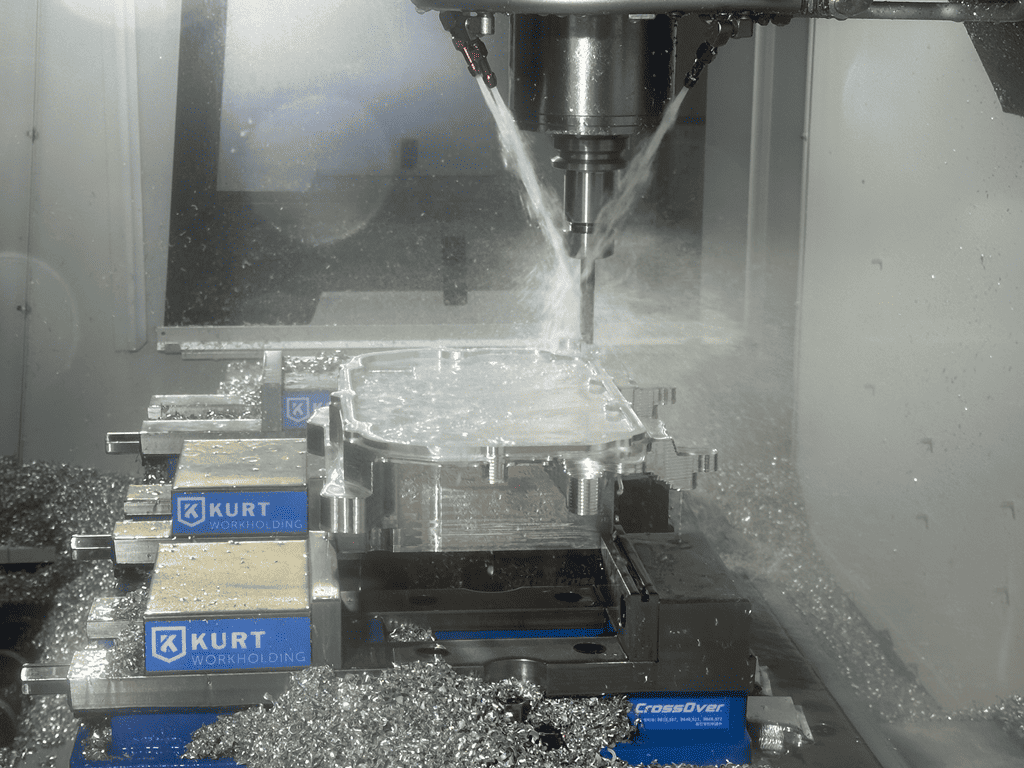
At Samshion, our team frequently relies on vertical milling setups to produce prototypes, mold inserts, and structural components. These machines are the backbone of flexible and precise machining work.
Vertical milling machines are a common sight in machine shops. As the name suggests, these machines feature a cutting head or spindle that is vertically oriented. The spindle holds the cutting tool usd to machine the workpiece. Some machines have a quill that moves the spindle along the Z-axis. Additionally, the worktable can move along the X-axis, Y-axis, and on some machines, up and down on the Z-axis.
The vertical milling machine can also function as a drill press when the quill moves vertically on the Z-axis. These machines are handy for projects where the work is on a single side, such as sectioning operations or finishing operations like beveling.
There are two vertical milling machines: knee mills (also known as Bridgeport-type or turret milling machines) and bed milling machines (commonly referred to as bed mills). Each type functions differently, offering unique advantages.
Machinists have various tools at their disposal, depending on the type of cut and material. Cutting tools can be held in the collet or directly in the milling head, and the milling head moves into the workpiece as the cutting tool spins.
In addition to milling, drills and taps can be used to create holes and internal threads. Various end mills and cutting tools are available for machining materials ranging from aluminum to titanium.
With these machines and tools, Samshion engineers are equipped to handle diverse machining tasks with precision and efficiency.
Knee Mill
The machine tool of choice for many machine shops, knee mills feature a fixed spindle. The knee moves vertically on the Z-axis, and the table moves on a longitudinal X-axis and an in-and-out Y-axis. As mentioned earlier, the rotating spindle inside the quill provides another Z-axis.
Today, many CNC mills are knee mills, and their versatility is enhanced as either a stand-alone or benchtop model. Depending on their table size, a variable-speed vertical mill has an almost infinite amount of machining uses. Many knee mills have an R8 spindle taper and a drawbar to hold collets. They are available in a single phase for home shops and hobbyists, perfect for those home machinists with one machine tool and a bandsaw to manufacture small parts. And for those parts requiring angle cuts, the milling head swivels left and right 90 degrees.
Bed Mill
The bed mill’s table does not move up and down along the Z-axis. Instead, vertical movement comes from the spindle. Unlike the knee mill, where the quill moves but not the motor, the entire head and motor of the bed mill move up and down on the Z-axis. But just like the knee mill, the bed mill’s work table travels along the X-axis and Y-axis.
Bed mills work well when large and heavy workpieces must be machined.
What are Vertical Milling Machines Used For?
Because of their versatility, vertical milling machines are at home in practically any industry. The vertical knee mill is even sometimes referred to as a “mill drill” because it can perform milling and drilling operations.
Here is a handful of the many components and products that come from vertical milling machines and the industries using them:
1.An excellent choice for manufacturing automotive parts since shafts, gears, pins, etc., require several vertical milling operations.
2.The transportation industry relies on parts produced by the CNC vertical milling machine. Many of these components help keep their products and personnel safe during transportation.
3.Agriculture depends on vertical CNC mills to make parts like livestock gates and various farm equipment components.
4.Vertical CNC milling machines can face, slot, drill, and bore, making them invaluable in manufacturing industry-specific machinery and tooling used in many manufacturing processes.
5.Excellent for prototyping, custom work, toolroom tasks, or engraving, and, in a pinch, they can help out with woodworking jobs.
Vertical CNC mills, with their variable spindle speeds and other features, can complete simple and complex metalworking projects and can even be used as a router to machine large, flat plates in various industries.It’s so versatile that vocational schools and science labs purchase them as a valuable teaching tool for students to understand the milling process.
What is a Horizontal Milling Machine?
Like vertical mills, horizontal milling machines feature a rotating spindle. Still, this spindle is mounted horizontally. The cutting tools used on these machine tools are typically shorter and thicker, often similar to the grinder wheel, instead of the long, thin-end mills you would see on a vertical milling machine.
While not nearly as versatile as a CNC vertical knee mill, horizontal mills are capable of taking heavier and deeper cuts. The motors on these machines often have more horsepower to move the larger beds and the heavy-duty workpieces.
What are Horizontal Milling Machines Used For?
Horizontal milling machines are primarily used in the following types of machining operations:
1.Machining grooves on a workpiece
2.Machining slots
3.Multi-side face milling operations
4.Drilling, tapping, and boring on the horizontal plane.
5.Machining jobs with extremely heavy workpieces and challenging material
Horizontal milling machines are an excellent choice for specific complex projects, such as manufacturing scalpels and diagnostic imaging equipment for the medical industry.
How Does CNC Control Transform the Milling Process?
A computer numerically controlled (CNC) mill can produce high-quality parts with minimal operator involvement. This advanced machine utilizes special motors and precise measuring tools (stepping motors) to select the tools, move the table and head, and machine the parts according to exact and repeatable dimensions.
The successful machining of parts on a CNC mill relies on the expertise of Samshion’s skilled CNC engineers and programmers. By interpreting drawings and following the correct sequence of operations, our team transforms raw materials into precision parts that meet strict tolerances.
- code programming is the foundation for CNC machining, and our engineers are well-versed in this language, ensuring the appropriate sequence for every project. Additionally, operators can use user-friendly CAM software to edit existing programs or create basic programs quickly.
By continuously improving our G-code libraries and post-processors, Samshion ensures every component meets exacting tolerances and surface requirements demanded by international clients.
In summary, the integration of CNC technology revolutionizes the manufacturing process by streamlining operations, enhancing precision, and enabling efficient production of intricate parts.
Wrap-Up
Both milling machines may have their merits, but for overall versatility, reliability, and affordability, the vertical milling machine will always come out ahead. Unless your company has specific needs, such as machining large, bulky, or heavy items, the choice is clear. You can use the vertical milling machine for so much more: high-volume production jobs, repair work, tool and die, metal patterns, engraving, and the list goes on!
At Samshion, our CNC vertical milling machines handle a wide range of machining needs — from prototype development to high-volume production. Designed with precision, efficiency, and reliability in mind, these machines deliver consistent results across various materials and complex geometries.
They are ideal for small and medium-sized manufacturing teams seeking high performance in a compact footprint, ensuring accuracy, smooth surface finish, and productivity in every project.
In practice, these machine help us support customers in automation, consumer products, and precision tooling sectors, ensuring that even the smallest batch maintains the same dimensional accuracy as mass production.