
Surface Finishing Services for Custom Metal and Plastic Parts
Select finishing processes around the substrate, functional surfaces, appearance standard and service environment, not color alone. SAMSHION coordinates mechanical preparation, anodizing, conversion coatings, plating, powder coating, painting, polishing and production inspection for prototypes and repeat orders.
- Finish selection reviewed against material and function
- Masking and dimensional allowances defined before production
- Appearance samples and measurable acceptance criteria available by project
- Coordinated manufacturing, finishing and final inspection
Surface Finish Is Part of the Engineering Specification
A finish changes more than appearance. It can affect corrosion resistance, wear, friction, electrical contact, light reflection, cleanability, adhesion and how a customer experiences the product. It may also add or remove material, soften an edge, expose an underlying defect or change the fit of a threaded, sliding or mating feature. For that reason, a finish should be specified with the same discipline as material, tolerance and heat treatment.
SAMSHION supports finishing as part of a controlled manufacturing route. The route can begin with CNC machining, sheet metal fabrication or molding, followed by preparation, masking, finishing and documented inspection. This integrated review is especially valuable when a drawing combines cosmetic requirements with critical datums, sealing surfaces, threads or grounding points.
A useful finishing request identifies the base material and temper, the required finish, color or texture, the surfaces to be treated, the areas to be masked, the permitted dimensional change and the acceptance method. A named color without a physical standard is rarely enough. A corrosion requirement without a test method, duration and acceptance criterion is also incomplete.
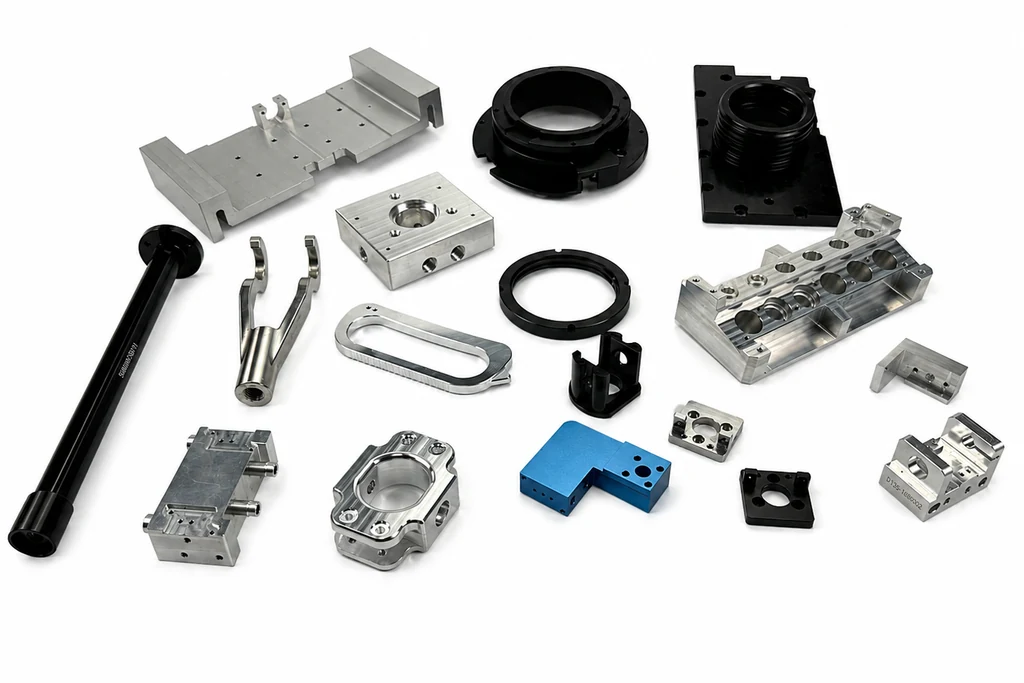
Surface Finishes by Manufacturing Process
Finishing requirements should follow the way the part is manufactured. A machined aluminum housing, welded sheet-metal enclosure and injection-molded cosmetic cover may all require a black appearance, but they do not reach that appearance through the same preparation, coating or acceptance method. Selecting a manufacturing route first prevents a color name from being mistaken for a complete finish specification.
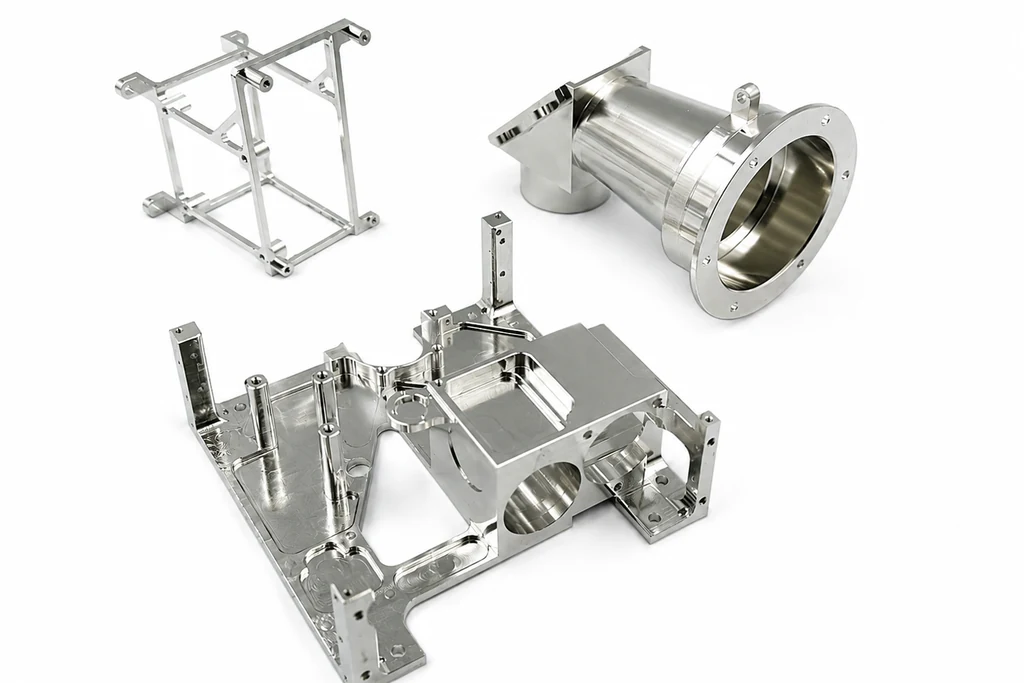
CNC-Machined Parts
CNC-machined parts may retain an as-machined toolpath or receive blasting, brushing, polishing, anodizing, conversion coating, plating, passivation, painting or laser marking. The route must account for sharp edges, cutter marks, burrs, plugged holes, sealing faces, threads and tolerance-sensitive bores. A cosmetic finish cannot reliably hide deep machining defects, so substrate condition and finish acceptance should be agreed together.
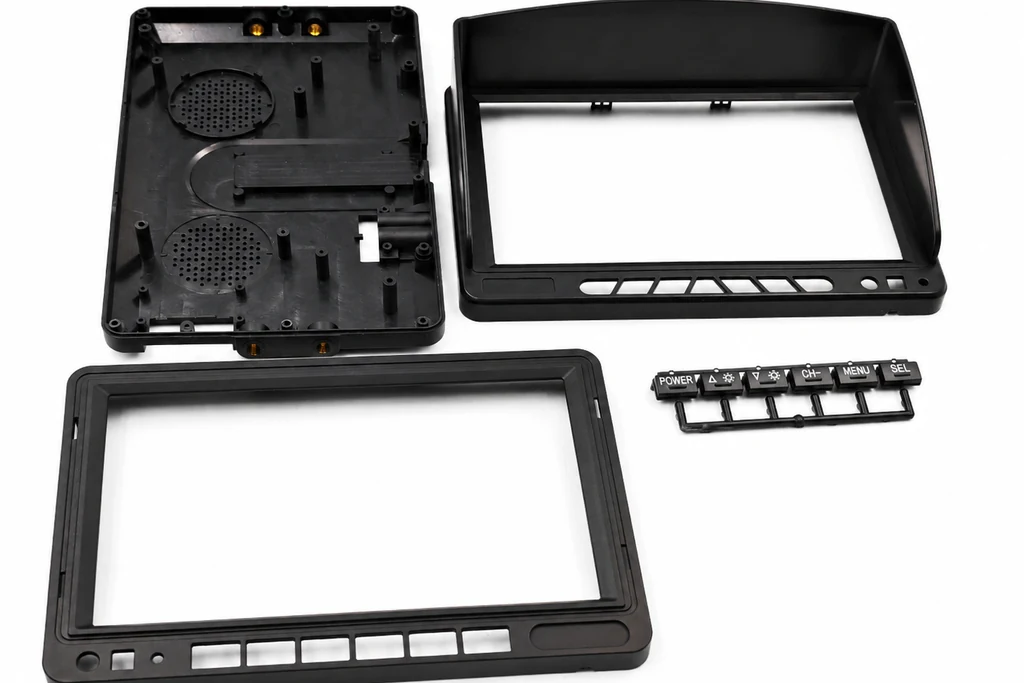
Injection-Molded Parts and Mold Surfaces
Injection-molded parts may use color, gloss and texture formed directly by the cavity surface, followed where needed by painting, functional coatings, printing, laser marking or metallization. This route begins before molding: resin, cavity polish, texture depth, draft, gate position, weld lines, ejector witness and processing conditions all influence the visible result. The related mold surface must therefore be engineered together with the plastic-part appearance requirement rather than treated as an unrelated metal finish.
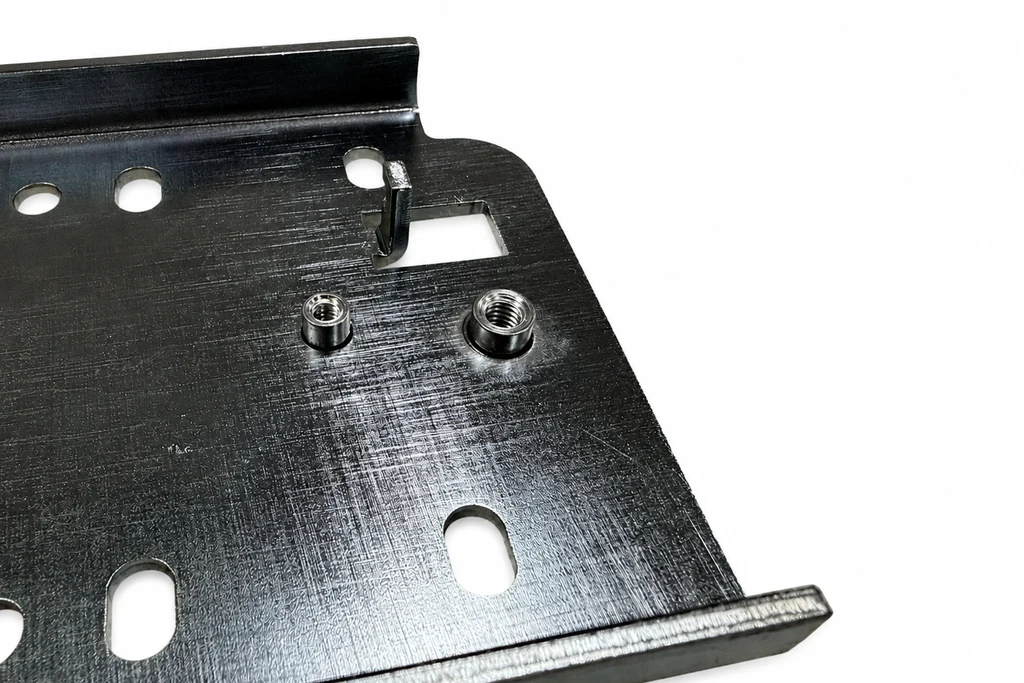
Sheet-Metal Parts
Sheet-metal fabrication commonly combines deburring, weld blending, brushing, blasting, conversion coating, plating, powder coating or wet painting. Formed edges, weld heat tint, grinding transitions, hook or rack points, enclosed corners and Faraday-cage effects can change coverage and appearance. Drawings should identify the visible faces, grain direction, masked interfaces and whether welds must remain visible, blended or sealed.
What Surface Finishing Services Are Available?
The appropriate process depends on the substrate and the outcome required. Availability, color range, part-size limits and documentation are confirmed during quotation rather than assumed for every project.
Mechanical and Abrasive Finishes
Mechanical finishing modifies the existing surface by cutting, abrading, peening or smoothing it. These processes are often used before a chemical or deposited coating, but they can also be the final finish.
As-Machined
An as-machined surface retains the toolpath and natural appearance created by milling or turning. It avoids a secondary cosmetic process and is often suitable for internal or non-cosmetic components. The drawing should still define any required roughness on seals, bearings or other functional areas; “as machined” does not establish one universal roughness.
Bead Blasting
Bead blasting creates a diffuse matte appearance and can visually unify light machining variation. Media, pressure, distance and exposure influence texture. Blasting can round sharp edges, alter a delicate surface or embed contamination when the media and cleaning route are unsuitable, so threads, sealing lands and precision bores may require masking.
Brushing
Brushing creates a directional grain on metal. Direction matters on adjacent cosmetic surfaces and should be shown on the drawing or appearance standard. Weld blending, local hand work and different material lots can remain visible after brushing; representative samples are useful when appearance is important.
Polishing and Buffing
Polishing progressively reduces peaks and scratches, while buffing can increase reflectivity. A visual term such as “mirror” should be supported by an approved sample, roughness target or inspection method when the surface is critical. Polishing removes material and can soften edges, lettering or small features, so functional zones must be identified before work begins.
Tumbling and Vibratory Finishing
Mass finishing can deburr and smooth many small parts efficiently. Media shape, compound, cycle time and part-to-part contact affect the result. Thin walls, fragile tabs and cosmetic faces require review because bulk processing can create dents or edge changes.
Grinding, Lapping and Honing
Grinding is used where controlled material removal and geometry are required on suitable surfaces. Lapping can refine flatness and texture on mating faces. Honing develops the geometry and cross-hatch of bores. These processes are specified from functional requirements and inspection methods rather than advertised as a single guaranteed roughness for every alloy and geometry.
Anodizing and Conversion Coatings for Aluminum
Sulfuric Acid Anodizing
Anodizing converts the aluminum surface into an oxide layer rather than depositing a separate paint film. It can improve corrosion behavior, wear response and appearance, and the porous oxide can be dyed before sealing. Alloy, temper, surface preparation, geometry, rack contact, bath control and sealing all influence color and appearance.
The Aluminum Anodizers Council design guidance explains that alloy, temper, gloss, surface structure and the coloring process affect the final appearance. Accordingly, color-critical projects should use a controlled color reference and agreed viewing conditions. Parts from different alloy or material lots should not be expected to match perfectly without a defined qualification plan.
Anodic oxide has dimensional consequences. The coating grows partly into and partly above the original surface, and buildup matters on precision bores, threads and mating features. The drawing should identify masking, post-machining or allowance requirements rather than applying a blanket tolerance after finishing.
Hard Anodizing
Hard anodizing is selected where a thicker, more wear-oriented oxide is appropriate. Its achievable thickness, color, local uniformity and performance depend on the alloy and geometry. Deep recesses, sharp edges, dissimilar inserts and threaded features require specific review. A hard anodize callout should state the governing specification or required coating class, thickness where applicable, sealing requirement, color and protected areas.
Chemical Conversion Coating
Conversion coatings can provide corrosion protection and a preparation layer for paint while retaining electrical conductivity more readily than a thick anodic oxide, depending on the specified system. Projects must identify the required specification, class, environmental restrictions and conductivity expectations. Contact areas should be defined on the drawing and verified by the agreed method.
Plating and Chemical Treatments for Steel and Stainless Steel
Zinc Plating
Zinc plating is commonly used to protect carbon-steel components. Coating system, thickness, supplementary treatment, color, corrosion requirement and hydrogen-embrittlement controls must be considered together. Threads and close fits require allowance because deposited coating occupies space.
The current ISO 2081 zinc-coating standard notes that base-metal defects can affect coating appearance and performance, and that dimensional requirements can limit coating thickness on threaded components. The purchase specification must therefore define more than “zinc plate”: it should identify the applicable standard, coating designation, supplementary treatment and any heat-treatment requirement relevant to the material and hardness.
Nickel and Other Functional Plating
Nickel-based coatings may be chosen for appearance, wear, corrosion behavior, solderability or as part of a multilayer system. Electroless and electrolytic routes do not behave identically. Geometry affects current distribution in electrolytic plating, while bath chemistry and preparation influence electroless deposition. The required process, thickness, substrate, masking and verification method should be confirmed before quotation.
Black Oxide
Black oxide is a conversion treatment used on suitable ferrous materials to produce a dark appearance with minimal buildup relative to many deposited coatings. It is not dimensionally “zero build,” and its corrosion performance depends strongly on cleaning and the post-treatment seal or oil. The specification should identify appearance, seal, handling and corrosion expectations.
Stainless Steel Passivation
Passivation is a controlled chemical treatment for suitable stainless steels after cleaning or descaling. It is intended to remove contamination such as exogenous iron and support formation of a passive surface; it is not a decorative coating and does not repair poor alloy selection or severe surface defects.
ASTM A967/A967M covers several passivation treatment routes and alternative verification tests. The correct treatment and test must be chosen for the stainless grade and project requirement. A drawing that merely states “passivate” can leave important decisions undefined, so the applicable standard, treatment and acceptance test should be specified.
Electropolishing
Electropolishing removes a controlled amount of metal from the surface of a conductive part. On stainless steel it can smooth microscopic peaks, improve cleanability and support passivation when performed correctly. Edge rounding, material removal, fixture contact and non-uniform current density need consideration. Critical dimensions should be reviewed before electropolishing and inspected afterward where required.
Organic Coatings and Painted Finishes
Powder Coating
Powder coating applies electrostatically charged powder and cures it into a continuous film. It can provide a broad range of colors and textures with durable coverage on suitable metal parts. Film thickness, edge coverage, Faraday-cage effects in deep recesses, drainage, grounding contact and cure temperature all influence the result.
Powder coating adds material. Threads, press fits, bearing seats, electrical contacts and mating faces usually require masking or allowance. Weld spatter, grinding marks and substrate irregularities may remain visible through the coating. A complete callout includes color reference, gloss or texture, coating system, film-thickness range when needed, masking map, cosmetic class and testing requirements.
Wet Painting
Wet paint systems can support specialized colors, gloss levels, textures and substrate combinations. Primer, topcoat, cure method and total dry-film thickness should be selected as a system. A color code alone does not establish gloss, texture, adhesion or chemical resistance. Representative coupons or first-article approval help control appearance.
E-Coating and Specialty Coatings
Electrophoretic coating can provide relatively uniform coverage on complex conductive components and is often used as a corrosion-resistant primer or final black coating. Other specialty coatings may be selected for friction, release, thermal, electrical or chemical requirements. SAMSHION confirms feasibility and the qualified supply route against the project specification rather than representing every specialty process as a universal standard option.
Mold Surface Engineering for Injection-Molded Appearance
The cavity surface becomes the visible surface of an injection-molded part. Mold polish, abrasive preparation, EDM condition, laser or chemical texture, local repairs and insert boundaries can all transfer to the plastic. For that reason, mold finishing is not simply cosmetic work performed after the tool is complete. It is part of the part design, tool design, release strategy and appearance-control plan.
SAMSHION coordinates the mold-surface requirement through its production mold making and injection molding teams. The selected treatment must suit the mold material, hardness, cavity geometry, polymer, expected appearance, draft and future maintenance route. A texture name or polish grade should be tied to defined surfaces and, where appearance is critical, a physical reference sample.
Mold Polishing and Gloss Control
Progressive polishing can produce surfaces ranging from visible machining or EDM character to fine matte, semi-gloss, high-gloss and optical-style finishes where the steel, geometry and application permit. The result on the plastic does not depend on steel polish alone. Polymer grade, filler, pigment, wall thickness and processing conditions affect how completely the part replicates the cavity and how light reflects from the molded surface.
Deep ribs, narrow slots, sharp internal corners and local hand-polished areas may not match large open cavity faces. Over-polishing can soften edges, alter shutoffs or create local waviness. The tool drawing should identify the required zones, acceptable transitions and surfaces that must retain geometry rather than receive additional cosmetic polishing.
Bead-Blasted, Matte and EDM Mold Surfaces
A controlled abrasive or EDM-derived mold surface can create diffuse matte or textured appearance directly in the part. The final visual effect depends on surface preparation, pattern uniformity, resin replication and draw direction. A generic callout such as “matte” does not identify one repeatable result; use a recognized grade, supplier texture reference or approved plaque.
EDM texture left from cavity manufacture should not automatically be treated as an approved cosmetic finish. Electrode condition, burn strategy, flushing, steel and subsequent handwork can create local variation. Where an EDM-style texture is intentional, the required grade, area and comparison method should be documented.
VDI-Style, Chemical and Laser Textures
Textures may be produced through controlled EDM, chemical engraving, laser texturing or other qualified methods. Numeric VDI-style grades describe a different system from proprietary pattern libraries such as Mold-Tech; they should not be converted as though they were exact equivalents. Pattern identity, depth, direction, repeat and seam behavior must be reviewed for the actual surface.
Chemical and laser methods can create leather grains, geometric patterns, fine stipple and functional microtextures. Complex curved faces may require pattern development and alignment around openings, shutoffs and parting lines. Before the full cavity is textured, approved plaques or representative tool areas can establish the intended appearance.
Texture Depth, Draft and Part Release
Texture creates microscopic features that resist sliding along the mold during ejection. Deeper or more directional textures generally require more draft, but one universal formula is not reliable for every polymer, wall, shrink direction or tool action. Standex Engraving Mold-Tech’s texture technical guidance specifically recommends evaluating texture depth, angle of action, shrink-on conditions, slides, lifters and shutoffs rather than relying on an old blanket rule.
Texture should therefore be selected before the final draft is released. If the geometry cannot provide enough draft, the team may need to reduce texture depth, move the texture boundary, change the draw direction, revise the side action or approve a different appearance. Adding a deep texture to a finished tool without this review can cause drag marks, scuffing, high ejection force or part deformation.
Parting Lines, Inserts and Texture Continuity
Parting lines, interchangeable inserts, sliders, lifters, vents and repaired areas can interrupt a grain. Alignment is especially important for directional, geometric or leather-like patterns. The tool concept should define where a texture can terminate naturally and which boundaries will remain visible on the finished product.
Tool maintenance also matters. Welding, polishing or replacing an insert can change local texture and gloss. Retained texture references, approved samples and controlled repair records make later maintenance more predictable than relying on photographs alone.
Mold Texture Samples and Approval
Physical plaques show how a texture appears and feels in a specific material and color. A steel sample demonstrates the tool surface, while a molded plastic plaque demonstrates replication through a particular resin and molding process. Neither automatically guarantees the result on a complex production geometry, but together they provide a more reliable starting point than a digital rendering.
For appearance-critical work, approve the texture reference, plastic material, color, cosmetic zones and viewing method before texturing the complete tool. The first molded samples then verify actual replication, part release and consistency across cavities.
Surface Finishes for Injection-Molded Plastic Parts
Plastic surface finishing includes both molded-in appearance and secondary operations performed after molding. Resin chemistry, mold release, surface energy, additives, fillers and residual stress affect adhesion, color, marking contrast and long-term appearance. A finish validated on one commercial resin grade cannot automatically be transferred to another material with the same family abbreviation.
Molded-In Color, Gloss and Texture
Pre-colored resin or an approved color concentrate can create the part color without a separate paint film. The base polymer, pigment, filler, wall thickness, cavity texture and lighting all affect perceived color. A Pantone or other color reference can guide development, but a representative molded plaque or approved part is more useful for repeat appearance control.
Gloss and texture originate primarily at the cavity surface. The same polished tool can produce different gloss in different polymers, while ribs and thickness transitions can create local appearance variation. Define cosmetic zones, gloss or texture reference and allowable molding witnesses rather than requesting a uniform visual result without a measurement or sample.
Painting and Functional Coatings
Painting can provide specialized color, gloss, soft-touch feel, UV-related protection or other optical and functional effects. Coating performance depends on substrate chemistry, cleanliness, pretreatment, primer, film build and cure conditions. Low-surface-energy plastics may require a validated activation or coating system, and aggressive solvents or excessive heat can cause cracking, distortion or adhesion loss.
Mask threads, sealing features, snap interfaces, datums and electrical or optical zones where necessary. Film thickness can change assembly force and edge definition. Use representative molded parts for adhesion, appearance, handling and assembly validation before repeat production.
Pad Printing and Screen Printing
Pad printing transfers small graphics onto curved or irregular surfaces. Screen printing is suitable for larger and relatively open print areas. Ink must be compatible with the exact resin and expected exposure to handling, cleaners, temperature and abrasion. Texture, draft and curvature influence print coverage, while fixtures must locate the part without damaging cosmetic faces.
Artwork should be revision controlled, with defined location, orientation, color and acceptable registration. Printed graphics should be evaluated under the same appearance conditions as the surrounding molded surface.
Laser Marking and Identification
Laser marking can create symbols, identification, serial data or contrast without adding ink. Mark response depends on polymer chemistry, pigment and laser-sensitive additives. A material that produces strong contrast in one color may respond differently in another, so trials must use the intended commercial resin and surface condition.
When serialization is required, define data source, format, location, orientation, readability and verification. A visually dark mark is not automatically durable or machine-readable under every use condition.
Metallization and Plating on Plastics
Plastic parts may receive vacuum metallization, conductive preparation and plated systems for decorative or functional effects. The route is highly substrate- and process-specific. Geometry, gate and weld-line placement, residual stress, surface defects and handling contamination can remain visible through a reflective metallic finish.
The coating stack, adhesion requirements, masking, appearance reference and environmental tests should be specified before tooling and material choices are finalized. Metallic appearance alone does not prove conductivity, corrosion performance or shielding effectiveness.
Appearance Standards and Inspection
Plastic cosmetic inspection should define viewing distance, lighting, orientation, inspection time and zones of different importance. Approved master samples and boundary samples can control color, gloss, texture, flow lines, weld lines, gate vestige, ejector witness, print defects and handling marks more effectively than general terms such as “perfect” or “no defects.”
Cosmetic approval remains separate from dimensional and functional acceptance. A visually acceptable part may still fail fit or sealing, while a harmless visual witness may not affect performance. Record each requirement and inspection method independently.
Surface Finish Quality Control
The inspection plan should match what the finish is intended to achieve. Visual inspection alone is not enough for every requirement, and measurement alone may not capture a cosmetic defect.
Appearance Inspection
Use defined lighting, viewing distance, viewing time and cosmetic zones where appearance matters. Compare against an approved physical sample or controlled color/gloss target when provided. Separate normal process variation from unacceptable defects in advance.
Coating Thickness
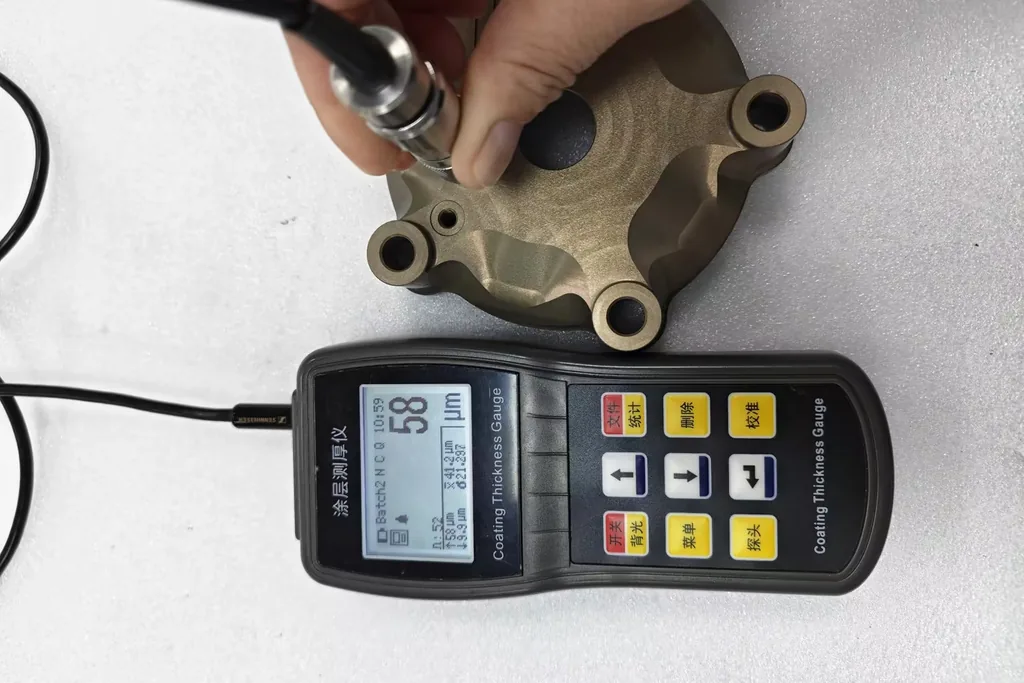
Select a method suitable for the coating and substrate. Measurement locations should represent the functional and process risk. A single reading at an easy location may not describe an entire complex part.
Adhesion and Cure
Paint and powder systems may require adhesion, cure or solvent-resistance checks. The method, sample preparation and acceptance criterion must be stated by the governing specification or customer requirement.
Dimensional Verification
Reinspect coated threads, fits, bores, sealing surfaces and other affected dimensions. SAMSHION’s quality assurance and inspection systems can support dimensional reports and project-specific evidence according to the approved inspection plan.
Corrosion and Performance Testing
Corrosion tests, conductivity checks, hardness, abrasion or chemical resistance are provided only when defined and quoted. A test name by itself is incomplete; exposure conditions, specimens, duration, evaluation method and pass/fail limits must be agreed.
Frequently Asked Questions
Which Finish Is Best for Aluminum Parts?
There is no universal best finish. Anodizing, conversion coating, powder coating, painting, blasting and polishing solve different functional and cosmetic problems. Select from alloy, exposure, dimensional interfaces, conductivity, wear and appearance requirements.
Does Anodizing Change Part Dimensions?
Yes. Anodic oxide develops partly into and partly above the aluminum surface. The effect depends on the process and specified coating. Precision bores, threads and fits should be reviewed for masking, allowance or post-processing.
Can You Match a Pantone or RAL Color?
A color reference can guide selection, but substrate, texture, gloss, coating chemistry, thickness and lighting influence perceived color. Use approved physical samples and defined acceptance conditions for color-critical programs.
Should Threads Be Masked Before Plating or Powder Coating?
Often, but not automatically. The decision depends on coating thickness, thread class, assembly requirement and corrosion objective. Mark the required treatment on the drawing and verify functional gauges after finishing when needed.
Does Salt-Spray Testing Predict Outdoor Service Life?
Not by itself. It is a controlled comparative exposure. Real performance depends on the coating system, design, environment and damage mechanisms. Use the governing product specification and corroborating evidence to establish acceptance.
Can Cosmetic Finishes Hide Machining or Welding Defects?
Some textures reduce the visibility of minor variation, but coatings do not reliably hide deep tool marks, porosity, grinding transitions, dents or poor preparation. Establish substrate quality before finishing.
Can One Finish Be Used on an Assembly of Different Metals?
Possibly, but dissimilar materials can react differently during preparation and finishing and may create galvanic or color concerns. Identify every alloy, insert and joint so the route can be reviewed.
What Files Should I Send for a Finishing Quote?
Send CAD, a controlled drawing, material, quantity, finish designation, color reference, masking map, critical dimensions and testing requirements. Photographs are useful for appearance context but should not replace the drawing.